
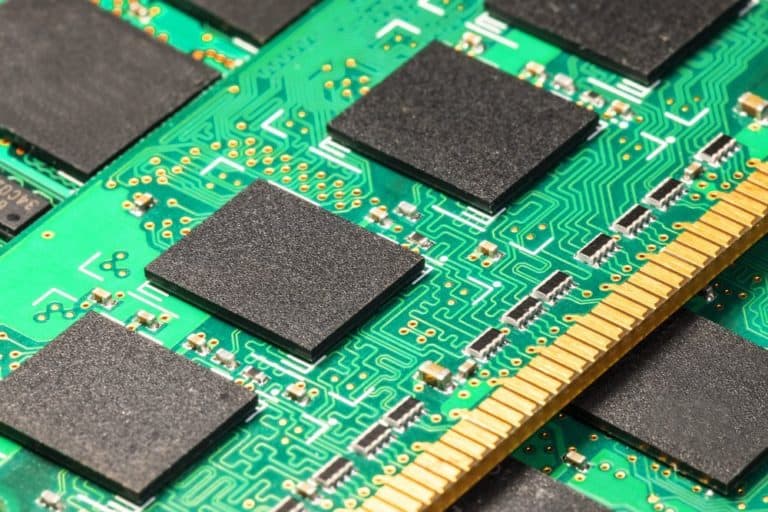
TrendForce has dramatically upgraded its memory price outlook for the first quarter of 2026. DRAM contract prices are now expected to rise around 90 to 95 percent quarter-over-quarter. NAND flash similarly sees a huge jump, with expected prices ballooning by 55 to 60 percent compared to Q4 2025. Specifically, PC DRAM prices could more than double even from their elevated positions late last year. This will invariably result in overall price increases across all product categories, though varying in significance depending on component costs.
The market research firm’s latest industry survey reveals persistent AI and data center demands in Q1 2026. As a result, prospects are worsening the global memory supply-demand imbalance. TrendForce originally predicted conventional DRAM contract prices would rise 55-60 percent QoQ, but has now revised this to 90-95 percent, within touching distance of doubling outright. Similarly, NAND flash forecasts jumped from 33-38 percent to 55-60 percent. Ominously, TrendForce notes this estimation may rise yet further.
This follows the now-familiar pattern that began in mid-2025. Between July and November last year, the price of 1TB TLC NAND surged from $4.80 to $10.70, according to Phison CEO Khein-Seng Pua. Spot prices for DRAM and NAND, or the cost of memory chips to IT vendors before turning them into a product, are the key signifier here. Since September, these spot prices have gone from relatively affordable to historic highs.
PC and server segments hit hardest
PC shipments in Q4 2025 nevertheless exceeded expectations, adding to widespread PC DRAM shortages. Even tier-1 PC OEMs with secured supplier allocations are experiencing declining inventory levels. In this seller-dominated market, PC DRAM prices are projected to increase by over 100 percent QoQ in Q1 2026, setting a new quarterly surge record.
Server DRAM faces similar constraints. Major cloud service providers and server OEMs in North America and China continued negotiating annual long-term DRAM agreements through January. Intense competition among buyers for limited supply is expected to drive server DRAM prices up approximately 90 percent quarter to quarter, setting the largest quarterly increase on record.
The widening supply-demand gap has pushed contract prices for LPDDR4X and LPDDR5X to surge by around 90 percent across the same period, also representing the steepest increases in their history. Most contracts with US smartphone brands were finalized starting late last year, while negotiations with Chinese vendors are anticipated to progress significantly toward the end of February.
NAND flash capacity constraints worsen
Despite Q1 2026 order volumes greatly surpassing suppliers’ production capacity, memory manufacturers remain optimistic about DRAM profitability and are proactively reallocating production lines from NAND to DRAM. This shift further limits NAND flash capacity expansion. Output gains can only be achieved through incremental process upgrades, making short-term capacity tightness difficult to resolve. Even if NAND isn’t facing the same demand crunch, its worsening supply will doubtlessly make TrendForce’s predictions a reality soon, at least in terms of a ballpark figure for staggering price rises.
Industry analysts report that up to 70 percent of memory chip products created globally in 2026 will be destined for AI data centers. It’s therefore no susprise pricing remains volatile. TrendForce’s estimation is therefore likely to be just that: an educated assertion.