
Reports inThe Wall Street Journal aboutNvidia’s doubts regarding a mega deal with OpenAI caused unrest in the AI sector. CEO Jensen Huang responded publicly in Taipei, stating that Nvidia is in fact preparing an exceptionally large investment.
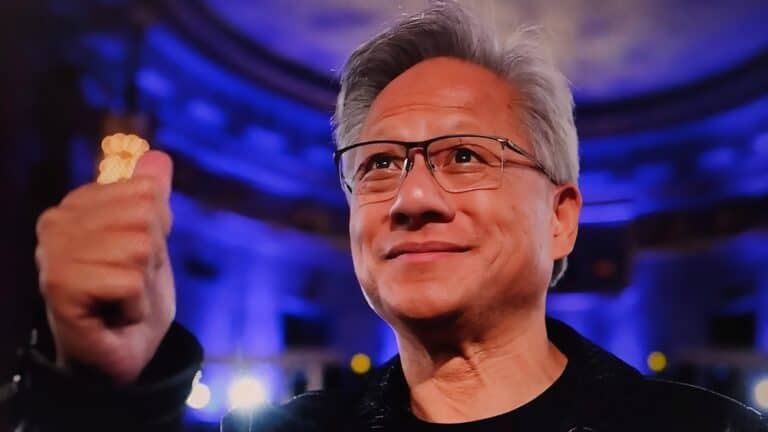
According to Huang (photo), the reports give a false impression of the situation. This was reported by Reuters and Bloomberg in separate reports. Speaking to the media in the Taiwanese capital, he stated that Nvidia intends to contribute a very substantial amount to OpenAI’s new capital round. He expressed his confidence in the AI company and in the collaboration with CEO Sam Altman. According to him, the investment round is currently being finalized and Nvidia is participating in it.
Although Huang did not mention an amount, he indicated that it is likely to be the largest investment Nvidia has ever made. At the same time, he tempered expectations by saying that it is not in the order of $100 billion. In September, a letter of intent mentioned a possible total investment of that magnitude. It was intended to support the construction of large-scale AI data centers and infrastructure. Internally, it was emphasized that this agreement was not binding.
Doubts about circular AI deals
The close relationship between Nvidia and OpenAI is being closely monitored by investors, as OpenAI is one of the largest buyers of Nvidia’s AI chips. This fuels the discussion about so-called circular AI deals, in which chip manufacturers invest in companies that then purchase their hardware. A similar construction can be seen in Nvidia’s recent investment in CoreWeave, also an important customer.
OpenAI is reportedly seeking to raise up to $100 billion in this financing round, which could value the company at approximately $800 billion. Several large technology companies are mentioned as possible participants. Amazon, for example, is said to be considering an investment of tens of billions in combination with an expansion of cloud capacity. Microsoft is also said to be in talks to join.
The original plans for the collaboration between Nvidia and OpenAI focused on building data centers with a capacity of at least 10 gigawatts, comparable to the electricity consumption of a large city. These facilities would be fully equipped with Nvidia hardware for training and running AI models.
Huang spoke in Taipei after a dinner with key Taiwanese suppliers to Nvidia, including chip manufacturer TSMC. The meeting was nicknamed the trillion-dollar dinner locally because of the combined market value of those present. His message was clear. Nvidia still sees OpenAI as a strategic partner and is willing to commit an exceptional amount of capital to it.