
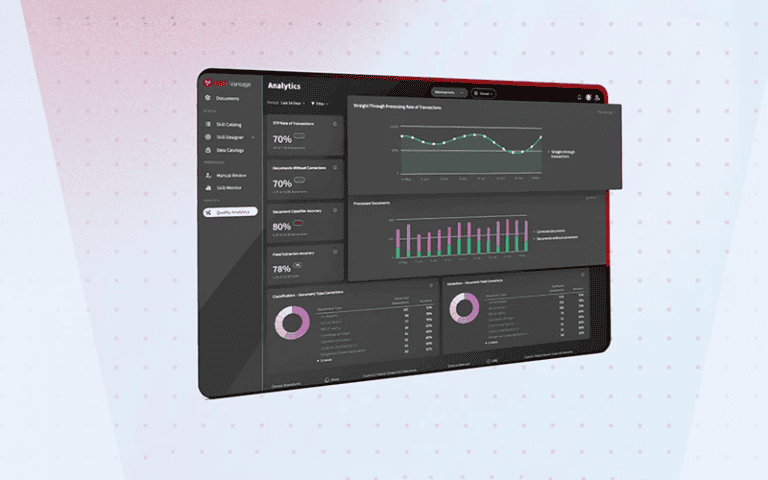
ABBYY (hereafter Abbyy) has launched its Vantage 3.0 technology, a “document AI platform” that now offers direct integration with Large Language Models (LLMs). The company operates on a mission to optimize processes, accelerate business (and technology) decisions and drive better outcomes with its approach to process AI and document AI. But what are these iterations of artificial intelligence and how does this platform-level technology work?
Not so hard to work out (and occasionally known as AI process automation), process AI is the integration of AI and ML (with optional natural language processing (NLP) and computer vision, including optical character recognition (OCR) in one platform) into business workflows with the aim of automating tasks that need and require human-like judgment.
Also straightforward to define, document AI (occasionally known as intelligent document processing) is a set of technologies designed to enable enterprise applications to ingest, interpret and contextually understand documents with human-like judgment.
Abbyy says that Vantage “bridges the reliability gap” between traditional AI and generative AI thereby increasing trustworthiness and explainability of data output.
A modernised tech stack
Built on a new and modernised tech stack, Vantage is designed to adapt as AI evolves and delivers new advancements faster. It introduces an analytics dashboard, built-in compliance and redaction capabilities and an expanded library of pre-configured AI models that enable organisations to gain real-time insights, protect sensitive information and (the reason we’re talking about this in the first place)… to accelerate process transformation.
The reliability and precision of purpose-built AI combined with the flexibility of generative AI here is said to allow users to use the capabilities of LLMs safely within business process workflows. This hybrid approach ensures users expand document automation capabilities while maintaining the control, consistency and explainability required for enterprise-grade solutions. Additionally, ABBYY Vantage connects to Azure OpenAI for prompt-based extraction without complex custom coding. It includes pre-engineered prompts optimised for data extraction to reduce setup time, and validation to ensure consistent results and continuously improve performance.
“We know that context matters when it comes to data extraction. With ABBYY Vantage, you can control exactly how data is sent to the LLM and choose between sending the document image or the structured, precise text output from ABBYY’s highly acclaimed OCR,” said Max Vermeir, vice president of AI Strategy at ABBYY. “Furthermore, you can tract where data was extracted from within the document for auditability and transparency that’s essential for compliance.”
The science of compliance
Vantage 3.0 embeds robust compliance controls, including enterprise-grade redaction tools that automatically remove sensitive data before storage or export. This ensures healthcare, financial services and insurance organisations safeguard confidential information, meet regulatory demands, and reduce the risk of data breaches. Enhanced role-based access controls and rigorous audit trails further fortify compliance for mission-critical document processing, providing peace of mind for privacy-conscious enterprises.
Furthermore, businesses running mission-critical document processing benefit from strengthened BC/DR capabilities that ensure uninterrupted operations, even in the face of regional or infrastructure failures. Businesses and government organisations can operate confidently in an ever-evolving regulatory landscape, knowing that Abbyy Vantage adheres to SOC 2, ISO certifications, GDPR, CCPA, FIPS and STIG compliance.
The new analytics dashboard provides organisations with granular process insights and real-time performance metrics such as touchless processing rates, document type detection accuracy, human-in-the-loop (HITL) corrections. With advanced visualisation and reporting features, teams can:
- Identify process bottlenecks
- Track precision rates
- Drive process optimization and ROI
These actionable insights ensure stakeholders make data-driven decisions about their document-centric business processes that improve employee and process efficiency, compliance and customer satisfaction. A growing library of pre-configured Document AI skills allows users to jump-start enterprise document processing automation with minimal setup.
New and enhanced AI models include:
- Certificates of analysis
- Insurance claims and mortgage notes
- Invoices, tax forms and purchase orders
- Financial and healthcare forms
Vermeir says that with quick deployment and out-of-the-box business logic, organisations can reduce implementation time and keep pace with evolving compliance and operational requirements. He says that businesses can now access and transform information from their enterprise documents with greater confidence, streamline compliance and accelerate day-to-day operations through actionable intelligence and trusted automation.