
Dutch company QuantWare, together with Elevate Quantum, Q-CTRL, Qblox, and Maybell Quantum, has launched the first commercially deployable Quantum Open Architecture system in the US. The Quantum Platform for the Advancement of Commercialization (fortunately abbreviated to Q-PAC) is now operational in Denver, Colorado. It was built in less than five months.
The Q-PAC system is running in Elevate Quantum’s Commercialization Lab on the Quantum Commons campus in Denver. The collaborating parties state that they achieved this in less than five months at a fraction of the cost of closed, full-stack quantum systems. Furthermore, such a rapid rollout in the US is unprecedented.
QuantWare, a Dutch company based in Delft, says it is not only advancing quantum technology but also helping to shape how quantum infrastructure is rolled out. The latter is expected to be a constantly evolving landscape until sometime in the 2030s, if we are to believe the roadmaps of various quantum players regarding when quantum computing will truly break through. Such predictions are always highly prone to error, but QuantWare can already play a significant role in making that anticipated quantum breakthrough a reality.
QPUs are promising
Founded in 2021 as a spin-off from Delft’s Technical University and QuTech, QuantWare supplies the quantum processing unit (QPU) for the platform. The company raised 20 million euros in a Series A funding round early last year and announced plans shortly thereafter for its own chip factory in Delft. QuantWare is currently considered the world’s largest volume supplier of QPUs.
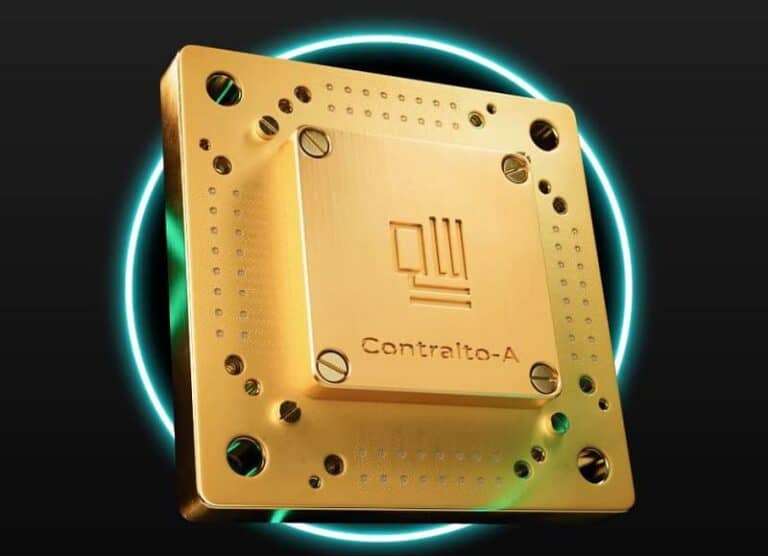
The system runs on QuantWare’s 17-qubit Contralto-A QPU. Qblox provides the modular electronics for controlling the system, Maybell Quantum supplies the cryogenic cooling infrastructure, and Q-CTRL’s software manages AI-driven calibration via Boulder Opal. Together, these components form an open reference architecture that gives users full visibility into all components—without the “black box” limitations of other quantum systems.
QUB architecture as the foundation
Q-PAC is based on the Quantum Utility Block (QUB), an open, modular, and validated framework that QuantWare, Q-CTRL, and Qblox announced in November. Q-PAC is the first full commercial implementation of this framework. Elevate Quantum COO and CFO Jessi Olson describes the system as “not a research testbed,” but a “fully reproducible, commercial-grade quantum system.”
The platform is available to companies, researchers, and government entities that want to experiment with quantum computing without building a full infrastructure themselves. Of course, the most important step for quantum has yet to come: making the technology production-ready.
Roadmap to 100 qubits and NVIDIA integration
The current 17-qubit system has a clear upgrade path. The same infrastructure will support QuantWare’s 100-qubit-class processors by 2027, allowing users to scale up without replacing the hardware.
Through a partnership with Arrow Electronics, the consortium is also working on integrating a GPU cluster server via NVIDIA NVQLink. This connection is designed to deliver ultra-low latency without requiring FPGA programming. This enables faster calibration and more efficient hybrid workloads for organizations deploying Q-PAC within an HPC environment.