
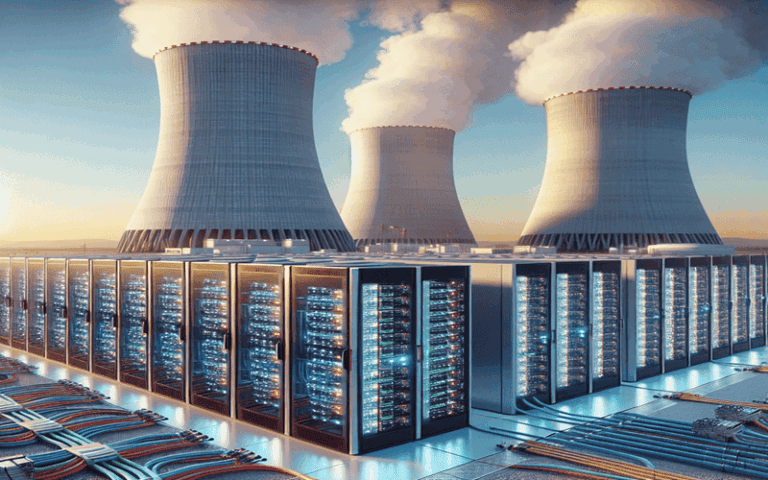
A Texas-based energy company has come up with a striking proposal to meet the rapidly growing power consumption of AI data centers. The company wants to give decommissioned nuclear reactors from the US Navy a second life as an energy source for large-scale AI infrastructure.
As reported by SiliconANGLE , the plan comes from HGP Intelligent Energy, which is seeking financial support from the US Department of Energy through a loan guarantee. With this support, the company wants to launch a project aimed at providing continuous, sustainable power to data centers running heavy AI workloads.
This involves two nuclear reactors that previously served on US Navy aircraft carriers and submarines. These reactors would be installed at a special data center campus near Oak Ridge National Laboratory in Tennessee, a location with a long history in nuclear research and technology.
The reactors HGP is targeting are known as pressurized water reactors, a type that has been reliably used by the Navy for decades. They are designed for long-term use and are known for their robust safety profile. According to the plans, together they would be able to supply between 450 and 520 megawatts of constant power, enough to support energy-intensive AI training and inference without interruptions.
Cheaper than new nuclear reactors
The total investment is estimated at $1.8 to $2.1 billion. Converted per megawatt, that would be significantly cheaper than building a new nuclear power plant or even a modern small modular reactor. It is precisely this cost advantage that makes the idea interesting for parties struggling with the rapidly increasing energy demand of hyperscale data centers.
Technically speaking, reusing these reactors does not seem to be an insurmountable problem. The biggest challenge lies in the regulations. Nuclear installations for military use fall outside the existing frameworks for civilian energy production. Moreover, the reactors are sealed and use highly enriched fuel, which does not comply with the current licensing procedures for commercial nuclear power plants in the United States.
Nevertheless, HGP is convinced that these obstacles can be overcome. The company argues that the necessary knowledge is already available and that it is working with investors and partners who have confidence in the safe and scalable implementation of the plan.
The proposal highlights the increasing pressure on the US power grid. The rise of AI is driving explosive growth in data centers, with traditional energy sources increasingly falling short. Large cloud and infrastructure companies are therefore looking to nuclear energy as a stable and emission-free solution, ranging from existing power plants to new reactor concepts and long-term power purchase agreements.