
Skip to content
Techzine Global
  • Home
  • Topstories
  • Topics
    • Analytics
    • Applications
    • Collaboration
    • Data Management
    • Devices
    • Devops
    • Infrastructure
    • Privacy & Compliance
    • Security
  • Insights
    • All Insights
    • Agentic AI
    • Analytics
    • Cloud ERP
    • Generative AI
    • IT in Retail
    • NIS2
    • RSAC 2025 Conference
    • Security Platforms
    • SentinelOne
  • More
    • Become a partner
    • About us
    • Contact us
    • Terms and conditions
    • Privacy Policy
  • Techzine Global
  • Techzine Netherlands
  • Techzine Belgium
  • Techzine TV
  • ICTMagazine Netherlands
  • ICTMagazine Belgium
Techzine » News » Security » Concerns about Chinese manufacturer of Google’s Titan Security Key
2 min Security

Concerns about Chinese manufacturer of Google’s Titan Security Key

Jim PeddSeptember 3, 2018 1:23 pmSeptember 6, 2019
Concerns about Chinese manufacturer of Google’s Titan Security Key

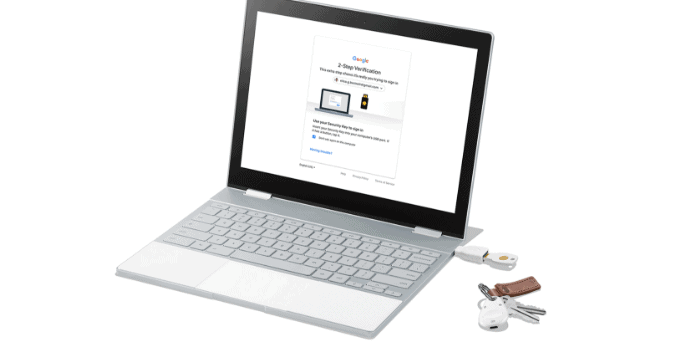
Last week, Google announced that the Titan Security Key would finally be available to everyone. The physical security key provides a two-step verification that would not be susceptible to phishing. But now it turns out that the key is produced in China and there are concerns about its safety.

Motherboard states that Google does not produce the Titan key itself. Instead, it uses a third party; Feitian Technologies. This is a Chinese company that produces all kinds of 2fa products. It already sells it in Western countries, but because it is originally a Chinese company, there are still some safety concerns.

Physical security

Some security experts are critical about Google’s choice to have the whole thing put together in China. One of the concerns lies in the simple fact that Chinese legislation means that companies have to cooperate with requests from the security services. This means that Feitian may be forced to install a back door in the Titan keys.

At the same time, Google states that the risk of abuse is small. The company adds the firmware to the chips in a familiar environment and delivers it to the manufacturer. It therefore monitors the functioning of the device itself. They are also permanently sealed hardware chips. As a result, no one would be able to access the chips and make changes.

How Titan works

Basically, the Titan Security Key is very simple. Two-step verification is used, whereby a user has to confirm his or her identity in two ways. First of all, users log in with their login name and password. Then they can confirm their identity in two ways.

On computers, they have to place Titan, which is a physical usb key. If someone wants to log in via a mobile device, they must use the supplied Bluetooth or NFC key. Google itself states that since its employees have to use Titan to log into their account, there have been no successful phishing attacks.

This news article was automatically translated from Dutch to give Techzine.eu a head start. All news articles after September 1, 2019 are written in native English and NOT translated. All our background stories are written in native English as well. For more information read our launch article.

Tags:

Feitian / Google / Login key / Security key / Titan Security Key / two-step verification

"*" indicates required fields

This field is for validation purposes and should be left unchanged.

Stay tuned, subscribe!

Nieuwsbrieven*

Related

Google is normalizing two-step verification for all sign-ins

Google plans to turn on 2FA by default for 150M users

Google improves security in the Play Store

Google will require two-step verification to allow logins

Editor picks

How close is China’s EUV project to eliminating ASML’s monopoly?

'Manhattan Project' is a clear threat in its infancy

Database administration in 2025: how DBAs are reinventing themselves

The role of database administrators (DBAs) is changing rapidly. Where...

OpenAI eyes $10 billion investment from Amazon

Amazon is reportedly considering an investment of around $10 billion ...

“Not all clouds are created equal” in the AI era: how is OCI different?

Also, how real is the AI bubble?

Techzine.tv

SAP Business Network: $6.5 trillion B2B collaboration platform

SAP Business Network: $6.5 trillion B2B collaboration platform

Why SAP says best-of-breed software era is over

Why SAP says best-of-breed software era is over

In-depth conversation about Agentforce IT service and how it wants to change the ITSM market

In-depth conversation about Agentforce IT service and how it wants to change the ITSM market

Why Salesforce built three levels of AI commerce agents

Why Salesforce built three levels of AI commerce agents

Read more on Security

SailPoint integrates with CrowdStrike Falcon for faster threat response

SailPoint integrates with CrowdStrike Falcon for faster threat response

SailPoint has announced new integrations with the CrowdStrike Falcon platform to connect identity governance ...

Erik van Klinken 6 hours ago
Why did so many security vendors abandon MITRE’s stresstest?
Top story

Why did so many security vendors abandon MITRE’s stresstest?

This year, MITRE made headlines primarily because its leading vulnerability database was in danger of being d...

Erik van Klinken December 12, 2025
Sophos CEO sees “cybersecurity poverty line”: what to do about it?
Top story

Sophos CEO sees “cybersecurity poverty line”: what to do about it?

We sit down with Sophos CEO Joe Levy during Pax8 Beyond to discuss, among other things, the progress of the S...

Sander Almekinders December 11, 2025
Palo Alto Networks migrates largely to Google Cloud and signs landmark deal

Palo Alto Networks migrates largely to Google Cloud and signs landmark deal

Palo Alto Networks and Google Cloud are already partners, but are significantly strengthening their ties. Cri...

Erik van Klinken December 19, 2025

Expert Talks

The year of the AI agents: why 2026 is about value, not technology

The year of the AI agents: why 2026 is about value, not technology

Microsoft has declared 2026 to be the year of the agent. This is not ...

ARTPEC-9 and Axis Edge Vault: a unified hardware-rooted framework for cybersecure surveillance

ARTPEC-9 and Axis Edge Vault: a unified hardware-rooted framework for cybersecure surveillance

As cyber threats grow in scale and complexity, protecting network-con...

How our team optimizes infrastructure for minimal AI video processing latency 

Over the past year, AI-generated video diffusion models have enabled ...

Redefining the Software Development Lifecycle in the Age of AI

For developers, the best coding happens when they’re in a state of ...

Tech calendar

Appdevcon

March 10, 2026 Amsterdam

Webdevcon

March 10, 2026 Amsterdam

Dutch PHP Conference

March 10, 2026 Amsterdam

GITEX ASIA 2026

April 8, 2026 Singapore

SAS Innovate 2026

April 27, 2026 Grapevine

Team '26

May 5, 2026 Anaheim

Whitepapers

Experience Synology’s latest enterprise backup solution

Experience Synology’s latest enterprise backup solution

How do you ensure your company data is both secure and quickly recove...

How to choose the right Enterprise Linux platform?

How to choose the right Enterprise Linux platform?

"A Buyer's Guide to Enterprise Linux" comprehensively analyzes the mo...

Enhance your data protection strategy for 2025

The Data Protection Guide 2025 explores the essential strategies and...

Strengthen your cybersecurity with DNS best practices

The white paper "DNS Best Practices" by Infoblox presents essential g...

Techzine Global

Techzine focusses on IT professionals and business decision makers by publishing the latest IT news and background stories. The goal is to help IT professionals get acquainted with new innovative products and services, but also to offer in-depth information to help them understand products and services better.

Follow us

Twitter
LinkedIn
YouTube

© 2025 Dolphin Publications B.V.
All rights reserved.

Techzine Service

  • Become a partner
  • Advertising
  • About Us
  • Contact
  • Terms & Conditions
  • Privacy Statement