

The network must keep pace with the times in order to cope with all the AI power being deployed. HPE wants to optimally connect data centers with the new Juniper PTX12000 routers. The combination of chassis, line cards, and Juniper Express 5 ASIC in the new models should result in the most compact ultra-high density DCI routers currently available.
Service providers need to ride the AI wave. This applies to compute, but certainly also to the network. If one part of the stack becomes faster and more powerful, the other cannot lag behind. In fact, the network is playing an increasingly important role. This is especially true now that scale across workloads requires enormous throughputs to be achieved between data centers.
“Performance is no longer about compute, but about networks,” says Julius Francis, Head of Product Marketing and Strategy at HPE, bluntly. “We need to rethink and rewrite it,” he puts it more poetically later in our conversation with him. Everything must move toward extremely high density and deep buffers. As far as HPE is concerned, the Juniper PTX12000 series of routers is the basis for this.
Juniper PTX12000
The Juniper PTX12000 series can rightly be called a beast of a router. It is currently available in two variants: the PTX12012 and the PTX12008. The last digits indicate how many slots there are in the rack. That is 12 and 8 respectively. The PTX12012 is 32RU high, while the PTX12008 is a more modest 22RU. In total, the larger model can offer 648 x 800G, while the smaller model can offer 432 x 800G. This router can process 43.2Tbps per line card.
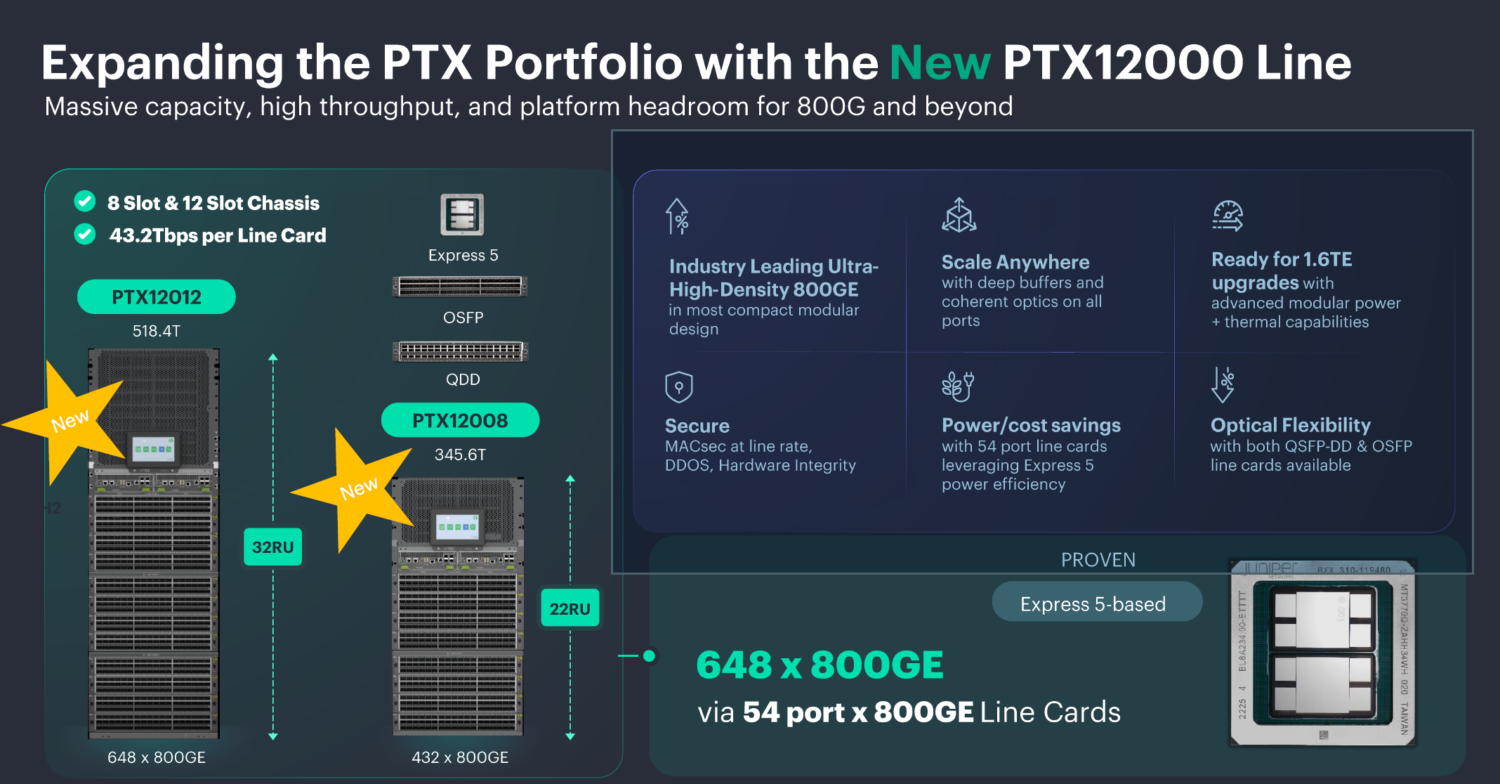
The Juniper PTX12000 series runs on the Express 5 ASIC, which Juniper developed itself and which has been used in products for several years. This is a chip that Juniper developed with the primary goal of delivering as much non-blocking throughput as possible. An important part of the Express 5 are the deep buffers. These ensure that performance remains consistently high and, above all, predictable. This is important when scaling between data centers is required.
According to Francis, the Juniper PTX12000 must not only be able to cope with today’s requirements, but also those of the future. “Service providers don’t want to purchase a routing platform now and then have to buy the next generation very quickly,” he says. That’s why the chassis is suitable for an upgrade from 800G to 1.6T in the future.
Juniper Express 5 ASIC versus Cisco Silicon One P200
During our conversation with Francis, we note that Juniper’s Express 5 ASIC is no longer particularly new. Especially with the announcement of Cisco’s very powerful Silicon One P200 in mind, this may come across as a somewhat outdated product in a very modern new line of DCI routers. How does HPE position itself in relation to that offering?
During our conversation with Francis, it becomes clear that HPE has, as usual, thought this through carefully. While Cisco mainly emphasizes the 51.2 Tbps throughput that the P200 can handle, which is higher than the 43.2 Tbps per line card of the PTX12000, Francis mainly talks about the density of the Juniper PTX12000.
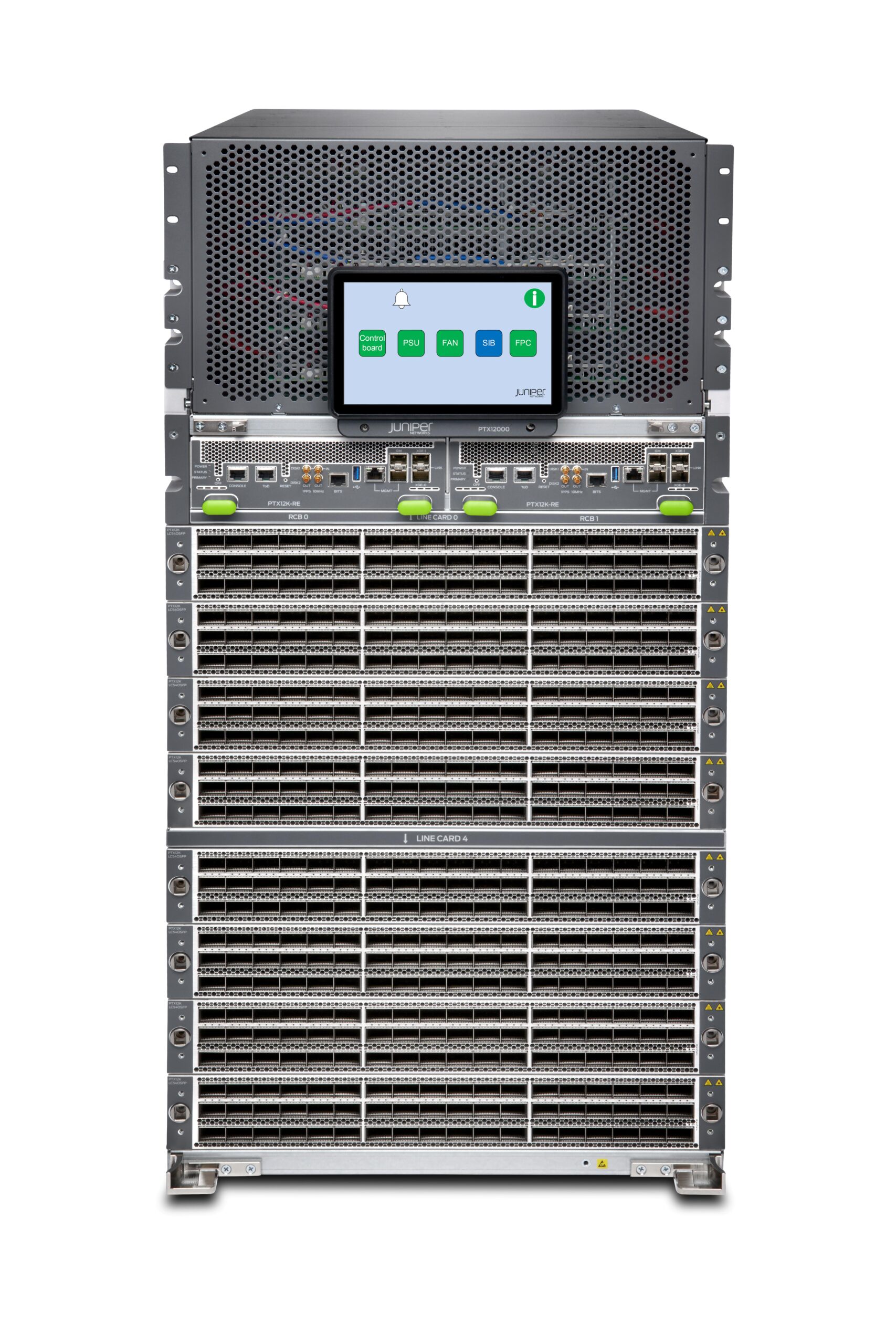
HPE is primarily concerned with how compact the modular design of these routers is. According to Francis, Cisco needs 18 slots to deliver what it promises, while HPE can do so in 12. This results in significant savings in energy consumption at the bottom line. Especially when you scale up the deployment of these routers, that can add up to a lot. Francis therefore calls the PTX12000 the market leader in ultra-dense routing in a compact form factor. Ultimately, everyone can find a way to proclaim themselves the best.
Juniper dual silicon strategy versus Cisco Silicon One
Ultimately, the differences between Juniper and Cisco are mainly due to a strategic choice that the companies made at some point. Cisco is developing a single unified architecture, while Juniper, and now HPE, has opted for a dual silicon strategy.
Cisco has Silicon One, which can be programmed to be used for specific workloads. That is why Cisco has a G series, K series, A series, and E series in addition to the P series. Of course, there are significant differences between the series in terms of format, type of engines, SerDes, and so on, but the basic architecture is identical.
Juniper has opted for a dual silicon strategy for different series of routers. The PTX series are equipped with the Express chip, the MX series with the Trio chip. As already indicated, PTX is focused on the highest possible throughput (PT stands for packet transport), while MX is a universal routing platform (M stands for multi-service). This offers the necessary possibilities for fine-tuning the chips for the tasks they have to perform. Unnecessary elements can be left out, allowing for considerable optimization.
What is the best strategy?
It is difficult to say which strategy is best. Developing a single basic architecture, as Cisco does, is undoubtedly faster than developing multiple architectures. The trick is to program the chips in such a way that they do exactly what they are supposed to do where you deploy them. With an architecture that is already much more suitable for the workload for which you are using it, we estimate that you can go further. In addition, it seems to us that you can keep those chips a bit more modest in terms of size and power consumption.
The situation reminds us more than a little of the comparison between Oracle’s universal relational database and the workload-specific databases offered by AWS. There, too, we have never really been able to identify a clear winner. The fact that AWS has also been offering Oracle databases in its own cloud environments for some time now shows that they couldn’t decide either.
Ultimately, the choice between different approaches will largely depend on customer preferences. This will be no different for Cisco’s Silicon One compared to Juniper’s Express and Trio. At the end of the day, both platforms can deliver extremely high performance at extremely high density. One offers slightly higher absolute performance, while the other offers a better balance between performance and energy consumption.
Other announcements
In addition to the new Juniper PTX12000 series, HPE is announcing several new products and services. These announcements are not as big as those for the new DCI routers, but we would still like to mention them here.
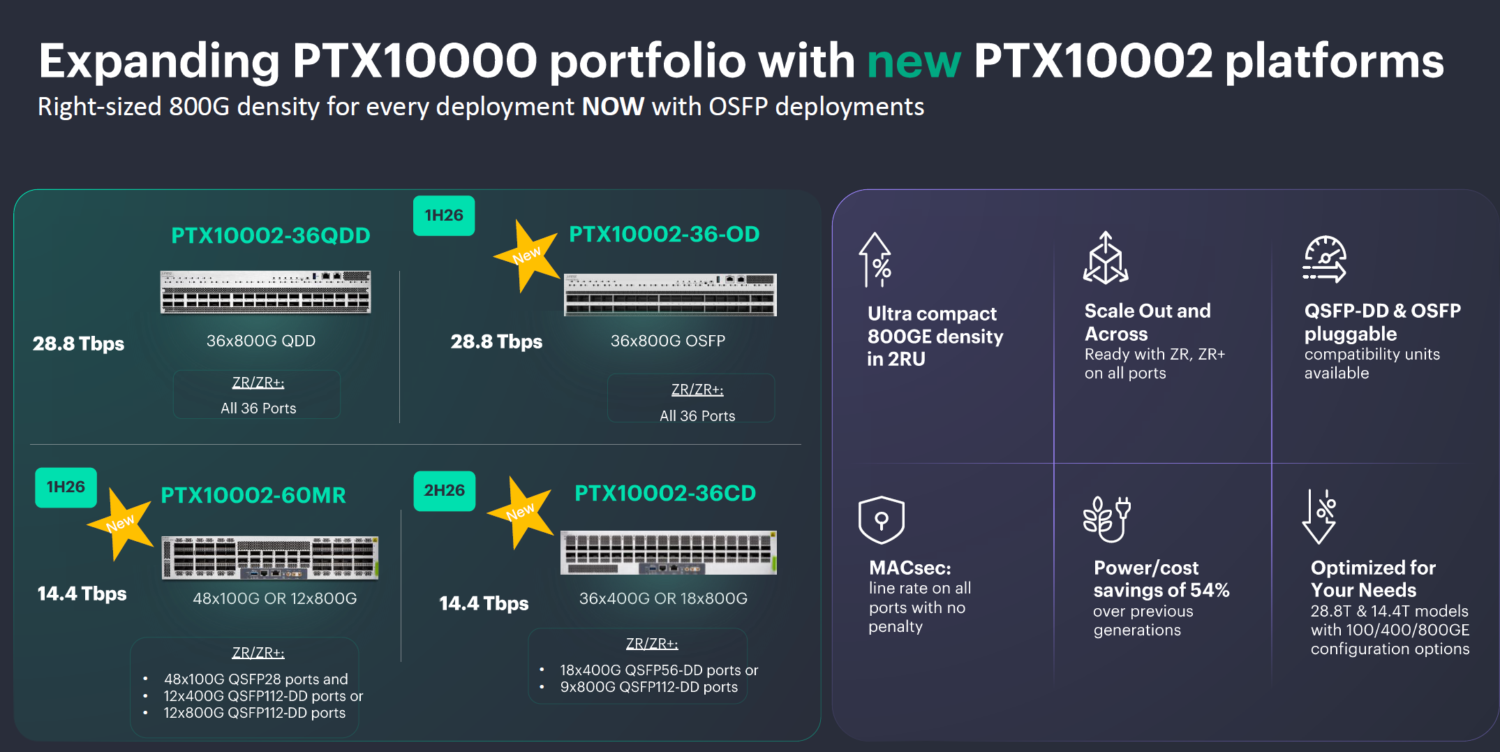
First, there is an expansion of the PTX10000 series. In addition to the existing model, there will be three more models of these 2RU-high routers. There are now options with a throughput of 28.8T and 14.4T and all kinds of options for the ports: 100G, 400G, 800G. They are also available with QSFP and OSFP optics.
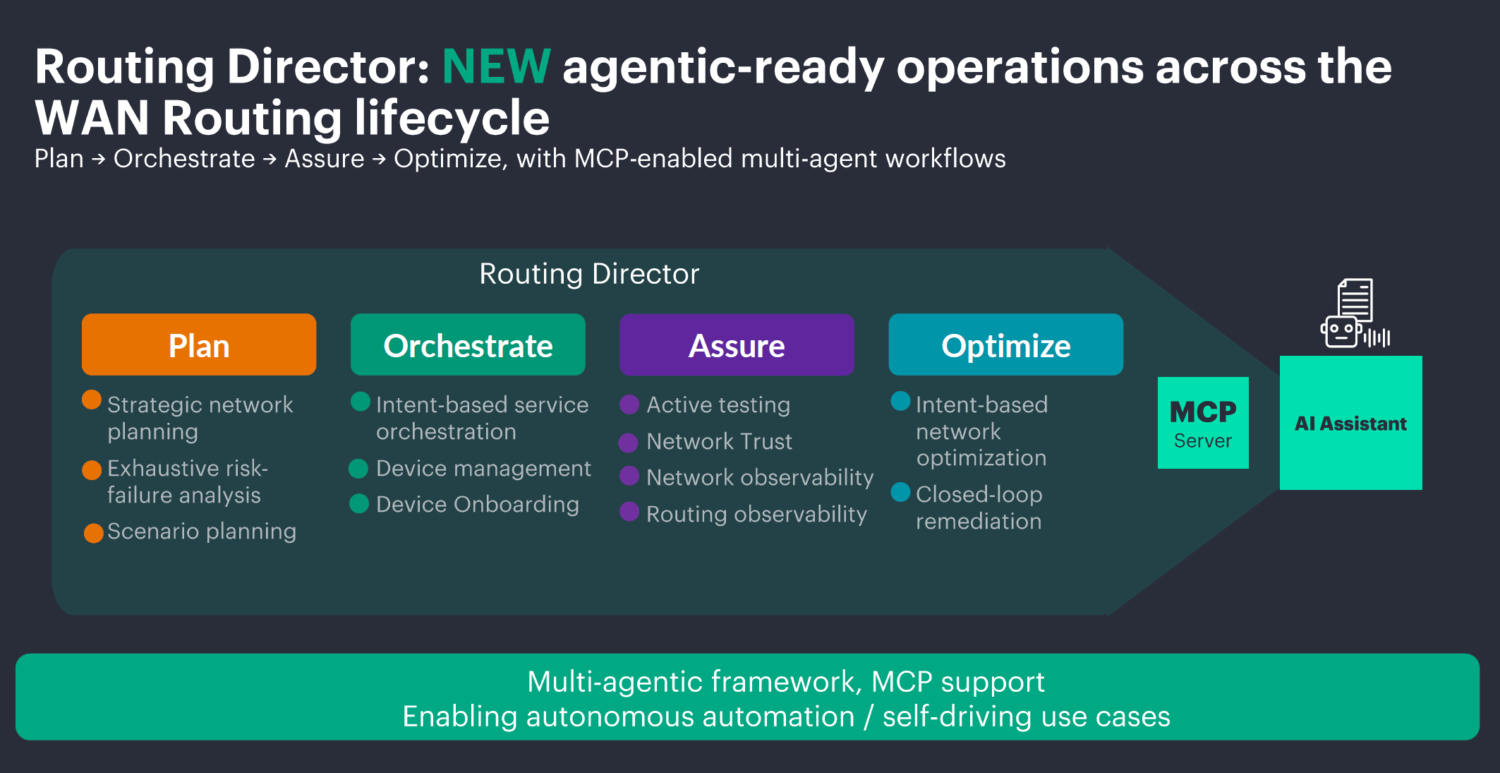
Furthermore, the Juniper Routing Director (formerly known as Paragon) is getting an update in the form of an MCP server. This server allows AI assistants to access the Routing Director’s features to build, configure, and optimize networks.
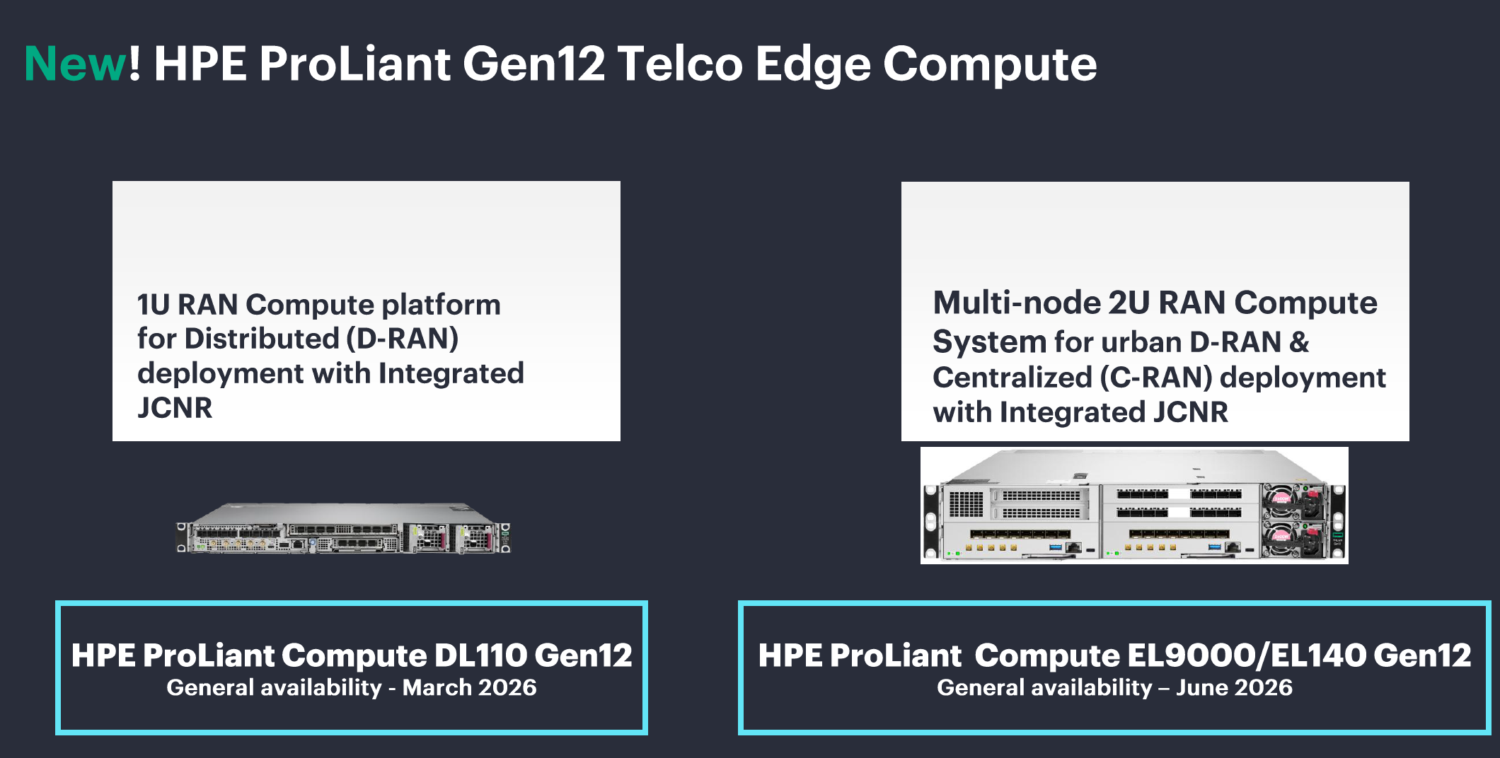
Finally, there are a few announcements on the compute front from HPE. Several new ProLiant Gen12 devices are coming. The HPE ProLiant Compute DL110 Gen12 is a 1U server aimed at Distributed RAN environments. The 2U ProLiant Compute EL9000/EL140 Gen12 is also suitable for Centralized RAN environments. Here, too, the merger of HPE and Juniper is already visible. Juniper Cloud Native Routing is integrated on both servers.
Availability
Finally, let’s look at the availability of everything HPE is announcing today. When it comes to the PTX12000 routers, the PTX12008 is orderable now, the PTX12012 will be available in the second half of 2026. Two of the three new PTX10000 routers will be launched in the first half of 2026, with the third following in the second half (see screenshot above). The two HPE ProLiant servers will be available from March 2026 (the DL110) and June 2026 (the EL140).
Also read: HPE Networking goes for Cisco crown with first integrations between Juniper and Aruba