
Oracle has implemented a temporary policy prohibiting the submission of AI-generated code and other content within the OpenJDK community. Developers may use generative AI to analyze, debug, and review code, but the output of such systems may not be included in official contributions to the open-source Java project.
With this interim policy, Oracle is laying the groundwork for a definitive guideline on the use of generative AI within OpenJDK. Until then, contributions may not contain content created in whole or in part using large language models, diffusion models, or similar AI systems. The ban applies not only to source code but also to documentation, pull requests, emails, wiki pages, and reports in the Java Bug System.
AI as a tool, not as an author
Oracle emphasizes that AI can certainly play a role in the development process. Developers may use AI tools to better understand existing code, detect errors, conduct reviews, or conduct research on OpenJDK projects. However, the generated output may not be included in a project contribution.
According to Oracle, there are several reasons for this. AI can quickly produce large amounts of code that appears credible but later turns out to be incorrect, insecure, or difficult to maintain. This increases the workload for reviewers and, according to the company, poses a risk to the quality of the Java implementation, which underpins many business-critical systems worldwide.
In addition, Oracle cites legal uncertainty surrounding copyright. Contributions to OpenJDK are subject to the Oracle Contributor Agreement, under which developers must guarantee that they hold the necessary intellectual property rights. Because it is still unclear how AI-generated output will be assessed legally, Oracle has opted for a strict ban for the time being.
Even partially AI-generated code is not permitted. According to the policy, someone who has an AI write 100 lines of code and then modifies only a few of those lines is still not allowed to submit the result.
Striking contrast
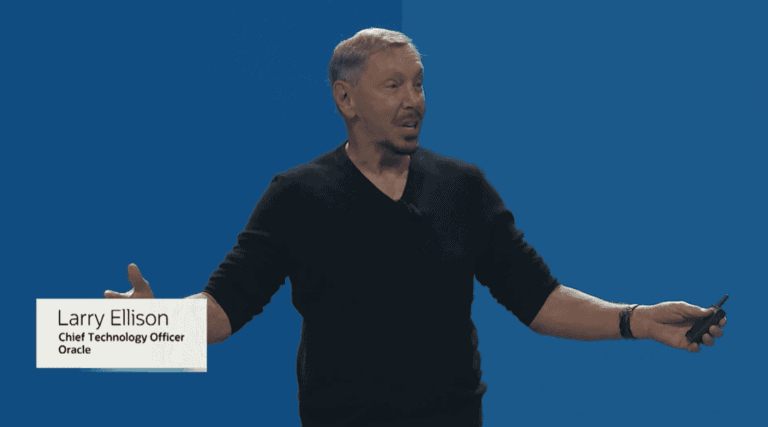
The new OpenJDK policy stands in stark contrast to how Oracle presents AI within its own organization, reports The Register. CTO Larry Ellison (photo) previously stated that Oracle developers are increasingly just describing what software should do, after which AI models generate the actual program code.
Co-CEO Mike Sicilia also previously stated that AI coding tools enable smaller development teams to build complete solutions for customers more quickly. Furthermore, Oracle is increasingly incorporating AI into its business operations and software portfolio, including through autonomous AI agents for business applications.
The interim policy does not explain why Oracle considers AI-generated code suitable for internal product development but not for contributions to OpenJDK. Open-source governance, legal requirements surrounding contributions, and OpenJDK’s central role as the reference implementation of Java may play a decisive role in this decision.
The current document is explicitly a temporary measure. Oracle is working on a final AI policy that will later be submitted to the OpenJDK Governing Board. Until then, all contributors must declare that their submissions comply with the new guidelines.