
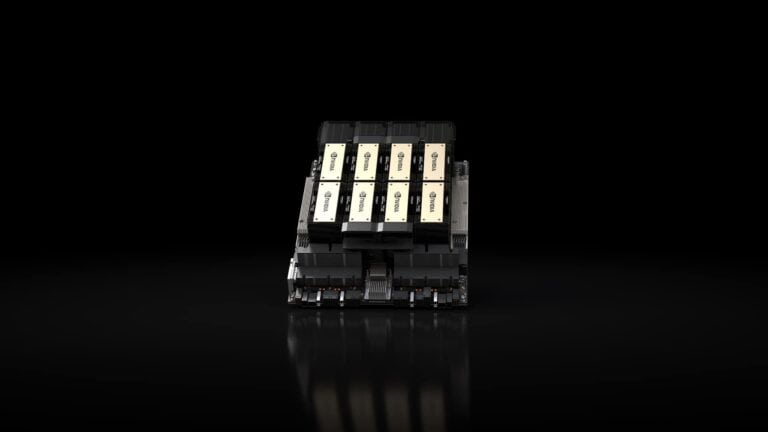
ByteDance and Alibaba have inquired with Nvidia about purchasing powerful H200 AI chips. This follows US President Trump’s announcement that exports to China are once again possible. The Chinese tech companies want to place large orders, but are still waiting for approval from Beijing.
This has been reported by sources to Reuters. The H200 is almost six times more powerful than the H20, the most advanced AI chip legally exported to China to date. Yesterday, Trump partially reversed an export ban, allowing the H200 to be sold to selected Chinese companies under certain conditions.
However, delivery remains uncertain. China has not yet given a clear response to Trump’s announcement. In fact, Beijing recently banned government-funded data centers and Chinese tech companies from purchasing Nvidia’s AI chips. That measure has significantly impacted Nvidia’s market share in China.
Limited production and supply concerns
Chinese companies are also concerned about availability. Nvidia is currently producing only a limited number of the H200. The company is focusing primarily on the newer Blackwell line and the upcoming Rubin generation. Sources close to the supply chain confirm that H200 production is still in its early stages.
For training large AI models, the extra capacity offered by the H200 compared to the H100 makes all the difference. According to sources, Chinese alternatives are also more suitable for inference, but not for training.
Official policy has not prevented a new market from emerging. According to Reuters, top Chinese universities, data center companies, and entities affiliated with the military have already tried to obtain H200 chips through alternative channels. An analysis of more than 100 tenders and scientific papers reveals these attempts.
Before Trump’s announcement, supplying H200 chips to Chinese organizations was punishable under federal law. That law prohibits the export of AI processors above a certain performance threshold to China. The policy reversal now creates a strange situation: older and less powerful chips such as the A100 and H100 are still subject to export controls, but the H200 is not.
Chinese companies expect authorities to review purchase requests and want to see use cases. Beijing must weigh whether importing H200 chips is desirable, while the country wants to encourage sales of its own AI chips from Huawei and Cambricon.