
The European data center market has been struggling with a structural capacity shortage for years. The rapid rise of AI is now undeniably exposing this problem. Despite record growth in new data centers, supply continues to lag behind demand.
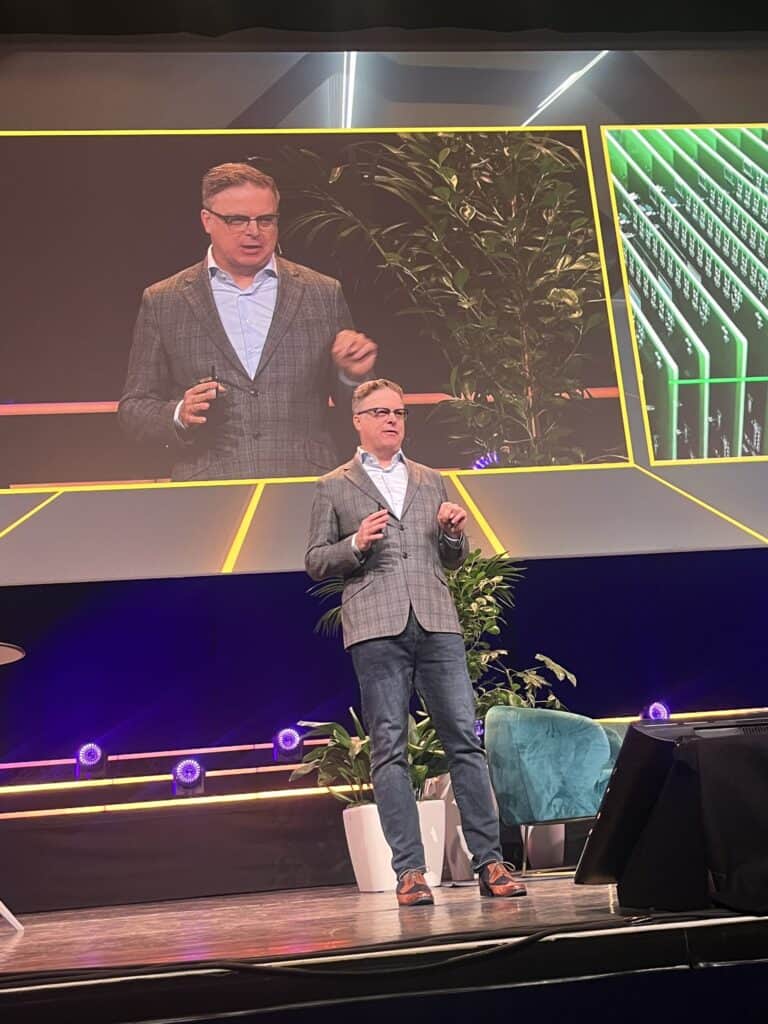
This was stated by market researcher Kevin Restivo of CBRE during Kickstart Europe in Amsterdam on Wednesday. He predicted a fundamental shift in where and how data centers are built in Europe.
By the end of this year, Europe is heading for approximately ten gigawatts of operational data center capacity. In 2026, supply will grow strongly again. That seems impressive, but according to Restivo, it is still insufficient to meet market demand. For the fifth year in a row, demand for data center space exceeds available supply. This leads to declining availability, rising prices, and ever-decreasing free capacity in existing facilities. The growth of AI is not a separate, new demand, but rather exacerbates a shortage that has existed for years.
The rise of AI is also causing a shift in the European data center landscape. Whereas data centers were traditionally built around large internet hubs, attention is now shifting to regions where energy is cheaper and more readily available.
New AI hotspots outside the traditional core
Locations in Norway, Iceland, Finland, Spain, and Italy are rapidly gaining significance for new data center developments. The decisive factor is no longer network connectivity, but the price and availability of power. AI workloads require so much power that the traditional logic of building near internet hubs is becoming less important.
Over the past year, hundreds of megawatts of data center capacity have been contracted, much of which is specifically intended for AI applications. A significant portion of those contracts are landing in Scandinavia. This shows that hyperscalers and AI providers are already adapting their European strategy to the new reality.
In addition, AI data centers are fundamentally different from traditional colocation or hyperscale facilities. The power density is much higher, cooling must be designed differently, and larger, stable power blocks are required. Many existing facilities in the traditional core markets are not designed for this.
According to Restivo, the availability of electricity is now the dominant limiting factor for the sector. In countries such as the United Kingdom and Germany, energy is not only scarce but also relatively expensive for large-scale AI data centers. Governments and grid operators will have to make power available more quickly and allow new constructions to enable further growth. In Ireland, for example, experiments are being conducted with direct power connections outside the regular grid.
Second data center landscape
CBRE expects that by 2030, there will be approximately 11 gigawatts of additional AI-specific data center demand in Europe. That is more than the entire current operational capacity. In effect, this means that a second data center landscape must be created that is primarily organized around energy rather than network.
The challenges are not limited to power supply. Regulations, licensing processes, and social acceptance also play a role. Data centers have become more visible and are increasingly meeting with resistance. At the same time, according to Restivo, a joint approach by governments, network operators, and the sector itself is needed to realize more efficient and energy-efficient facilities more quickly.
The European data center market was never designed for the energy intensity that AI entails. What was a capacity issue for years is now developing into a broader infrastructure issue. AI is forcing the sector to take a fresh look at where data centers are built, how they are designed, and how quickly energy can be made available. The underlying tension was already there, but AI is making it visible to everyone.