

Skip to content
Techzine Global
  • Home
  • Topstories
  • Topics
    • Analytics
    • Applications
    • Collaboration
    • Data Management
    • Devices
    • Devops
    • Infrastructure
    • Privacy & Compliance
    • Security
  • Insights
    • All Insights
    • Agentic AI
    • Analytics
    • Cloud ERP
    • Generative AI
    • IT in Retail
    • NIS2
    • RSAC 2025 Conference
    • Security Platforms
    • SentinelOne
  • More
    • Become a partner
    • About us
    • Contact us
    • Terms and conditions
    • Privacy Policy
  • Techzine Global
  • Techzine Netherlands
  • Techzine Belgium
  • Techzine TV
  • ICTMagazine Netherlands
  • ICTMagazine Belgium
Techzine » News » Security » Hackers sell data center login credentials of large multinationals
3 min Security

Hackers sell data center login credentials of large multinationals

Sander AlmekindersFebruary 21, 2023 3:04 pmFebruary 21, 2023
Hackers sell data center login credentials of large multinationals

Cybercriminals put stolen login data from large companies up for sale in late January. The data came from a number of the companies’ Asian data centers.

This was discovered by security specialist Resecurity in an investigation ongoing since September 2021. According to the investigation, several data center providers, cloud service providers and MSPs in Asia have been affected by a sustained cyber attack. The cybercriminals, originating from China and some other Asian countries, set out to steal login credentials and other sensitive data from (large) customers.

Bloomberg writes that the affected data center providers are Shanghai-based GDS Holdings and Singapore-based ST Telemedia Global Datacenters. Companies from which login credentials and data were allegedly stolen include Alibaba, Amazon, Apple, BMW, Goldman Sachs, Huawei, Microsoft and Walmart.

Multi-year attacks

The attacks have a long evolution, Resecurity’s security experts discovered. The first malicious cyber activities were spotted in September 2021. During this first attack, the cybercriminals managed to get their hands on a list of CCTV cameras, followed by login credentials of operational employees of the data centers themselves and employees of customers operating in the data centers. In addition, they got their hands on data about services purchased and equipment deployed. In addition, they showed interest is the availability of a “remote hands service (RHS) that allows customers to remotely manage their servers in the data center and troubleshoot problems before that.

In the second wave of attacks, carried out throughout 2022, the cybercriminals again managed to steal a customer database with more than a thousand records at a Singapore data center company. This attack, however, was detected and eventually repelled.

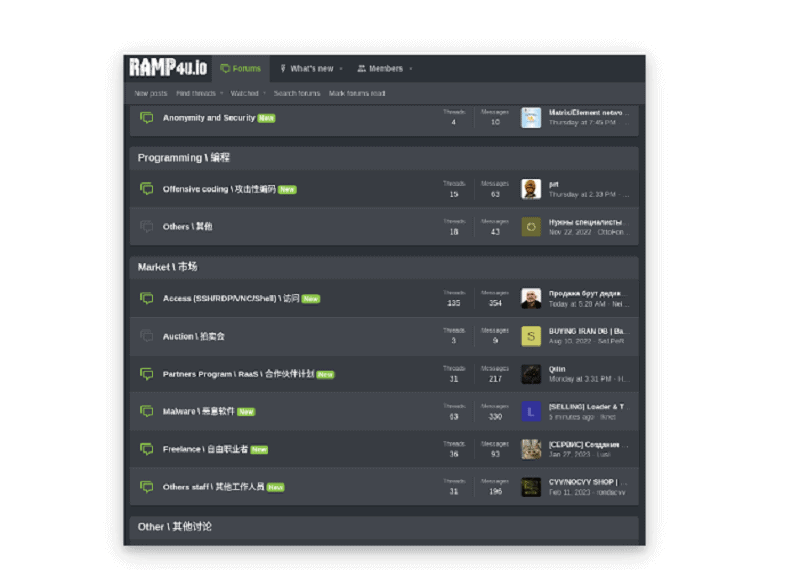
The third and, for now, final episode of this attack occurred recently. Investigators discovered that the cybercriminals put the stolen login credentials and other data of major customers of the affected data center companies up for sale on the dark web. More specifically, this involves the RAMP platform that is mostly used by Initial Access Brokers (IABs) and ransomware criminals.

Also read: European companies plan to increase IT security budget over next three years
Impact unknown

The researchers say they cannot estimate the impact of this large-scale theft of login credentials and other data. By going public now about these attacks on the aforementioned data center providers, they hope to mitigate any impact, but also to create more awareness of this type of attack. Meanwhile, in addition to the affected companies, several CERTs of the affected countries have also been informed about the attack.

Tags:

data centers / hack / login credentials / multinational companies

"*" indicates required fields

This field is for validation purposes and should be left unchanged.

Stay tuned, subscribe!

Nieuwsbrieven*

Related

Fortinet breach grants access to thousands of corporate networks

Oracle hit by second hack, customer credentials stolen

IBM: ‘Cloud threats doubled compared to 2019’

‘SSO credentials of the world’s largest organizations are for sale’

Editor picks

Digital sovereignty is expensive and complex

European measures to reduce dependence on foreign technology are putt...

Rotterdam’s Quantum Field Lab awaits testers

Shared hardware aims to make QKD affordable

AWS tests and proves: European Sovereign Cloud can operate fully independently

Ever since announcing the European Sovereign Cloud (ESC), AWS has gon...

Confluent opens pipe on Streamhouse data architecture

Confluent used its Current 2026 user/practicioner conference in San F...

Techzine.tv

Why enterprises are choosing HPE for private cloud AI

Why enterprises are choosing HPE for private cloud AI

From edge nodes to 256-GPU clusters: HPE's private cloud explained

From edge nodes to 256-GPU clusters: HPE's private cloud explained

Why OpenTelemetry is winning the observability battle

Why OpenTelemetry is winning the observability battle

Why hyperscalers run containers in VMs: VKS deep dive

Why hyperscalers run containers in VMs: VKS deep dive

Read more on Security

Dutch government praises quantum keys but doesn’t use them
Top story

Dutch government praises quantum keys but doesn’t use them

The Dutch government praises its ground station for the EAGLE-1 QKD satellite, but does not use quantum key d...

Kim Loohuis 12 hours ago
Modern threats require a single security platform, not additional tools
Top story

Modern threats require a single security platform, not additional tools

AI is changing the scale, speed, and autonomy of cyberattacks. At the same time, state-sponsored actors are i...

Berry Zwets October 29, 2026
OpenAI model finds 948 root exploits in the Linux kernel

OpenAI model finds 948 root exploits in the Linux kernel

An unreleased OpenAI model discovered and exploited 948 (!) local privilege escalation vulnerabilities in the...

Erik van Klinken 7 hours ago
Paint vulnerability allows RCE, patch is hard to find

Paint vulnerability allows RCE, patch is hard to find

Microsoft Paint contains a remote code execution vulnerability with a CVSS score of 8.1. Microsoft released a...

Erik van Klinken 9 hours ago

Expert Talks

AWS European Sovereign Cloud: Architecture, Assurance, and Compliance 

AWS European Sovereign Cloud: Architecture, Assurance, and Compliance 

How to evaluate sovereign cloud infrastructure beyond certifications

AI’s safety debate needs a clearer line

AI’s safety debate needs a clearer line

Generative AI can produce a convincing image in the time it takes to ...

Keeping up with F1: How high-performance storage powers live media production

At the Spa Grand Prix, Ethos had to turn a constant flow of footage i...

Why uniform governance fails with enterprise AI agents (and how to fix it)

As enterprises shift from static LLM chatbots to autonomous AI agents...

Tech calendar

Benelux Cyber Summit

November 24, 2026 Amsterdam

Celosphere 2026

December 2, 2026 Munich

Whitepapers

Experience Synology’s latest enterprise backup solution

Experience Synology’s latest enterprise backup solution

How do you ensure your company data is both secure and quickly recove...

How to choose the right Enterprise Linux platform?

How to choose the right Enterprise Linux platform?

"A Buyer's Guide to Enterprise Linux" comprehensively analyzes the mo...

Enhance your data protection strategy for 2025

The Data Protection Guide 2025 explores the essential strategies and...

Strengthen your cybersecurity with DNS best practices

The white paper "DNS Best Practices" by Infoblox presents essential g...

Techzine Global

Techzine focusses on IT professionals and business decision makers by publishing the latest IT news and background stories. The goal is to help IT professionals get acquainted with new innovative products and services, but also to offer in-depth information to help them understand products and services better.

Follow us

Twitter
LinkedIn
YouTube

© 2026 Dolphin Publications B.V.
All rights reserved.

Techzine Service

  • Become a partner
  • Advertising
  • About Us
  • Contact
  • Terms & Conditions
  • Privacy Statement