
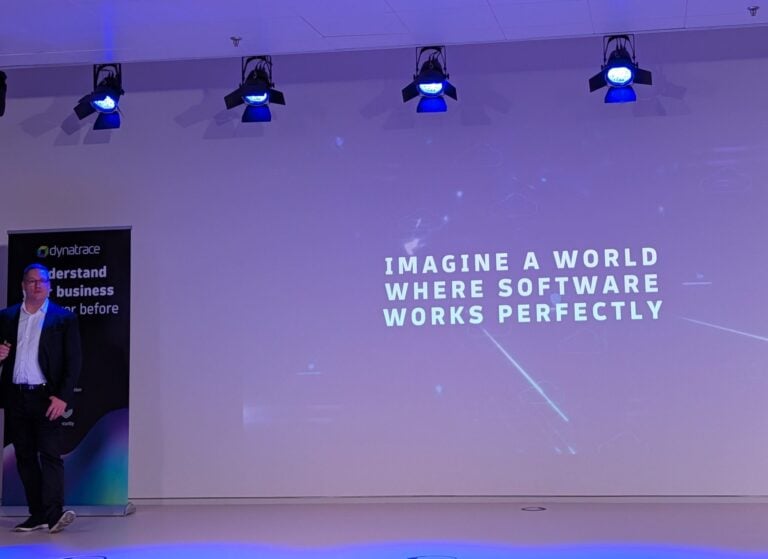
Dynatrace celebrates its 20th anniversary this year. The company started with traditional application performance monitoring (APM), but has evolved into a platform that combines AI and automation to manage complex IT environments. The latest version of the platform is designed to predict problems and resolve them automatically. This is also known as the Dynatrace 3rd-generation platform. We discussed this with VP EMEA Solutions Engineering Roman Spitzbart.
Dynatrace started collecting trace data from applications in 2005. Organizations wanted to know why an application was slow and what was happening exactly. That first generation was mainly manual and technical. “It was about collecting data and understanding what was going on,” explains Spitzbart. APM has remained the company’s foundation for a long time and remains a core component today.
However, a significant shift occurred in 2014 when Dynatrace launched its second-generation platform. The focus shifted from simply displaying data to actually providing answers. AI was used for the first time to recognize patterns and identify problems. This development set the platform’s direction for a long time. Dynatrace is primarily known as an observability tool.
The third generation, which dominates today, is all about automation. Observability data now drives actions. The platform not only solves problems, but anticipates them. This is also known as autonomous intelligence. It should function as a real-time control system for every organization. Data is converted into insights (Knowledge), AI then understands the business and technical context (Reasoning), and automatic decisions follow based on the goals defined by employees (Actioning).
Context as the foundation for reliable AI
One of the biggest challenges Dynatrace aims to address with the new platform version is complexity. Organizations work with dozens to hundreds of interconnected systems. However, it is challenging to bring together and understand the data from all these systems. That is why Dynatrace introduced Grail, a data lakehouse, in 2022, which collects all observability data in a single place. This data environment forms the basis for the Knowledge component of autonomous intelligence.
Context is central to Dynatrace’s philosophy. In addition to collecting metrics, logs, and traces, it is about understanding how they relate. “When you add context to AI, only then does AI have real value,” says Spitzbart. Without context, AI provides generic answers that are of little help in solving concrete problems.
This emphasis on context should distinguish Dynatrace from other solutions on the market. For example, companies’ security architectures often rely on a multitude of different tools, which leads to a silo structure. Combining observability data with security information creates a complete picture. This makes it clear whether a security incident actually affects the functioning of applications.
Agentic AI as the next step
Spitzbart also envisions a world in which software repairs itself. For businesses, this means less manual intervention is required. Developers are given the full context when something goes wrong, enabling them to take swift action. Operations teams are striving for complete autonomy in handling incidents, and this is becoming possible.
An example shared by Spitzbart shows how this works. In the example, a service owner is automatically assigned a problem. The system then analyzes logs and traces, identifies the root cause, and creates a ticket. This is already available in the Dynatrace platform. The next step is integration with external agentic AI tools, such as GitHub Copilot. This agent receives context from Dynatrace and then proposes a code fix.
The developer only needs to check whether the proposed solution is correct. The system then runs test cases to validate that the problem has actually been solved. Only then is the fix rolled out to production. Spitzbart emphasizes that many of these steps are already working: “This is not a five-year vision; it will be functional within a year and a half.”
Open ecosystem for AI collaboration
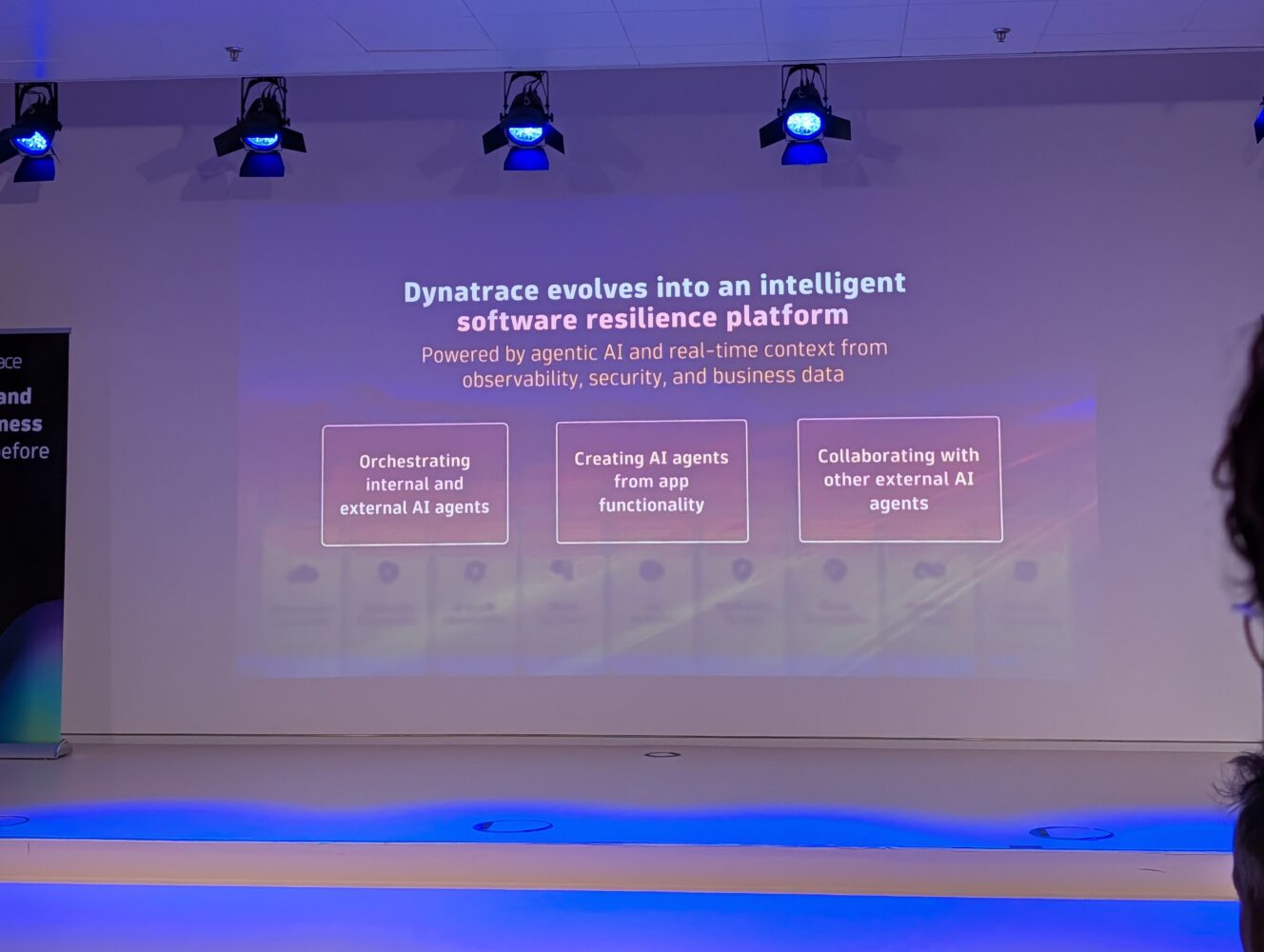
Dynatrace is also currently working on a system that enables internal and external AI agents to collaborate. The company recently introduced a Model Context Protocol (MCP) server. This allows agents to communicate with the platform in a standardized way. GitHub Copilot, for example, can ask Dynatrace questions to get more context before proposing a solution.
The idea is that Dynatrace acts as an orchestrator. It coordinates different AI agents, each with its own expertise. For example, a Kubernetes agent can start an extra pod to relieve pressure. A security agent checks whether changes comply with compliance rules. Dynatrace ensures that all agents have access to the proper context.
This approach must fit in with the architecture we know from Dynatrace. For example, OpenPipeline enables data collection from multiple sources. Grail stores that data and preserves the relationships between different signals. Dynatrace’s AI engine, Davis AI, then analyzes that data and identifies the root cause of problems. And then the AutomationEngine comes into play, performing actions to automate processes as much as possible.
AI observability is becoming essential
Spitzbart outlines that organizations are currently struggling to bring AI applications into production. After all, these are new platforms and frameworks with which organizations have little experience. According to Dynatrace, observability is ultimately an indispensable component for anyone who wants to run AI systems. There are specific challenges, such as preventing AI from accidentally sharing sensitive data.
Guardrails are needed to prevent AI from overstepping its boundaries. But how often are those guardrails hit? And what happens when a guardrail fails? EU regulations will soon require interactions with AI systems to be logged. Those logs must be stored in context so that what happened can be understood afterwards.
Dynatrace has therefore built dozens of integrations for AI observability, enabling organizations to monitor AI apps. These include Amazon Bedrock and Google Gemini. Frameworks such as OpenTelemetry for Large Language Models are also supported. This gives organizations the same level of insight into AI applications as they have into traditional software.
In addition to the performance of AI apps, costs are increasingly important. Some AI applications work well technically, but cost five times as much as they deliver. Without insight into the sources of those costs, it is difficult to optimize. Observability can help organizations make that assessment.
Ready for use today
Dynatrace wants to show that it has a focused vision for the future and that much of it is already working. For example, operations teams can use Kubernetes observability to monitor the health of their platform, while developers can use code-level visibility to gain insight into production environments without modifying code. There is also an impact analysis for the business, which links technical metrics to business results. This makes it clear which technical problems actually affect revenue or customer satisfaction.
Finally, security and compliance issues are fully integrated into the platform. Continuous compliance monitoring ensures that configurations do not suddenly change during deployments. Vulnerability management, in turn, identifies weaknesses before they can be exploited. Combining observability and security provides a complete picture of the situation.
Over the past 20 years, Dynatrace has grown into a versatile platform. The company has evolved from an APM tool to a platform that combines AI and automation. The focus is now primarily on context, which enables reliable AI. As agentic AI becomes increasingly popular by the day, the promise of self-healing software seems closer than ever.
Tip: Dynatrace CTO: “Shift left is a disaster for enterprise organizations.”