
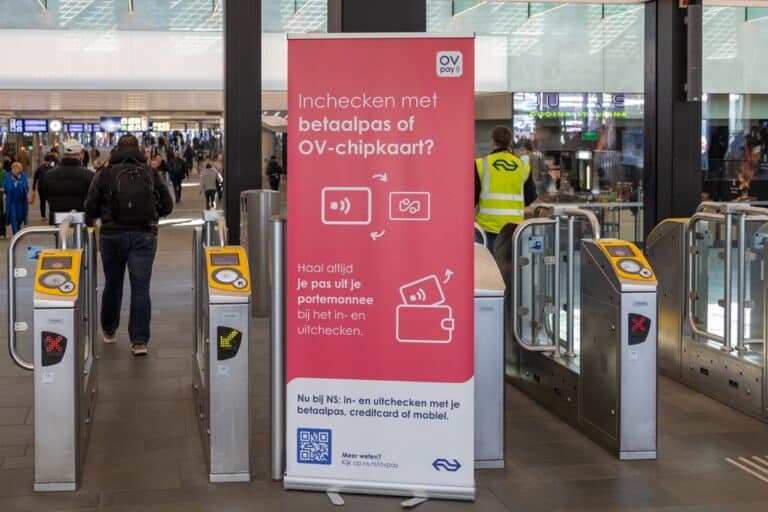
Translink processes millions of public transport transactions in the Netherlands every day. With the transition from the OV-chipkaart to OVpay (different technology, new products, and services), Translink was looking for a solution to gain a comprehensive and clear overview of the functioning of complex processes and the availability of products and services. Translink has now been working with Dynatrace’s observability platform for a year and a half. We spoke with project manager Jan ten Hage.
Translink is a highly IT-driven organization that outsources much of its development work and operations to various suppliers. Each of these suppliers works on their own part of the entire chain. The infrastructure consists of a mix of AWS, Google Cloud, Azure, Oracle Cloud, and proprietary data centers. The technologies used also differ per component. “We have a multi-everything environment,” says Ten Hagen. Within that complex environment, Translink wanted to implement a single observability tool to gain a clear overview of how all processes work.
Transition to a new era
Translink is in the midst of a transition from the OV-chipkaart to OVpay. The OV-chipkaart, based on Mifare technology, was introduced in 2007 and is now due for replacement. The OV-chipkaart system primarily operates in batch mode. Data is collected and processed at night. Problems can often be resolved the next day without any immediate consequences for passengers or public transport companies.
This will change with the introduction of OVpay, which allows passengers to check in and out with a debit card, credit card, or mobile phone, and with the new OV pass, which, unlike the OV chip card, uses the same EMV technology as the debit card. “We have a whole new technology stack behind this route. There are new business processes with new requirements,” explains Ten Hagen. For example, passengers expect to be able to view their journey immediately, correct a missed check-in themselves, and easily create expense reports.
These real-time expectations require a proactive approach. More than ever, Translink must identify problems before travelers and public transport companies are confronted with them.
Inspections as a test case
An initial use case focused on the inspection system. Inspectors in public transport use Android devices to check whether passengers have checked in. Behind this action is a chain of systems: SaaS applications, a switch in the company’s own data center, an integration layer, and the back office, which runs hundreds of virtual machines.
Dynatrace enabled tracking transactions across the entire chain. The company rolled out OneAgent across most of the chain. Initially, logs were collected via a dashboard. “It has helped us enormously, especially in the back office, which is really complex,” says Ten Hagen. Translink can now clearly track transactions from the inspection app to the database. Custom dashboards show whether the inspection system is working for each transport organization, how many transactions there are, and where any problems may be.
App monitoring for conversion
A second case involved the OVpay app. Translink implemented real user monitoring to understand how customers use the application. This provided valuable insights, especially in crash analysis and the adoption of new versions.
For example, travelers who are eligible for age discounts can link the discount to their debit card in the app. In that case, they must upload a photo for inspection purposes. The conversion rate was disappointing. Dynatrace showed that the problem was not taking and uploading the photo, but that later steps in the process were causing bottlenecks. “By focusing on data rather than assumptions, we were able to shift our focus and tackle the right issues,” says Ten Hagen.
In collaboration with the business, the traditional approach of workshops, in which wishes are collected, dashboards are built, and results are demonstrated, proved not to work well. Instead, Translink opted for more iterations and prototyping. IT teams first explored what was visible in Dynatrace. The business explained what was needed. This exchange created understanding for each other’s worlds and increased mutual trust.
Lessons from practice
After a year and a half of working with Dynatrace, Translink learned several lessons. The technical installation of agents proved to be easier than expected. But the processes surrounding it took more time. Suppliers had to be convinced in the beginning, security checks had to be completed, and change processes had to be followed.
The terminology also required explanation. Dynatrace refers to “problems” for every anomaly, while in ITIL, this has a different meaning. Translink had to explain internally what was and was not relevant. The platform sees a lot, including small deviations that have no direct impact. That is why Translink created three categories. The standard category contains everything Dynatrace sees. Then there are “events” that may interest product teams. Finally, there are “problems” that are or could very likely be real incidents. Only the latter two categories are forwarded to ServiceNow, the ticket system, where IT operations record and track incidents.
Customization per target group
An important lesson: there is no such thing as a one-size-fits-all dashboard. IT operations people need different information than product developers. Delivery managers have different needs again. Translink built separate dashboards for different roles based on the same data.
After a year and a half, Translink has much better insight, can intervene more quickly, and can demonstrate that processes are working. Data drives discussions instead of opinions. In app development, the tooling helps to identify conversion issues.
The roadmap includes more business services, further adoption, and customer dashboards for transportation organizations. Ten Hagen: “The results achieved so far offer very good prospects for the future.
Tip: Dynatrace moves from APM and observability to Autonomous Intelligence