
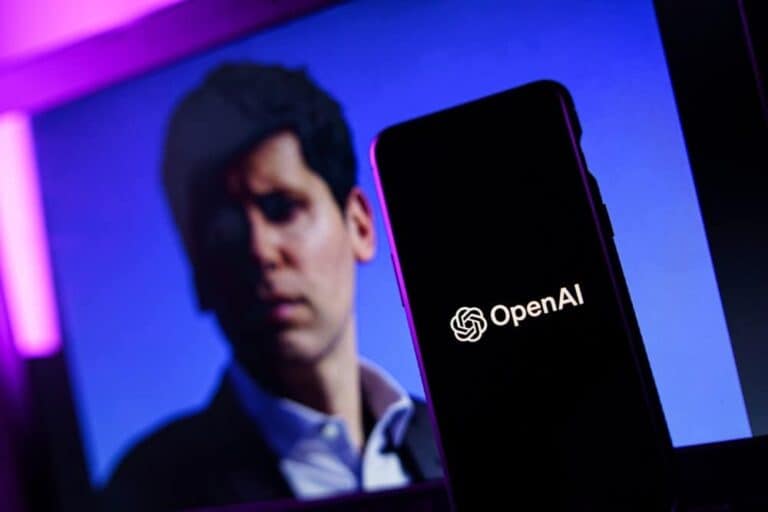
Before ChatGPT appeared, Google seemed to be the unassailable AI leader. However, OpenAI completely surprised CEO Sundar Pichai’s company, prompting him to declare an internal ‘code red’ in 2023. After several missteps, Google seems to be back in the lead in the AI race. It is now up to Pichai’s counterpart Sam Altman to sound the alarm as CEO. How did this happen?
There is no doubt that ChatGPT took Google by surprise. It couldn’t be otherwise, given that the latter felt compelled to pit the initially weak Google Bard against OpenAI’s chatbot. In Pichai’s words, the initial launch was like pitting a souped-up Honda Civic against sports cars. AI blunders such as recommending glue on pizza in search engine results were clear signs that Google was taking risks to counter the threat from ChatGPT. How different the AI world will look at the end of 2025, when Google will not only have a competitive AI model at its disposal, but will also be the only company to offer a mature ecosystem of AI products for both the business and consumer markets.
OpenAI is confused
This past week, it emerged that OpenAI is considering putting ads in ChatGPT. For three years, no user has seen any advertising in the chatbot’s interface. Since the launch of the service, however, more links have gradually appeared in AI responses, and there are constant rumors of new trial balloons for OpenAI to monetize ChatGPT. So far, that revenue model has not been found. In fact, increased competition is driving down prices for ever-improving LLMs, and protocols and frameworks such as MCP and Agent2Agent are democratizing the integration of these models. They are extremely modular and can often be easily swapped in business solutions.
OpenAI seems to have counted on a certain lock-in that does not exist. This has prompted Sam Altman to declare ‘code red’ in a memo to employees. It also no longer has a technological edge, and it is not entirely clear which market it wants to serve. Is ChatGPT the crown jewel, which consumers will continue to communicate with via text and speech and are willing to pay for? Will API revenues prove decisive, or will it be integration into government services? Only the massive expansion of AI infrastructure seems to be a priority, but it is by no means certain that all the promises surrounding Stargate and the rumors about proprietary chips will come true.
Multiple playing fields
In other words, the AI race covers all kinds of playing fields, but the participants in this race do not yet know which of those playing fields will require a winning result. This uncertainty actually works out well for Google’s strategy, which itself provides the now powerful Gemini model series, but also offers other LLMs through its cloud services and has integrations with virtually all Workspace applications. Add to that Google’s own TPUs, which enable it to build AI on its own hardware, and it quickly becomes clear that no one is as well positioned as this company. In fact, only Microsoft can mimic a similar vertical integration, but there, the internal development of AI models is still in its infancy, no AI chips of any significance are being produced, and the rollout of AI through Copilot is regularly received very negatively.
On top of all the doubts at OpenAI itself, there has been volatility on the stock market for months. Positive figures from Nvidia inspire confidence until the backlash comes even stronger. After all, the chipmaker’s profits can be explained by deals it has made with companies in which it invests itself or through which it distributes money. If there is a bubble, as OpenAI CEO Altman suggested, then its bursting is a bigger problem for his AI model builder than for Google.