
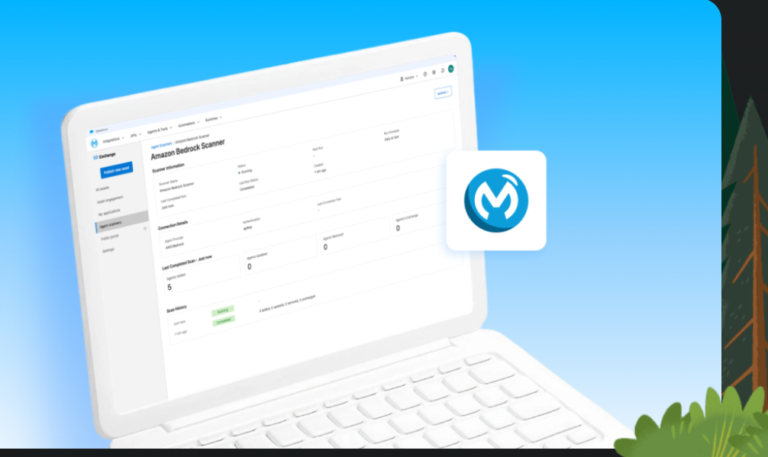
Salesforce is expanding MuleSoft Agent Fabric with automated discovery for AI agents, addressing the proliferation of agents across IT stacks. The update includes Agent Scanners that automatically detect and catalog agents across Salesforce Agentforce, Amazon Bedrock, Google Cloud’s Vertex AI, and other platforms. With the move, Salesforce aims for Agent Fabric to become the single source of truth for agentic AI.
The number of actively deployed AI agents worldwide is projected to exceed 1 billion by 2029, a 40-fold increase from 2025, according to the IDC numbers Salesforce cites. This explosion creates a new challenge: agent sprawl. Specialized AI agents are being deployed across teams, functions, and platforms without proper visibility and governance, creating risks of shadow AI.
Today’s MuleSoft Agent Fabric enhancements aim to transform this fragmented landscape into a governed agent network. The centerpiece is Agent Scanners, which automatically detect and catalog AI agents. These scanners provide the ability to find agents across Salesforce Agentforce, Amazon Bedrock, Google Cloud’s Vertex AI, and other platforms. For Model Context Protocol (MCP) servers and custom agents, additional registration capabilities simplify onboarding.
Automated discovery replaces manual tracking
Agent Scanners eliminate the need for manual audits of cloud environments. Instead of AI engineers scouring platforms for agents built across inventory, logistics, and customer service teams, scanners automatically locate assets like an inventory forecasting agent in Vertex AI and register it alongside an Agentforce customer support agent. According to Salesforce, there’s no manual data entry, no visibility gaps, and no surprises.
The scanners continuously patrol linked ecosystems such as Salesforce Agentforce, Amazon Bedrock, and Google Cloud’s Vertex AI. They identify running agents within minutes, spot new or updated agents, pinpoint their endpoints, and understand their intended functions. Beyond surface-level detection, Agent Scanners extract deep metadata including specific capabilities (such as querying databases or processing refunds), the large language models powering the agents, and accessible data permissions where available. This metadata is normalized and mapped to Google Cloud’s standard agent-to-agent (A2A) protocol card specifications.
“The most successful organizations of the next decade will be those that harness the full diversity of the multicloud AI landscape,” said Andrew Comstock, SVP & GM, MuleSoft, Salesforce. The expanded capabilities of MuleSoft Agent Fabric provide freedom to innovate across any platform while maintaining unified visibility and control needed to scale.
Everything discovered is continuously synced to MuleSoft Agent Registry, a central catalog where agents, MCP servers, and AI tools can be registered and made discoverable. This always-on approach replaces stale spreadsheets, ensuring security teams access real-time data rather than outdated snapshots.
Beyond major platforms
Automatic discovery isn’t limited to major platforms. MuleSoft Agent Fabric includes flexible registration for homegrown agents and MCP servers via URL, plus a curated list of public MCP servers from the Official MCP Registry. This ensures no AI asset is left behind.
Bringing agents and tools together enables optimization and control. MuleSoft Agent Visualizer provides a view of the entire AI footprint with advanced filtering and search capabilities. Organizations can see every agent running on Amazon Bedrock versus Google Cloud’s Vertex AI with just a couple of clicks.
MuleSoft Agent Fabric was unveiled before Dreamforce 2025 as a platform to govern, manage, and observe AI agents across enterprise ecosystems. The platform acts as a neutral orchestration layer working across different platforms, mirroring MuleSoft’s success in API management. According to industry data, 79 percent of organizations report some level of agentic AI adoption in 2025, with 96 percent, or virtually all companies, planning to expand usage.
The platform builds on three core capabilities. Discover creates a unified registry for all agents, LLMs, and MCP tools. The Broker handles orchestration, receiving prompts and determining which agents and tools to engage. Agent Visualizer provides visual maps showing how agents, systems, and LLMs interconnect and perform.
Also watch: MuleSoft agent fabric: governing AI agents across platforms