
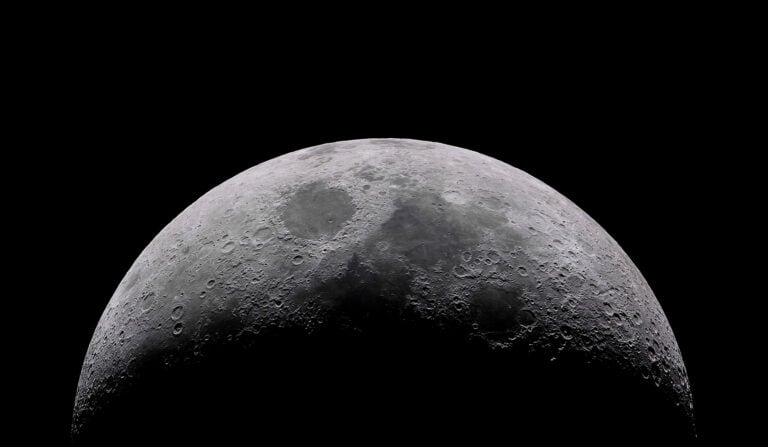
By the end of 2026, an HPE system will reach one of the most exotic locations for computing power to date: the Moon’s south pole. The system will be mounted on Astrolab’s FLIP rover and will be the first to run benchmarks at this extraterrestrial site. Tasks such as LiDAR data processing and LLM workloads will be tested.
The mission is part of NASA’s broader goal to build a lunar base for astronauts in the coming years. The Artemis missions will bring people and landers to the Moon, but the plan is to build a complete infrastructure around them that will last for decades. This involves a mix of public and private launches, with Astrolab and HPE as examples of the latter group.
The HPE Spaceborne Computer-4 is compact, has no moving parts, and is equipped with an energy-efficient CPU and GPU. For storage, HPE uses SSDs from Kioxia, a partner that has been collaborating with the Spaceborne program for some time. The speed and consistency of this storage will also be tested on the Moon.
The mission is part of NASA’s Commercial Lunar Payload Services (CLPS) program. Voyager Technologies’ Griffin-1 lander will deploy Astrolab’s FLIP rover near the south pole. According to NASA, Griffin-1 will launch aboard a SpaceX Falcon Heavy, with the Nobile crater as its destination. The lander is currently undergoing environmental testing at JPL.
From the ISS to the Moon’s surface
“In the next phase of lunar exploration, it’s becoming increasingly important to be able to convert data into actionable insights right at the site of discovery,” said Scott Wiest, vice president and global sales chief technologist at HPE.
The first Spaceborne Computer was sent to the ISS in 2017, with about 1 teraflop of computing power. Instead of physically shielding all components from radiation, protection was provided through software. Its successor, the Spaceborne Computer-2, launched in 2021 and doubled the capacity to approximately 2 teraflops, featuring Nvidia T4 GPUs and flash storage. Microsoft has already tested AI models on that hardware aboard the ISS.
LLMs, LiDAR, and cybersecurity
On the Moon, the Spaceborne Computer runs LLMs for visual data analysis and autonomous monitoring. This allows the system to test how independently workloads can operate at extreme distances from Earth. In addition, the system processes LiDAR data for terrain analysis and navigation to map the surface. A container environment is designed to demonstrate that scalable AI services can operate reliably there as well.
NASA is testing a neural network trained on data from Earth, the Moon, and the ISS, in which three separate AI models work together. It is also running an optimized LLM that searches through and interprets documents on board. Deloitte is deploying Silent Shield, a system that detects cyber intrusions using near-real-time predictive analytics.
On Earth, HPE supports Astrolab’s mission control center in Hawthorne, California, with HPE Private Cloud and HPE CloudOps Software.
Read also: HPE secures first AMD Helios order, 1.2 billion from Vultr