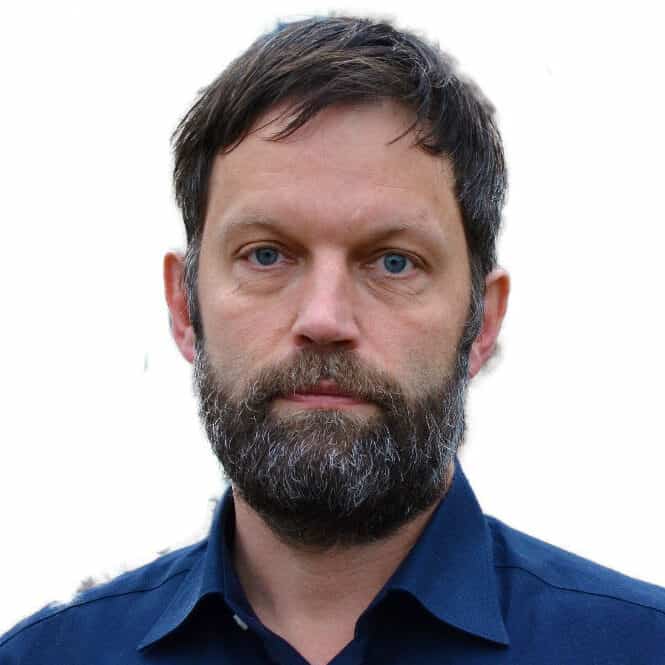
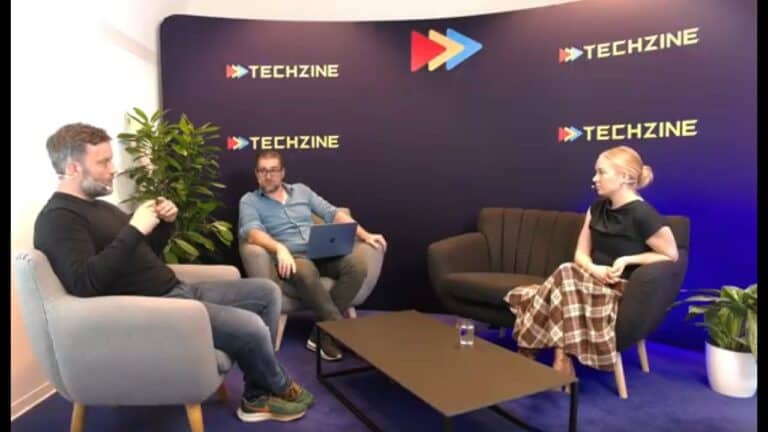
Atlassian’s Teamwork Lab is not a think tank producing whitepapers, we hear from Molly Sands, who runs this unit of the company. Rather, it is an active research and experimentation engine that aims to change how real teams work. It measures the results, and feeds those findings back into Atlassian’s products. At Atlassian Team ’26 Europe in Amsterdam, we had the chance to sit down with Sanders to talk about what this looks like in practice.
Teamwork Lab is Atlassian’s internal research and innovation group. Led by Molly Sands, it brings together PhD behavioral scientists, data scientists, researchers, designers, and change experts. Their shared mission, according to her, is to understand how work is evolving. Not only that, they also want to do something useful with that understanding.
The group uses three different research modes. First, large-scale global surveys of knowledge workers. Second, analysis of behavioral patterns on the Atlassian platform itself. Third, controlled experiments run inside real Atlassian teams to test whether new ways of working actually produce better outcomes.
Deep work is broken
One of the clearest issues when it comes to work nowadays is the collapse of deep work, Sands says. For software engineers, architects, and other knowledge workers, sustained, focused thinking is very important, but also increasingly rare. Modern work schedules, filled with standing meetings and constant interruptions, make deep work nearly impossible to protect.
Teamwork Lab’s approach is to ask teams to burn down their existing calendars entirely. Every recurring meeting is removed. The team then rebuilds from scratch. What actually matters right now? How much overlap is genuinely necessary? Where do you put your uninterrupted focus blocks?
Sands notes that Teamwork Lab provides guidance rather than a rigid prescription. Research on team communication patterns shows that ‘bursty’ teams, teams that communicate in concentrated, asynchronous bursts rather than constant back-and-forth, tend to outperform. The lab recommends that no more than half of any week should be pre-booked in meetings. Of course, there are different thresholds for managers versus individual contributors.
Getting buy-in isn’t hard
Asked whether managers resist these experiments, Sands is clear: buy-in is actually straightforward, because everyone already feels the pain. The experiment framing helps too. Participants are not being told this is a permanent change. The idea is that they are being given explicit permission to try something radically different in a time-bound window. That removes the stakes and creates psychological safety to experiment. The lab measures outcomes using data, but participants themselves gain insight simply from living through a different way of working.
Research feeds directly into the Atlassian platform
Teamwork Lab’s findings are not just there on paper, for example in research reports, Sands stresses. They inform the philosophical architecture of Atlassian’s product suite. They have a big impact on how the platform connects teams to goals, tasks, and context. This is the foundation of the Teamwork Graph: the idea that meaningful work requires visibility across the full chain from strategy to execution.
Atlassian has also built AI capabilities that help teams check whether their goals are actually well-formed. The content embedded in Atlassian’s collections reflects thinking processes and frameworks that Teamwork Lab has validated through research and experimentation.
Measuring productivity and AI ROI is hard
One of the hardest things that Teamwork Lab does revolves around measurement. According to its own research, only 6% of executives say they can clearly point to the ROI of their AI implementations. It’s not that the value isn’t there, by the way, but most organizations do not know how to measure it.
Sands argues that self-reported metrics are more valuable than they are typically given credit for. People cannot reliably tell you whether they were more productive last Tuesday than the Tuesday before, but they can tell you with reasonable accuracy how their team is doing. Is it high-performing? Are they making progress on goals? Is quality being maintained under pressure?
Sands also flags a systemic risk in AI-driven productivity: if deploying AI for coding makes engineers 50% faster at that task but slows down adjacent processes, the net benefit may be zero or negative. In other words, measurement needs to capture the full system, not just the optimized component.
AI is making jobs bigger, not simpler
Teamwork Lab’s research on how roles are changing surfaces a seemingly counterintuitive finding: knowledge worker jobs are not shrinking as AI handles more tasks. They are getting bigger. If you think about it, this makes sense, as People can carry work further through more phases. They can also perform specialized tasks they previously lacked the capability for, and spend less time waiting for dependencies.
This expansion of scope only increases the need for collaboration. Atlassian’s research finds that the heaviest AI users are actually working more cross-functionally, not less. Designers are engaging more with engineers and product managers, not retreating into an individual builder role.
The ‘lazy’ bias
Teamwork Lab also gathers insights around social perception. In a study with 1,000 online knowledge workers, participants were shown identical pieces of work. One version was accompanied by a note that the author had used AI. The other was not. Everything else was identical.
The results of this piece of research said a lot. Participants were 10 times more likely to call the AI-assisted person lazy, and 24% less likely to recommend them for a high-profile assignment.
However, organizational culture eliminated this completely. When participants reported working in an environment where AI use was championed and actively modeled by leadership, the negative perception disappeared. This finding has direct implications for AI adoption strategy: organizations need leadership visibility and explicit endorsement of AI in order to make adoption socially safe.
Also read/watch: Atlassian Strategy Collection wants to end strategic drift