
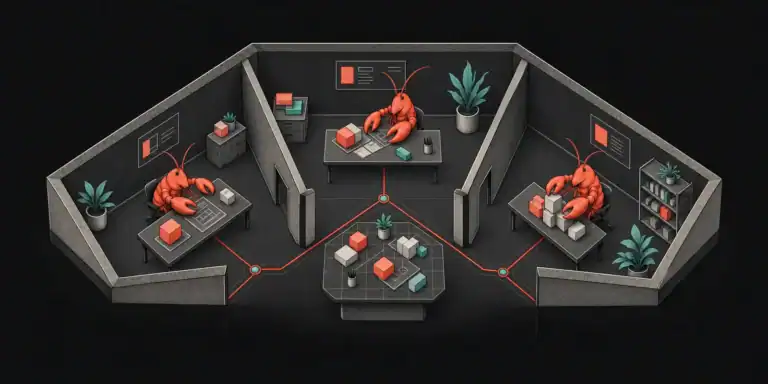
The OpenClaw Foundation is introducing OpenClaw Enterprise, an open-source platform for managing persistent AI agents in sensitive environments. The project originated at OpenAI and is now being developed in collaboration with Red Hat and Nvidia. The 1.0 release is scheduled for later this year.
According to the OpenClaw Foundation, no shared standard for security, safety, and governance currently exists. As a result, many IT departments simply ban agent platforms like OpenClaw. OpenClaw Enterprise (OCE) aims to solve this problem. The question the foundation is asking is: how can you deploy powerful agents securely without limiting their capabilities?
Control plane with interchangeable components
OCE builds an enterprise-level control plane on top of the OpenClaw foundation. The platform supports multi-tenancy, hard security boundaries, and standardized agentic primitives. It also provides governance and auditability across an agent’s entire lifecycle. Organizations can replace core components, such as the harness, the model, and the sandbox, with third-party solutions or their own implementations.
Security is the top priority. OCE combines strict separations between trusted and untrusted workloads with sandboxing, LLM-based reviews, and granular permissions. In the coming weeks, the foundation will publish a reference architecture demonstrating how these layers of protection work together in practice.
Development began at OpenAI, which had previously recruited OpenClaw’s founder. OpenAI subsequently donated the project to the OpenClaw Foundation, where it is now being further developed as an independent project in collaboration with Red Hat and Nvidia. OCE runs on its own infrastructure and, according to the foundation, will always remain free. Red Hat and OpenAI are already running internal pilots with the platform.
No production version yet
However, OCE is not yet production-ready. For now, the foundation recommends the platform only for internal pilots. Organizations can host it themselves by cloning the repository. Use Docker Compose for local development and Kubernetes for internal deployment. The foundation deliberately made the code public early to develop the platform collaboratively with the community leading up to the 1.0 release.
Tip: Will OpenClaw become relevant again with the 2.0 release?