
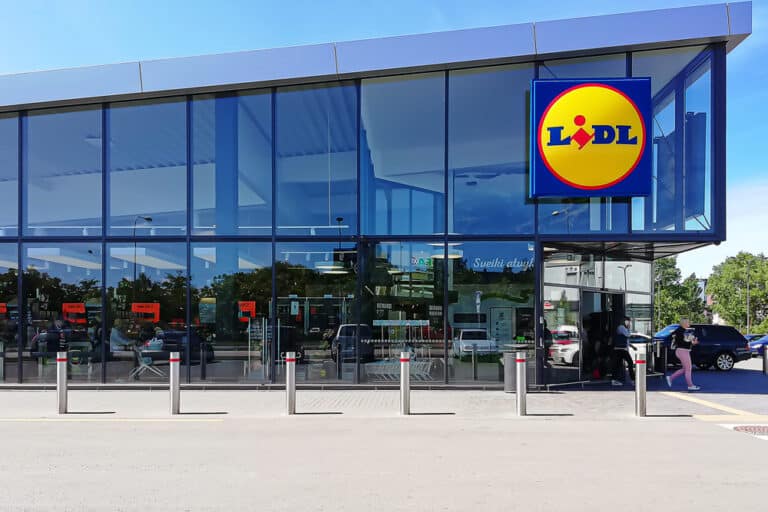
The Schwarz Group, Lidl’s parent company, will invest up to 5.6 billion euros by 2033 in a data center in Mecklenburg-Western Pomerania in northern Germany. The state aims to reduce its dependence on foreign cloud and AI providers. The facility’s capacity is expected to eventually reach 240 megawatts.
The German retail group announced the plans during a press conference alongside Minister-President Manuela Schwesig. The proposed site is located in an industrial park in the municipality of Dummerstorf, near Rostock. Final permits have not yet been granted, and the technical specifications, including the exact composition of the cloud and AI chips, have not yet been finalized.
The 240-megawatt capacity is partly intended for the Schwarz companies’ own ecosystem. The remainder will be used to scale up sovereign IT services, which are consolidated under the IT division Schwarz Digits. In the longer term, the group envisions expanding the connection capacity to 1 gigawatt by 2045.
Second major data center project in Germany
This is not the first project of this scale. Schwarz Digits is already building a 200 MW data center in Lübbenau, Brandenburg, on the site of a former coal-fired power plant. There, the parties recently signed contracts for a joint district heating concept.
In Dummerstorf, the parties also signed a letter of intent with Stadtwerke Rostock regarding the use of waste heat. The energy mix is another factor: Northern Germany has abundant onshore and offshore wind resources, and the site offers the possibility of connecting to the 380-kilovolt grid. The cooler climate makes free air cooling more efficient. In its day-to-day operations, the group aims to use only renewable electricity.
Digital building permit and openDesk
In addition to the data center, the state and Schwarz Digits are working on the digitization of public administration. The first applications are set to go live this year: a digital building permit on the STACKIT platform and the introduction of openDesk, starting with managed workstations for teachers.
“Digital sovereignty is not achieved through appeals or speeches. It is achieved through action, reliable infrastructure, and practical applications,” said Gerd Chrzanowski, General Partner of the Schwarz Group. According to the partners, the collaboration is structured as a scalable project intended to serve as a blueprint for the rest of Germany.
Tip: Government selects Lidl owner as European cloud alternative