
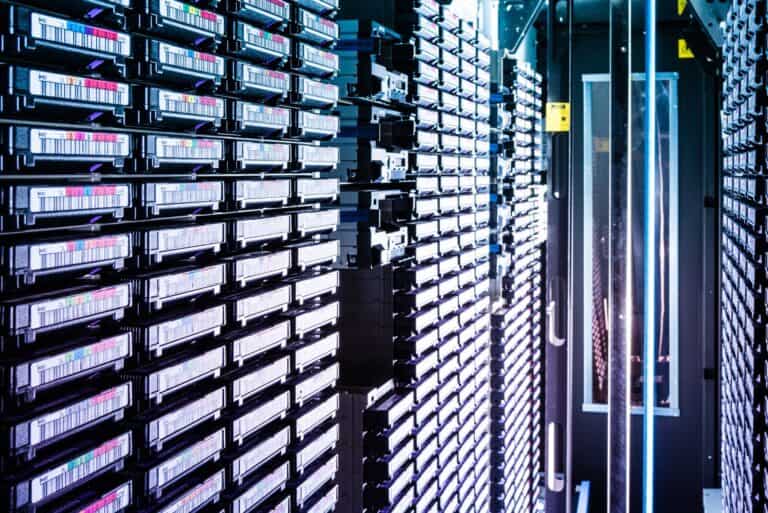
Tape storage is benefiting from the rapid growth of AI datasets. In the first quarter of 2026, the global shipment volume of Linear Tape-Open (LTO) increased by 57 percent. The combination of ample storage capacity, low energy costs, and offline storage makes tape particularly attractive.
This growth follows a year in which 160.3 exabytes of compressed LTO storage were shipped. While this was 9 percent less than the 176.5 exabytes shipped in 2024, it was still the second-highest volume on record.
The LTO standard is backed by companies including HPE, IBM, and Quantum. They attribute the recent resurgence in part to AI. Training data, model checkpoints, and research data mean that organizations must retain ever-larger amounts of information for longer periods of time. At the same time, demand for tape for traditional archiving and backups remains strong.
High storage capacity without continuous power consumption
Tape has properties that make it attractive for large amounts of data that do not need to be constantly accessible. A single compressed cartridge can hold tens to hundreds of terabytes. Large tape libraries combine hundreds of cartridges with robotic systems that automatically load the required tape into a drive.
A key difference from hard-disk storage is energy consumption. A stored tape consumes no electricity as long as it is not being read or written to. For large archives, this can be an advantage over disk-based systems that are kept operational around the clock.
According to Network World, AI datasets are also becoming so large that traditional hard-disk-based backup environments are reaching their limits, and tape offers sufficient scalability to store such volumes of data. In practice, the choice between disk and tape also depends on factors such as the desired access speed, costs, and the architecture of the storage environment.
Air gap as an added benefit
Security also plays a role. A cartridge removed from the drive no longer has a physical connection to the network. This allows tape to be used to create a true air gap, keeping stored data out of the direct reach of, for example, ransomware.
Tape thus appears to be less of an alternative to fast primary storage and more of a supplementary layer for large datasets that need to be retained long-term and relatively inexpensively. The rapid growth of AI is increasing this need and restoring the relevance of a storage technology that has existed for decades within modern infrastructures.