
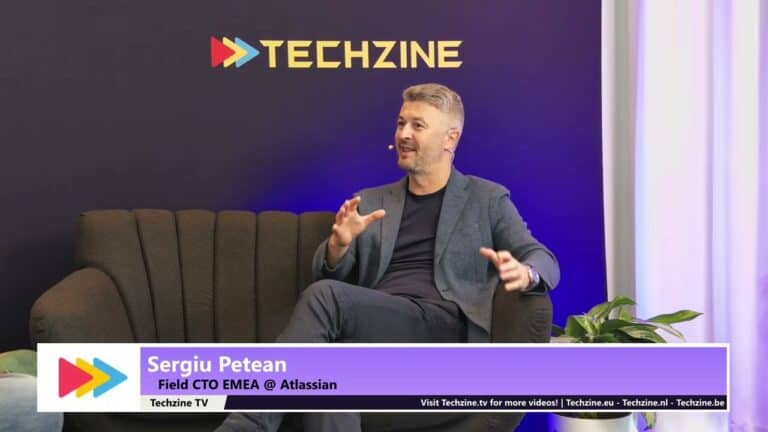
Trust is the big topic of the day when it comes to AI. Atlassian recognizes that too. During Atlassian Team ’26 Europe, we sat down with Sergiu Petean, Field CTO EMEA at Atlassian, why the AI conversation is much more about trust trust than capabilities in the AI race in Europe. And what does Atlassian do to meet the region’s regulatory and sovereignty demands?
Atlassian serves 130,000 customers in Europe. That’s quite a big number, and is a testament to the success of the company in Europe, Petean argues. Many of these customers have done business with Atlassian for 20 to 22 years, and for much of that time, Atlassian operated without a traditional sales force in the region. Renewals, Petean jokes, are love letters.
Despite this strong foundation, Petean acknowledges that many European customers have not yet seen the product improvements Atlassian has made over the past five years. That creates both a challenge and an opportunity as the company accelerates its AI-focused roadmap.
AI adoption in Europe is hesitant but accelerating
When asked whether European AI adoption keeps pace with the rest of the world, Petean says that Europe is more hesitant. For years, technology was treated as a cost center in many European organizations, and that mindset has resulted in significant technology debt. A large portion of European companies remain on-premises, which makes the leap to AI-native operations considerably harder.
That said, Petean sees a shift. Across his travels to the Nordics, the UK, Italy, and other markets, he observes a growing recognition that change is no longer optional. AI, he argues, is the trigger that finally made that reality undeniable. The risk of standing still now outweighs the risk of moving.
The double-edged sword of regulation
When you say Europe, you almost immediately follow that up with the term regulation. Petean sees both sides of regulation. On the one hand, smart regulation can be a powerful catalyst for innovation. He cites PSD2, the European directive that opened up banking APIs, as an example of that. European banks that embraced open APIs were forced to modernize their infrastructure, Today, Petean argues, they are ahead of many global peers as a result.
However, regulation has a darker side too. When organizations aim to be overcompliant, the excess effort consumes R&D budgets that could otherwise be directed toward innovation and AI exploration. This opportunity cost is a structural drag on European competitiveness.
Digital sovereignty and the rise of Euroscalers
Sovereignty is a growing topic across all of Atlassian’s markets, but it is particularly complex in Europe. Different national regulations layer on top of evolving European-level requirements, creating a fragmented landscape. Atlassian is actively engaging with every organization that raises sovereignty concerns, and is in conversation with a new category of infrastructure providers Petean calls Euroscalers, European hyperscaler alternatives being built to meet local data and sovereignty requirements.
Atlassian’s response to AI trust concerns
One of the announcements made at Atlassian Team ’26 Europe directly addresses European concerns about AI and data control. Atlassian announced LLM inference capabilities designed to give customers greater control over where AI processing happens and what data AI systems can access. The rationale behind this is straightforward: customers cannot become AI-native if they do not trust AI.
The race for trust, not capabilities
Petean summarizes the AI race in Europe as a race for trust, not a race for capabilities. For Atlassian, 20 years of consistent behavior and customer relationships represent a genuine competitive advantage in this environment, he states. Atlassian builds trust on top of its existing foundation, according to him.
Also read/watch/listen: Atlassian Jira is “for every team” but needs focus too