
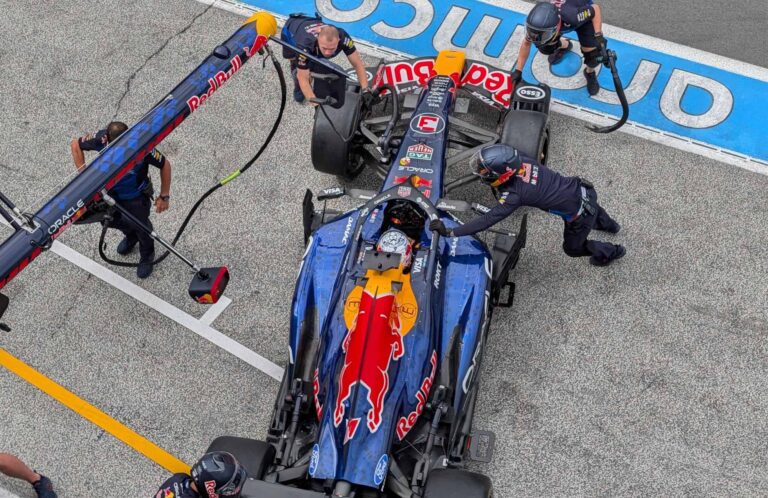
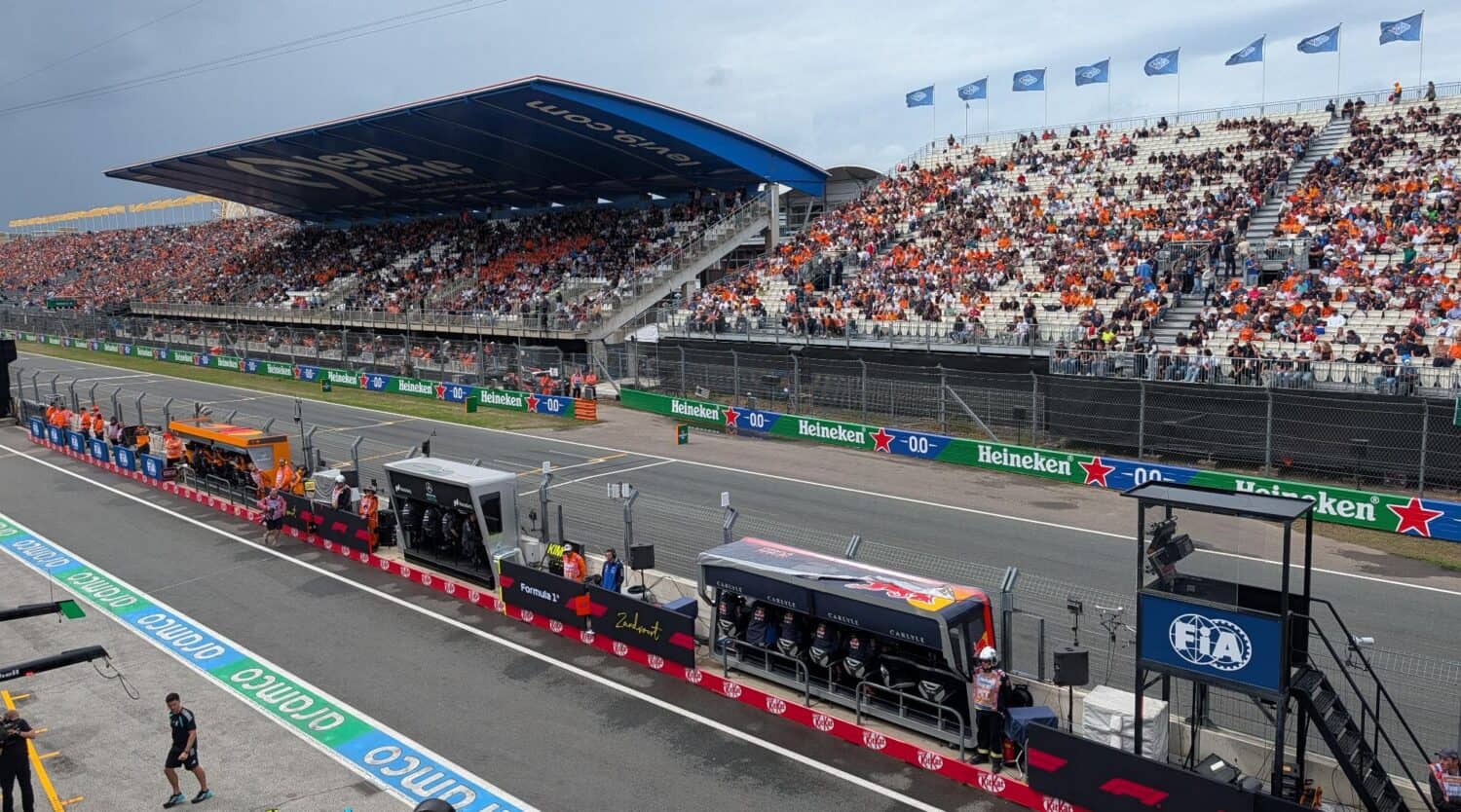
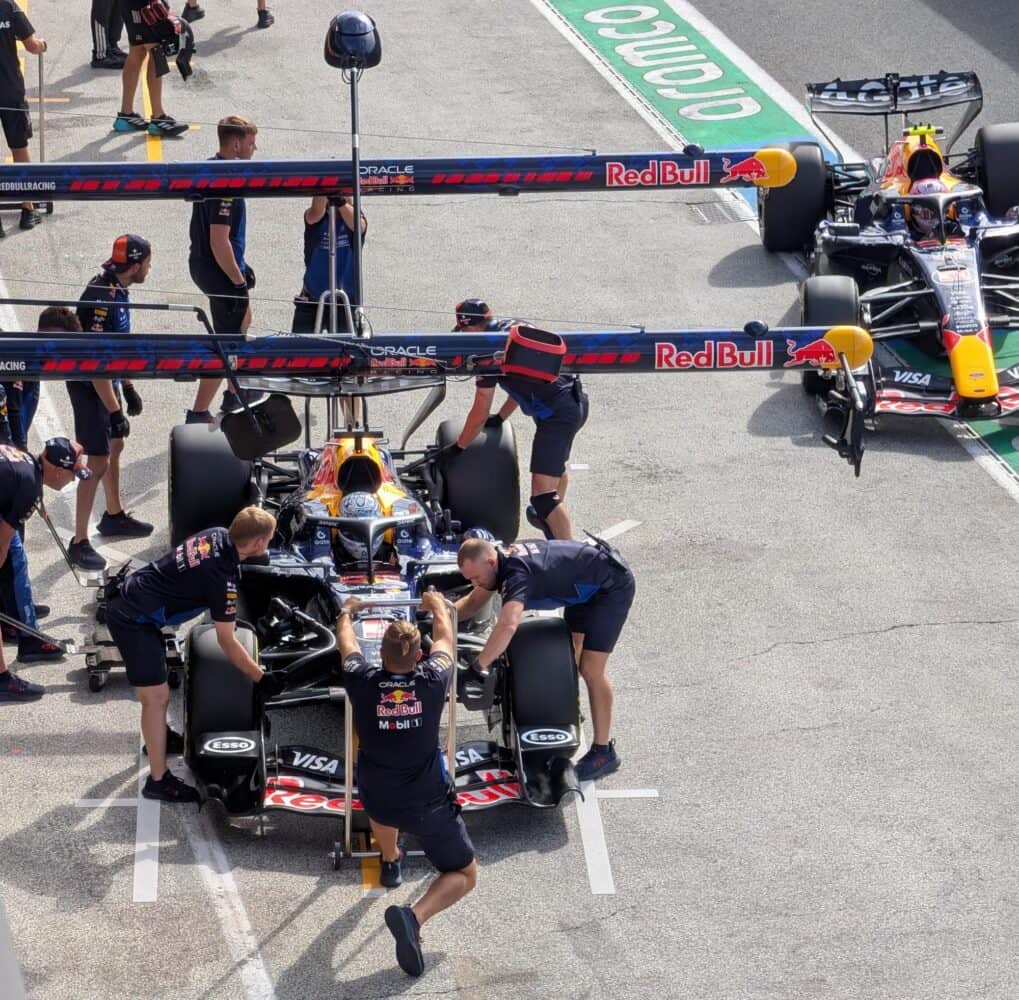
Anyone walking through the pit lane at Circuit Zandvoort on a sunny Friday is overwhelmed by a wall of noise, the smell of burnt rubber, and mechanical perfection. Mechanics move past one another in precise choreography. Tire warmers are swapped out at a rapid pace, and race engineers stare intently at a sea of screens filled with real-time telemetry.
Yet the world championship in modern Formula 1 has long since stopped being decided solely by raw horsepower or driving skill. Behind the scenes at reigning world champion Oracle Red Bull Racing, today’s success revolves around an invisible force. Scalable cloud computing power, lag-free data streams, and mathematical algorithms decide victory or defeat in fractions of a second.
During the Dutch Grand Prix, we got an exclusive look into the racing team’s technical operations. We spoke at length with Fraser Mcartney-Smith, Senior Technical Partnerships Executive, and Martin Galpin, Head of Technology and Analysis Tools. Their story shows how the line between elite sports and enterprise IT has definitively disappeared.
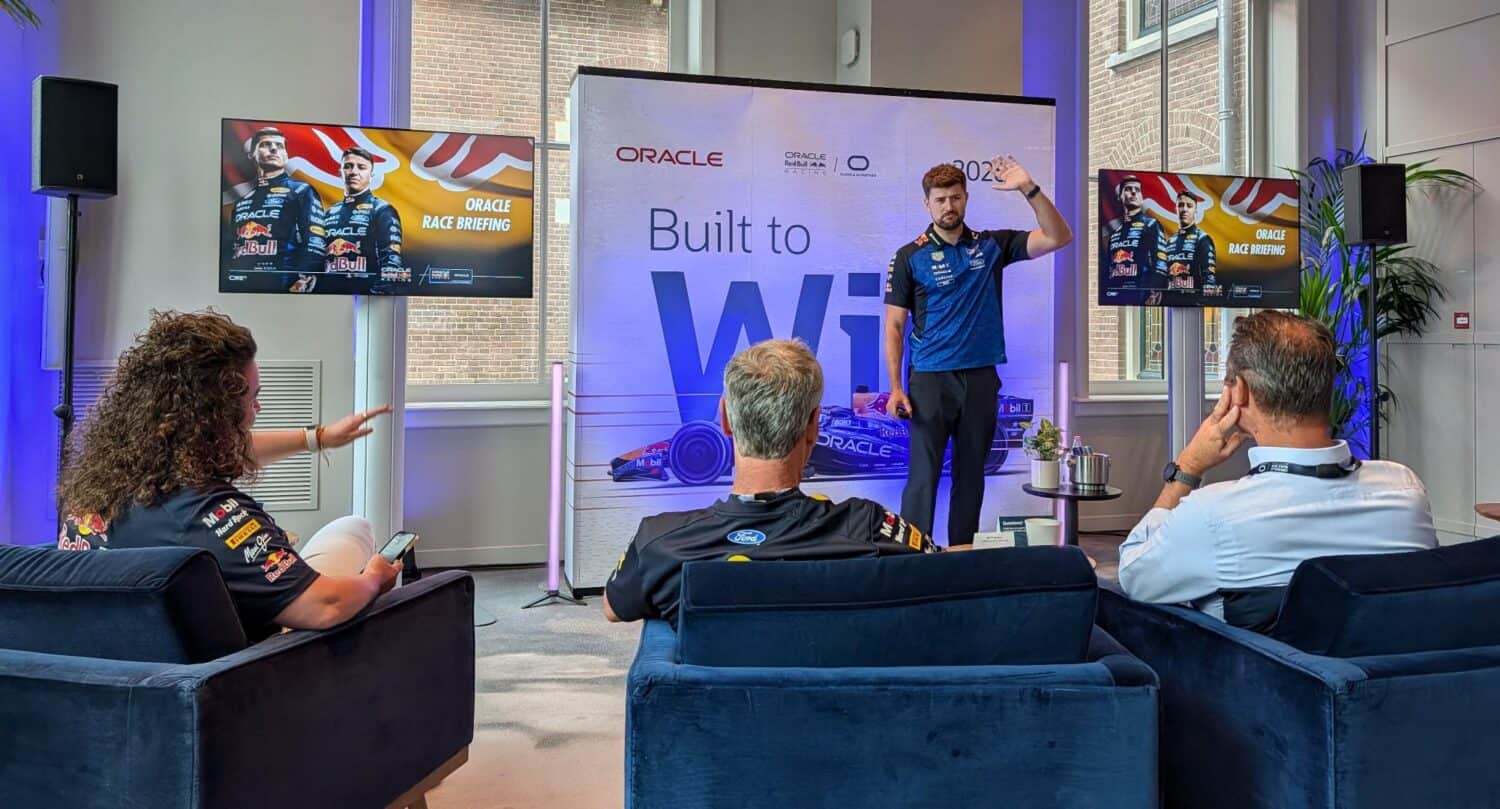
In the Zandvoort paddock, it immediately becomes clear that tech giant Oracle’s role goes far beyond traditional sports sponsorship. While commercial partners primarily seek visibility, this collaboration functions as a deeply integrated innovation partnership. The cloud infrastructure forms the backbone of virtually every strategic, aerodynamic, and operational process within the team.
The car as a mobile data center
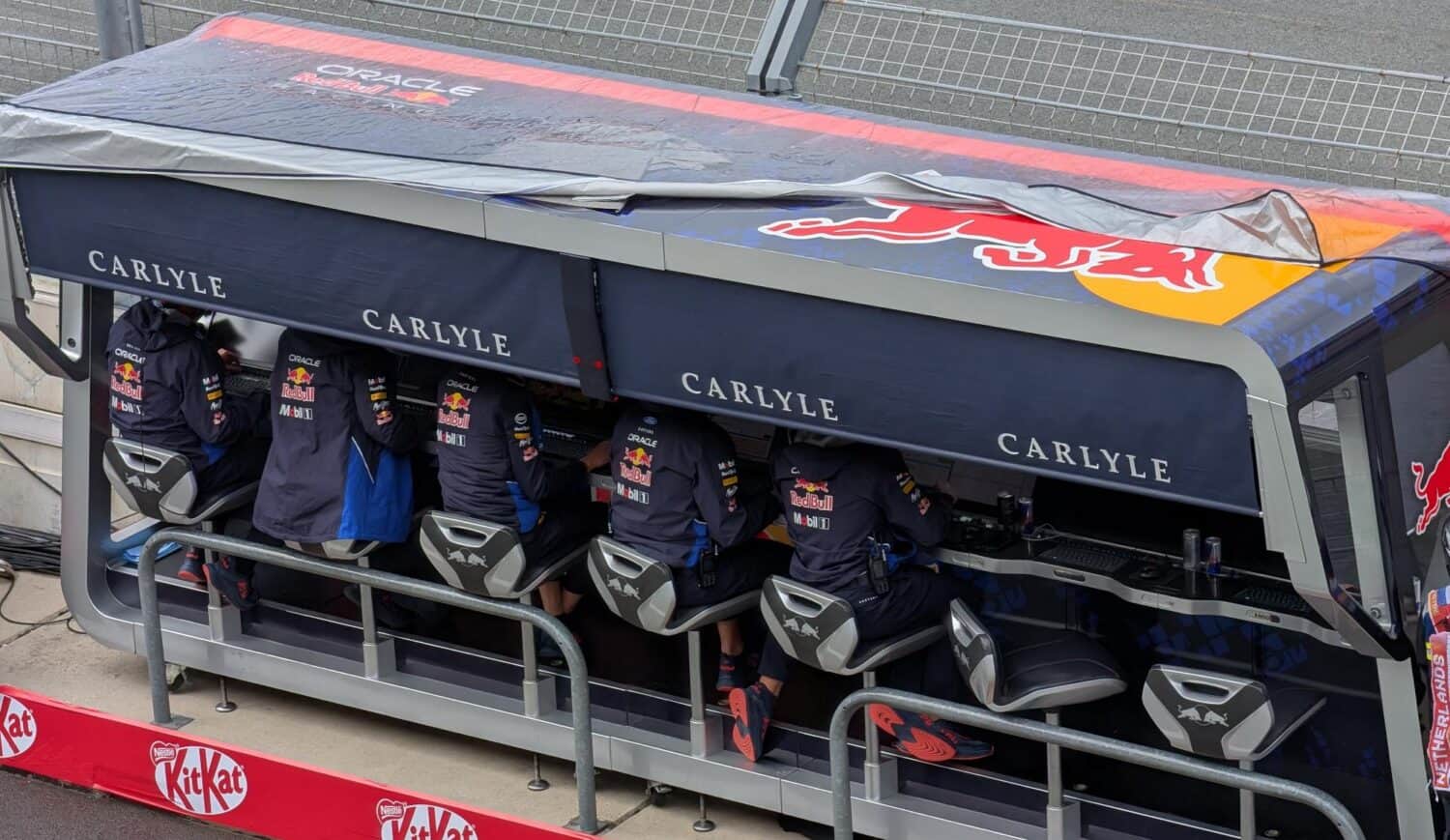
In practice, a modern Formula 1 car functions as a mobile data center. Hundreds of sensors continuously measure variables such as suspension load, tire temperature, airflow, and engine parameters. During every lap, this data stream is sent directly to the pit wall and to the Operations Room in Milton Keynes, UK. Whereas strategists used to rely on stopwatches and experience, everything now revolves around advanced simulation models.
During a single race weekend, Red Bull Racing runs no fewer than eight billion Monte Carlo simulations via Oracle Cloud Infrastructure (OCI). Mcartney-Smith explains that four billion of these run before the weekend to model historical data, track characteristics, and tire wear. The remaining four billion simulations take place live during practice, qualifying, and Sunday’s race.
According to Mcartney-Smith, the switch to OCI has yielded a 25 percent increase in the team’s capacity. “In a sport where margins are measured in thousandths of a second, a 25 percent increase in simulation power is simply enormous,” Mcartney-Smith explains. That extra capacity is crucial when unexpected events occur. As soon as a Safety Car appears or a rain shower breaks out, the cloud cluster immediately calculates thousands of scenarios to determine the fastest pit stop strategy.
The design lifecycle
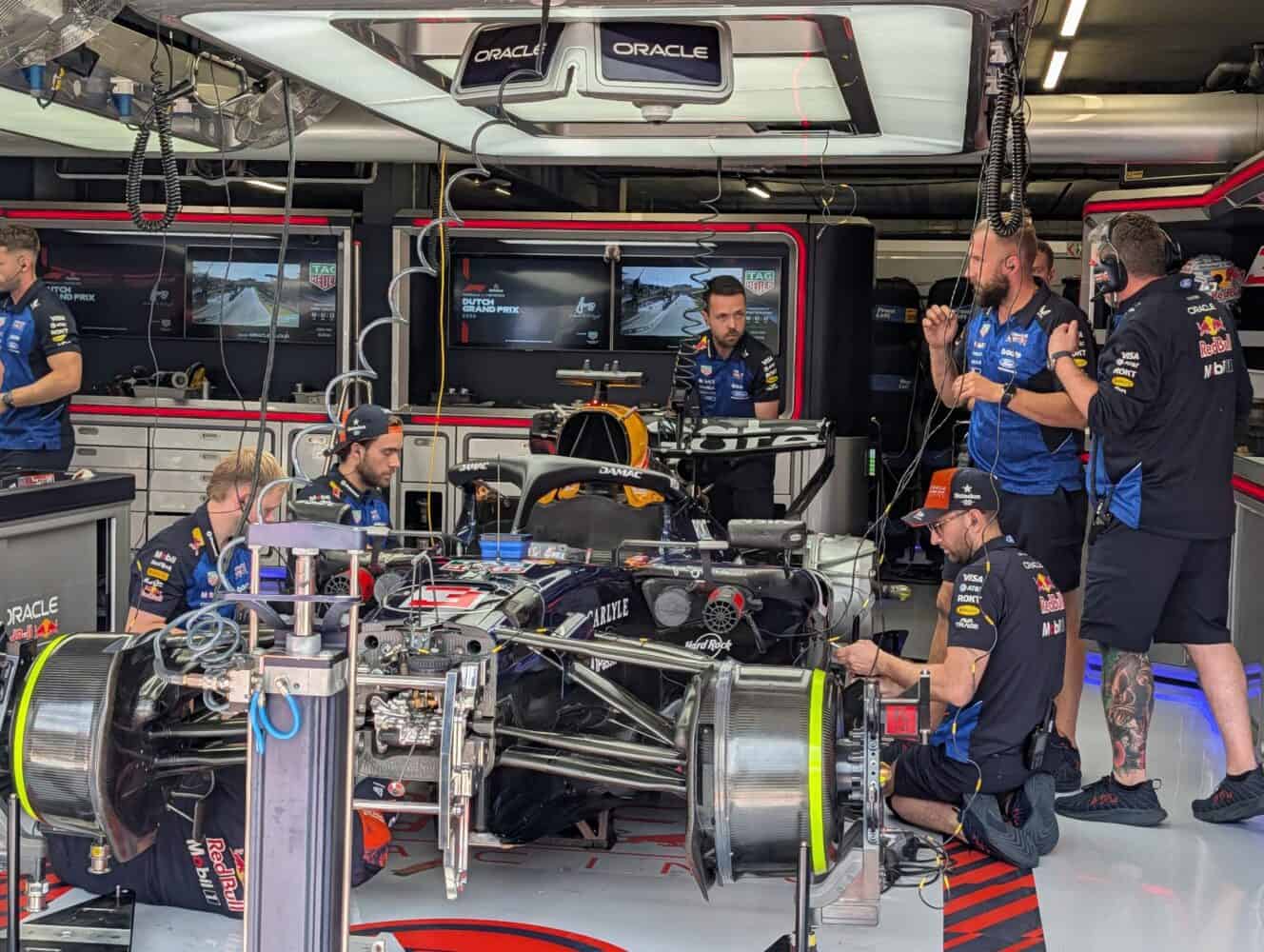
Sunday’s race is merely the culmination of an extensive digital development cycle. Mcartney-Smith walked us through the design process for each individual car component. It all starts with Computer-Aided Design (CAD), in which 3D models are linked to material databases. These designs then undergo rigorous Computational Fluid Dynamics (CFD) simulations in the cloud, which act as a virtual wind tunnel.
Components that survive this virtual selection process go directly to the physical driving simulator at the factory. Mcartney-Smith emphasizes that Red Bull Racing is unique in this regard: the team builds the entire software and hardware stack for these simulators entirely in-house. This is where the virtual world and physical racing converge, with test drivers sometimes completing grueling sessions on behalf of the drivers on the track.
Only after a component has been approved in the simulator does the team produce a scale model for the physical wind tunnel. Mcartney-Smith describes how lasers and smoke screens are used at high wind speeds to verify that the airflow exactly matches the CFD calculations. Only then does the component receive the green light for actual production.
Data versus gut feeling
The massive volume of eight billion simulations has a strictly mathematical foundation, Martin Galpin explains. Galpin leads a team of software engineers, data scientists, and machine learning experts. He says the team began pioneering this work early on and established its own machine learning group as early as late 2016. “Our goal has always been to build software that we simply can’t buy anywhere,” Galpin explains. “We develop everything in-house that gives us a decisive competitive advantage over the competition.”
Still, the team’s technology choices have fundamentally changed over the past fifteen years, Galpin notes. Whereas in the past almost all software was written from scratch as custom code, Red Bull now relies on proven enterprise standards. For real-time data streaming, for example, the team uses open frameworks such as Apache Kafka. This allows its engineers to focus entirely on the mathematical algorithms that make the difference on the track.
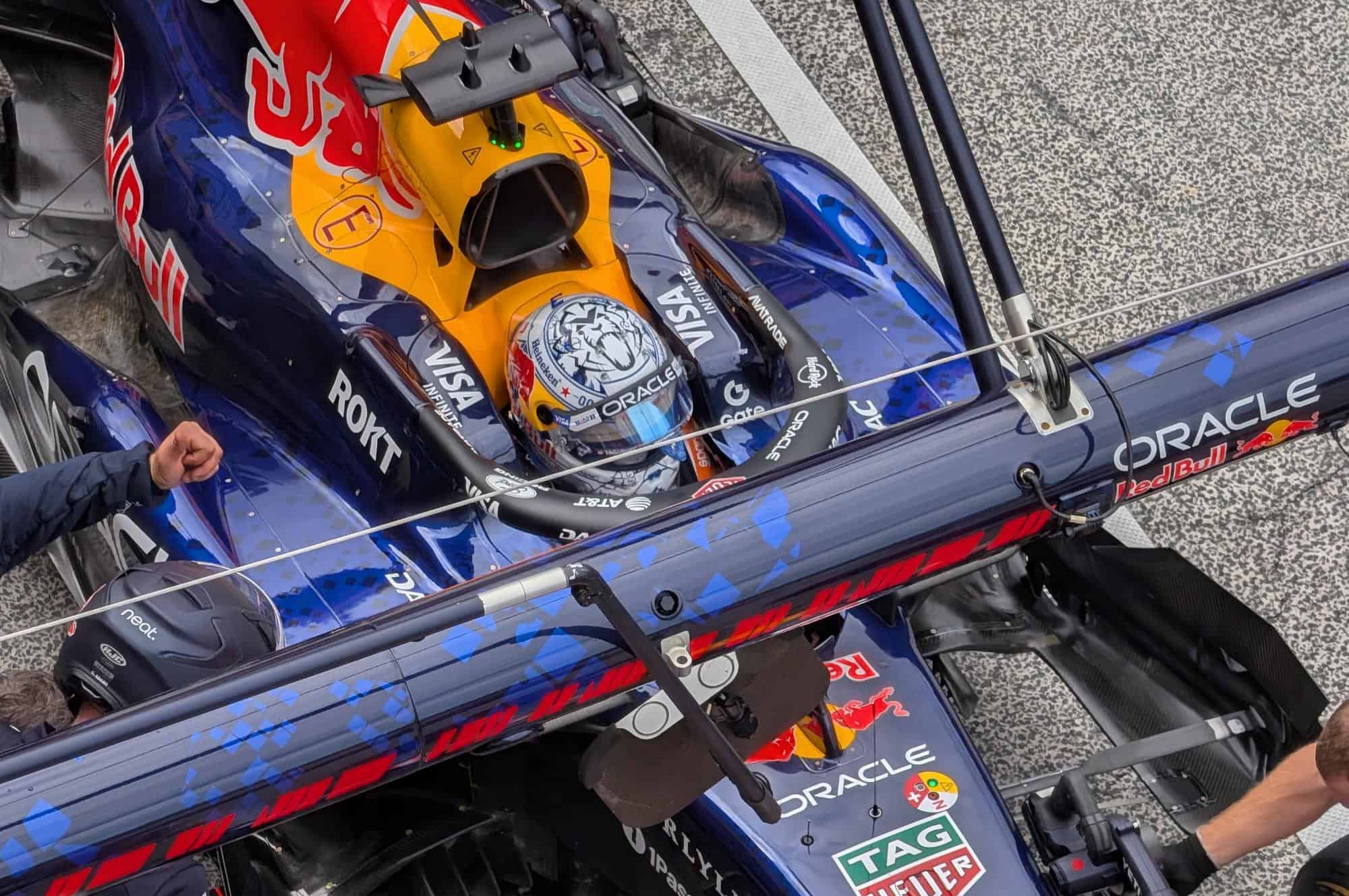
Galpin explains that the number of simulations is determined by the principle of mathematical convergence. Due to the many random variables, models must iterate until the results are statistically stable. According to him, anyone who stops simulating too early risks basing their strategy on a random outlier rather than the most likely scenario.
At the same time, Galpin puts the hunger for data into perspective with a well-known statistical maxim: all models are, by definition, an approximation of reality, but some are exceptionally useful. In his view, no single model encompasses the full reality. The cloud provides the pit wall with clear scenarios, but for Galpin, the final decision to pit always remains a human judgment call made by the race engineers in consultation with the driver.
Cloud economics and the budget cap
For enterprise IT decision-makers, Formula 1 presents a familiar challenge: how do you maintain maximum innovation within a strict budget? Since the introduction of the FIA’s financial cost cap, every racing team must account for its expenses with precision. Galpin emphasizes that continuously maintaining heavy server clusters in an in-house data center simply no longer fits within these rules.
OCI’s cloud architecture offers a solution here through elastic scalability. “Under the current cost cap, physically purchasing additional servers for our own data centers is simply no longer an option,” explains Galpin. “With OCI, we literally spin up a massive computing cluster one hour before the race, run the intensive calculations during the Grand Prix, and shut everything down immediately afterward.” As a result, the team pays only for the actual peak usage during race weekends. This results in significant cost savings and frees up budget for further car development.
That same flexibility proved crucial when Red Bull Powertrains was founded, Mcartney-Smith explains. When the team decided to develop its own engines, the power units were already digitally modeled and tested in OCI before the physical factory walls in Milton Keynes were even built. This allowed the team to optimize the thermodynamic design before building the first physical engine block.
AI pit wall agents and sandboxes
Beyond telemetry and aerodynamics, Red Bull is extensively integrating generative AI and language models. Mcartney-Smith explains that the team is developing, among other things, so-called AI Pit Wall Agents. In the event of an incident or a risky passing maneuver, such an agent analyzes racing regulations and previous decisions by race control within seconds. At the Red Bull Driver Academy, AI also screens data from thousands of young drivers to identify talent early on.
Within Galpin’s software teams, AI coding tools are now the standard. Galpin compares the choice of these tools to the preference for text editors: it’s purely about productivity, regardless of which coding tools the team uses. He does note, however, that commercial state-of-the-art models currently reason more reliably than open-source variants and that hallucinations have decreased significantly thanks to improved context engineering.
However, autonomous agents also pose security risks. In a competitive field where intellectual property is worth its weight in gold, data security is Galpin’s top priority. “Issues such as data exfiltration and prompt injections are real concerns we must take into account,” Galpin warns. “If you want agents to be effective, they need access to your systems. To prevent intellectual property from leaking through hidden processes, all code execution and AI tooling must run within strictly isolated software sandboxes.”
Agility as a success factor
The race weekend at Zandvoort shows where technology’s limits lie. You can process terabytes of telemetry, run billions of simulations in OCI, and deploy AI agents for every scenario, but motorsports remains a human endeavor.
When a driver, like Verstappen, pushes just past the limit on a soaking-wet track and crosses a slippery white line, no algorithm can correct that slide. That’s exactly where the parallel with the business world lies. Data and cloud power are indispensable tools for making better decisions, but the art of driving and ultimate responsibility always remain a human endeavor.