
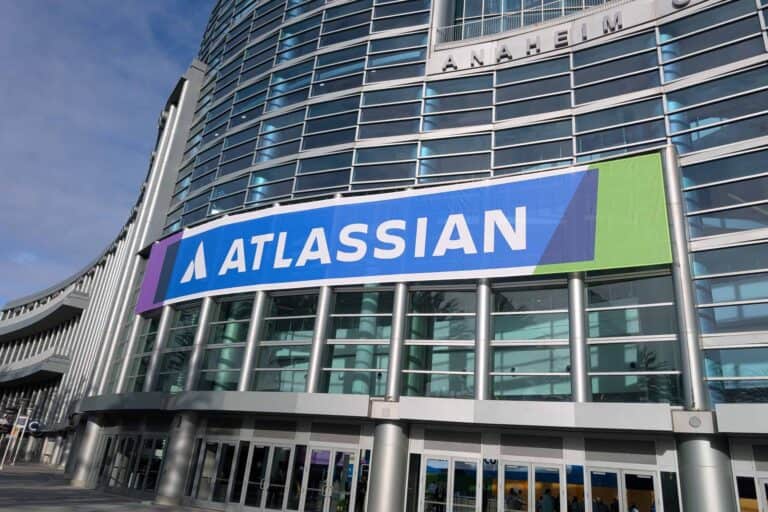
Earlier this year, Atlassian cut 1,600 jobs to free up funds for more AI investments. It turns out that a budget cap is needed in this area as well, with individual “AI wallets” serving as personal token budgets for employees. Is this a strong alternative to tokenmaxxing, that is, the unlimited use of AI, and what are the risks?
Tokenmaxxing has been out of fashion for a while now; hefty AI costs have certainly become apparent in financial statements over the past six months. The alternative is to cap the “burning of tokens,” as it’s often called. Atlassian has opted for varying budgets depending on the employee. For example, senior executives on the company’s R&D side can allocate $2,000 per month to AI, compared to $500 for lower-level positions. Atlassian views this solution as a “significant budget” for using multiple AI tools.
Who gets more AI?
It sounds logical: give the most valuable employees a larger AI budget, because they’ll be able to boost their productivity and creativity in a way that makes the higher costs worthwhile. The question is whether a reverse approach might make just as much sense. Give entry-level roles a generous budget for experimentation and require senior staff to be more efficient in their use of AI.
Incidentally, this presents an interesting challenge for all employees. Normally, staff almost always opt for the most powerful AI model available. With an AI wallet in hand, there’s now, for the first time, a clear, albeit indirect, incentive to choose cheaper options. What if you could complete 50 tasks with the more affordable GPT-5.6 Terra for the same price as 20 tasks with GPT-5.6 Sol? When is a task complex enough to justify using Claude Fable 5 over Opus or Sonnet? These are open-ended questions, and the answer varies by role.
An AI wallet provides a legitimate constraint that encourages such trade-offs and rewards successful experiments. The next step is calibration: what are the best practices for deploying more expensive LLMs, or which employees excel in token efficiency? Those who perform even better than before without depleting their AI wallet will likely have built up significant expertise compared to colleagues who use up all their tokens without achieving a significant performance gain.
The key question: Is AI even worth it?
Findings regarding AI’s ROI are, to put it mildly, inconsistent. While last year 95 percent of surveyed companies had not yet achieved a meaningful return on investment according to MIT, 88 percent of Deloitte respondents reportedly feel confident about measuring this return. An AI wallet could be the litmus test.
Consider testing different teams over a few weeks, with the LLMs used becoming progressively cheaper each week. Or let employees test with a temporarily doubled budget: have the efficiency gains, if even measurable, become significantly different? The most challenging aspect of these test scenarios is that the best LLMs are constantly changing, and use cases also vary over time. Programmers were already able to benefit from more powerful code completion in the early days of GitHub Copilot five years ago, while a design team might not have recognized the potential benefits until after several new versions of ChatGPT, Gemini, or Claude were released.
Nevertheless, Atlassian’s move is, at the very least, a thoughtfully formulated trial balloon. Other companies may have had similar plans but haven’t acted on them yet, given the widely acknowledged sky-high token costs that have risen so sharply over the past six months. Reasoning models with tool calls and sub-agents are devouring tokens like never before, leading to inventive ideas for curbing the costs.
See also: The problem with AI model routing