
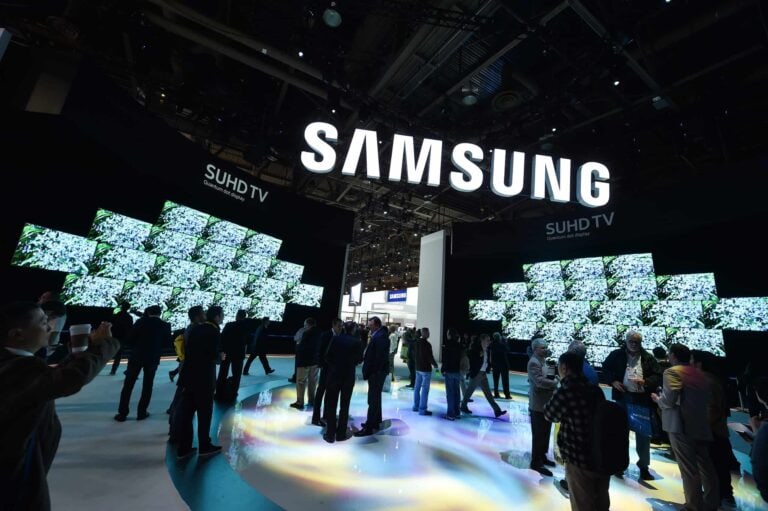
Samsung employees have suspended a planned strike. The largest union, which represents nearly 48,000 employees, has reached a tentative wage agreement with the South Korean manufacturer. For the global memory market, which is already under intense pressure, the avoidance of a strike is very good news. Union members will still have to vote on the deal between May 22 and 27.
The conflict centers on the distribution of profits from the massive surge in demand for memory chips. Samsung wanted to substantially reward employees in the memory chip divisions with bonuses of 607 percent of their annual salary, but workers who manufacture less advanced chips for companies like Tesla and Nvidia would receive only 50 to 100 percent. Those 23,000 employees, according to the union, should not be left behind.
Pressure from SK Hynix and a judge
Tensions have been mounting for some time, and Samsung owes this largely to developments among its competitors. Last year, competitor SK Hynix abolished its bonus cap for ten years, leading to bonuses more than three times higher than at Samsung. Some employees switched companies. As previously reported, Samsung’s stock consequently lagged behind SK Hynix’s, despite strong growth among AI chip companies in general. Now, however, the stock has found its way back up, with an 8 percent increase today at the time of writing.
Earlier, the union had already threatened an 18-day strike, which would have involved more than 45,000 employees. A South Korean court intervened preemptively. It ruled that a strike must not disrupt safety procedures and quality control. In the event of a violation, the unions risk fines equivalent to 64,000 euros per day.
Market reaction and earnings figures
It is important to emphasize just how significant the increase in demand for memory chips has become. Samsung’s operating profit for the first quarter of 2026 rose by approximately 750 percent year-over-year. That demand is also driving Samsung’s ambition in HBM4 memory, with which it aims to narrow its gap with SK Hynix.
For now, the company must first and foremost regain the support of its own workforce to fulfill all its ambitions. Samsung has at least stated that it hopes to see no repeat of the labor dispute. “With a humble attitude, we will build a more mature and constructive relationship with employees to ensure that something like this never happens again.”