
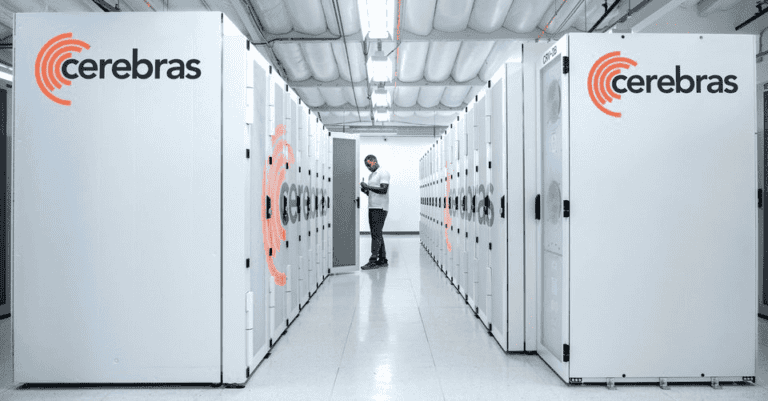
Cerebras posted its first earnings report post-IPO, and the market was not impressed. Shares fell 10 percent in after-hours trading after the AI chip designer forecast full-year gross margins well below those of its supposed rivals like Nvidia and AMD. Revenue, however, surpassed expectations by a clear margin.
Cerebras raised 5.55 billion dollars in its IPO last month as shares surged 68 on its Nasdaq debut day and pushed its market cap to 95 billion dollars. Typically, newly listed companies fail to hold on to such short-term gains over the medium term, with most stock listings occurring at a fairly premium valuation. This appears to be the dynamic taking place over at Cerebras.
For Q1 2026, the company reported revenue of 193.4 million dollars, nearly double the 99.5 million from a year earlier. Its adjusted net loss narrowed to 2.5 million dollars, far better than the analyst estimate of 36.75 million dollars. Q2 revenue guidance of 194 million dollars also topped the 174.34 million consensus. Such numbers, often enough to characterize a quarterly report, aren’t what likely caused the stock to dip, however.
Wafer-scale approach puts pressure on margins
Cerebras projected full-year adjusted gross margins of 38% to 41 percent, down from the 47 percent it posted in Q1. By comparison, Nvidia operates in the mid-70 percent range and AMD in the mid-50s. The gap is therefore meaningful. Cerebras focuses on AI inference, the process of generating responses to user queries, using chips built from entire silicon wafers rather than individual cut dies. As we previously covered, that wafer-scale design enables exceptional memory bandwidth and speed for inference workloads, but it is notoriously difficult to manufacture at scale and prone to errors or in need of redundant cores to make up any physical deficiencies.
Another short-term drag is that Cerebras is temporarily renting back its own systems from an existing client to meet demand while it expands data center capacity. CFO Bob Komin said on the post-earnings call that “the additional cost of renting third-party capacity will depress core cloud and other services margin temporarily from current levels,” but added that the company targets gross margins of 60 percent over the long term, right in between the Nvidia and AMD numbers respectively.
Revenue strong, global footprint expanding
Despite the margin pressure, Cerebras continues to grow quickly. Much of that growth rests on its relationship with OpenAI, which has signed a 20 billion dollar multi-year deal to deploy 750 megawatts of Cerebras chips for ChatGPT inference workloads. CEO Andrew Feldman said the company is in early discussions to open data centers in Israel, the UAE, Australia, Singapore, India, and Indonesia.