
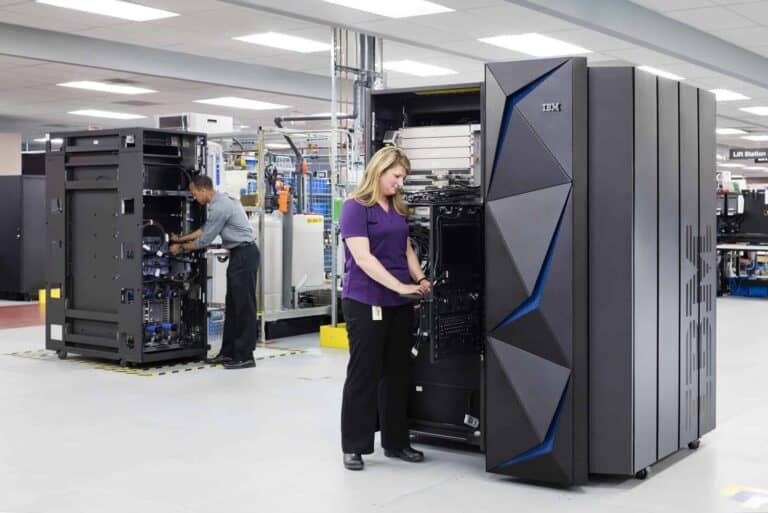
IBM has just posted one of its weakest quarters in years. The infrastructure division, in particular, was hit hard by a sharp decline in mainframe sales. Nevertheless, the company does not see this as a structural problem. According to IBM, the decline is due to deferred investments, not to customers abandoning the platform.
Last week, IBM had already warned investors that the quarterly results would be significantly worse than previously expected. That unusual step turned out to be justified. When the final results were released, it became clear that revenue from infrastructure operations was under significant pressure. Revenue from the mainframe business fell by 42 percent, prompting IBM to also lower its growth forecast for the full fiscal year.
The figures had an immediate impact on the stock market. Following the profit warning, the stock lost about a quarter of its value, the largest one-day price drop in the company’s history.
Postponed purchases
During the earnings call, CEO Arvind Krishna stated that dozens of customers have postponed their planned purchases of new mainframes. According to him, this does not mean that organizations are abandoning the platform. On the contrary, some of those orders have since been placed, according to TechCrunch.
These postponed investments are weighing heavily on the results. Mainframes are among the most expensive systems in the enterprise segment and generate not only hardware revenue for IBM but also long-term revenue from software licenses and maintenance. CFO Jim Kavanaugh emphasized that every dollar in mainframe hardware revenue generates an average of three dollars in software revenue. A slowdown in hardware sales, therefore, has a much greater impact on total revenue.
Interestingly, IBM points to the very same AI investments that have actually provided the company with many growth opportunities in recent years. According to Krishna, many customers were faced with significantly higher prices for data center hardware, memory, and PCs. As a result, they chose to allocate their available IT budgets to those components first and to postpone replacing their mainframes.
This explanation aligns with reports from other suppliers. Manufacturers such as Dell, HP, and Apple have also pointed to rising component prices in recent months, driven by the enormous demand for AI infrastructure. According to IBM, this does not indicate a decline in interest in mainframes, but rather a temporary shift in investment budgets.
Mainframes not yet obsolete
During the earnings call, Krishna emphasized that IBM sees no indications that customers are migrating to alternative platforms. According to the CEO, demand for mainframes will remain intact in the long term, and the company expects that postponed purchases will eventually be completed.
In doing so, IBM once again refutes predictions that the mainframe’s days are numbered. That expectation has resurfaced repeatedly over the past decades, yet the platform remains a crucial part of the IT infrastructure for many large companies and financial institutions. IBM is counting on the fact that even the current wave of AI will ultimately do little to change that, according to TechCrunch.