
State Secretary Willemijn Aerdts of Economic Affairs and Climate Policy (EZK) has banned the acquisition of Solvinity by the American company Kyndryl. The decision was made yesterday (May 25) on the advice of the Investment Assessment Bureau, which identified a risk to the public interest based on the WOZT.
The Investment Assessment Bureau (BTI) received a notification of the proposed acquisition on November 21 and immediately launched an investigation based on the Act on Undesirable Control in Telecommunications (WOZT). Upon completion of that investigation, the BTI recommended a complete ban. State Secretary Aerdts adopted that recommendation. Both parties—Kyndryl as the proposed buyer and Solvinity as the target company—have since been informed.
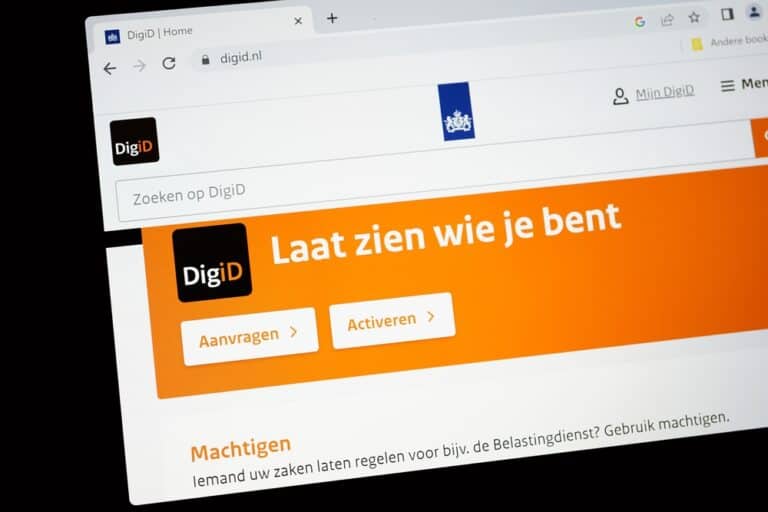
Solvinity manages DigiD, the Dutch citizens’ digital portal connecting them to their tax affairs, subsidies, and much more governmental data. The system is considered critical to the daily operations of the state, and has become a lightning rod as well as wake-up call for the Dutch sense of digital sovereignty.
In the letter to Parliament, Aerdts emphasizes that the review is country-neutral, risk-based, and proportionate. “The Netherlands attaches great value to the presence of foreign, and specifically American, technology companies and their contribution to the Dutch economy and digital infrastructure,” the State Secretary stated. According to him, the investment review applies equally to all investors, regardless of origin.
Long-standing issue
The acquisition was announced in November and immediately sparked widespread political opposition. Solvinity manages the infrastructure on which DigiD and MijnOverheid operate, which made the deal particularly sensitive. The government announced early on that it would investigate the implications. Kyndryl subsequently failed to allay these concerns. A debate in the House of Representatives came to nothing.
The House of Representatives had previously passed a motion calling on the government not to renew the DigiD hosting contract in 2028 if the acquisition went through. Just one party voted against that motion at the time among nearly 20. In early May, a judge in summary proceedings rejected a request to terminate the contract with Solvinity. The judge ruled that a responsible transition requires six to eight months and that termination entails unacceptable risks for essential government services. The reasoning behind that ruling was published on May 22.
The ban on the acquisition puts an end to the proposed deal, which would have been worth at least 100 million euros. An alternative offer from a Dutch party fell just short of the mark. Whether Solvinity is now up for sale again remains to be seen. The sovereignty debate is also likely to significantly alter the amounts involved. After all, it is now known that the management of DigiD is considered so valuable to the national interest that an American buyer will not be permitted. There is no indication that Kyndryl was barred as the intended owner of Solvinity for any reason other than its U.S. nationality.
Aerdts intervened after receiving signals
The State Secretary reports having received serious indications that the transaction was about to be finalized. That was the reason for not delaying action. The cabinet will remain in contact with Solvinity and the current owner in the coming period. Aerdts is also offering a confidential technical briefing to the House of Representatives to explain the decision, in line with a previously adopted motion.
In the longer term, the Solvinity case will remain both well-known and notorious inside the Netherlands. On the one hand, the Dutch government has now acted early enough to keep DigiD in Dutch hands. However, every technology company in this country must now ask itself whether it plays a critical role in the national digital infrastructure. If that is the case, The Hague’s actions may be the same next time.