
Nvidia has significantly reduced the number of Asian companies authorized to purchase AI processors directly. The chipmaker has compiled a new list of approved customers following an extensive vetting process. The company aims to prevent advanced chips from ultimately ending up in China via third countries.
The Financial Times reports on this based on information from three sources familiar with the matter. According to the newspaper, the stricter selection criteria apply to customers in Singapore, Malaysia, and Japan, among other countries. More than half of the existing customers reportedly failed to pass the first round of evaluation. Companies that were rejected can adjust their business operations and resubmit an application at a later date.
Specialized cloud providers offering AI infrastructure, so-called “neocloud” providers, are particularly affected by the new rules.
New checks extending into the data center
Nvidia has been monitoring customers for some time to comply with U.S. export laws, but the procedures have been significantly expanded in recent months. According to the Financial Times, the company now inspects customers’ data centers, reviews contracts, and speaks with end users to verify that the delivered hardware actually reaches the specified customers. The U.S. Department of Commerce is also reportedly involved in these checks.
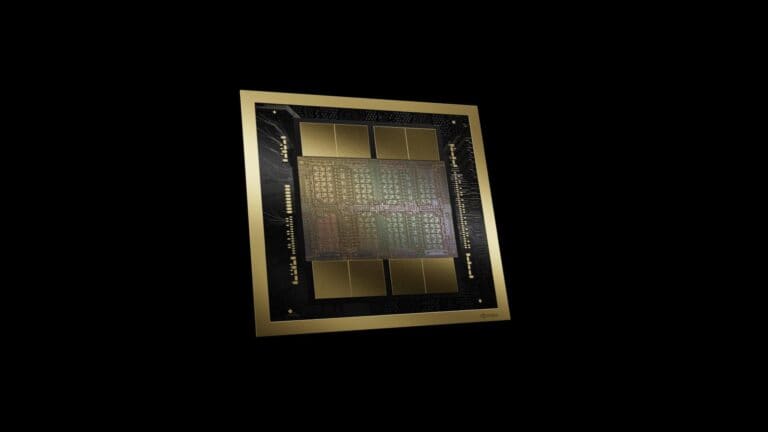
This stricter approach aligns with the Trump administration’s policy to prevent advanced AI processors from ultimately ending up with Chinese organizations via third countries. In May, the U.S. Department of Commerce published additional guidelines designed to prevent powerful AI chips from being supplied to foreign subsidiaries of Chinese companies. In doing so, the department highlighted, among other things, the risk that Nvidia’s latest Blackwell processors (photo) could still find their way to China via countries such as Malaysia.
These concerns are not new. Earlier this year, U.S. prosecutors indicted a co-founder of Supermicro and several employees for their alleged involvement in a network that is said to have funneled AI chips to China via Southeast Asia. According to the indictment, the hardware in question had a total value of approximately $2.5 billion. Supermicro has stated that it is cooperating fully with the investigation.
Shortages are increasing
The tightened controls now appear to be having a noticeable impact on the Chinese AI sector. According to industry sources, it is becoming increasingly difficult to obtain advanced AI processors.
The United States has banned the export of its most powerful AI chips to China for years. At the same time, the Chinese government is encouraging the use of domestic alternatives to reduce dependence on foreign suppliers. As a result, Nvidia’s H200 processor, which is already several generations behind the company’s latest products, is also virtually unavailable on the Chinese market.
This is causing tensions as Chinese tech companies rapidly develop and roll out AI agents. Such systems require significantly more computing power than traditional generative AI applications, further increasing the demand for powerful GPUs.
According to a Chinese executive in the technology sector, even less powerful AI processors are now completely sold out. Anything that can be used for AI workloads is now finding a buyer.
Chinese production is growing, but still lagging
Beijing is counting on Chinese chip manufacturers to scale up production sufficiently in the coming years to reduce dependence on Nvidia. While capacity is growing rapidly, it still lags behind that of international competitors. Moreover, Chinese manufacturers still do not have access to the most advanced chip manufacturing equipment.
Nvidia emphasized to the Financial Times that compliance with export regulations is the company’s top priority and that it fully complies with all legal obligations. In doing so, the manufacturer underscores that the stricter customer controls are part of its broader compliance with U.S. export restrictions.