
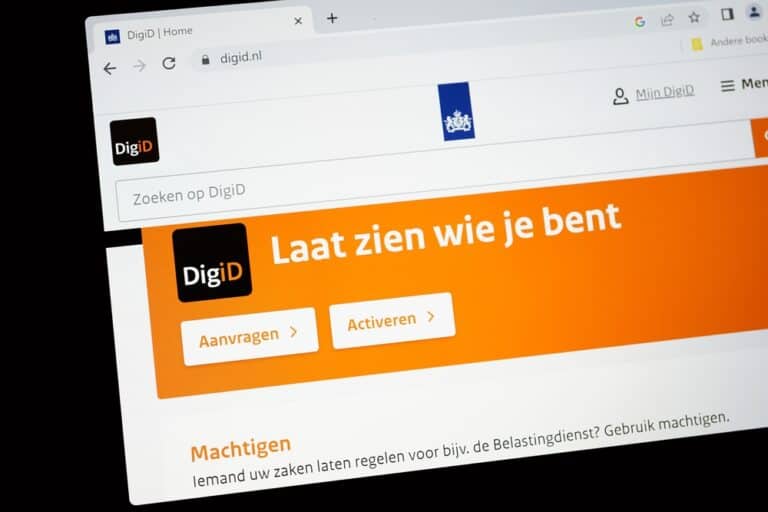
IT management company Solvinity and its majority shareholder Vitruvian Partners went to court on Monday to overturn the takeover ban imposed by Dutch State Secretary Aerdts. Solvinity, administrator of the vital DigiD system to manage digital identities for civil affairs, argues that the company’s survival is at stake and that the state secretary was influenced by media commotion.
State Secretary Willemijn Aerdts opted for a ban in late May on the advice of the Investment Assessment Bureau (BTI). As a result, the former IBM subsidiary and U.S. company Kyndryl was left out in the cold: the proposed acquisition of Solvinity was not allowed to proceed. According to the letter to parliament, the acquisition would have affected the public interest. This is because Solvinity manages the infrastructure behind DigiD and MijnOverheid. The concern was that the U.S. government could demand access to sensitive data via the CLOUD Act. The company had already announced that it would file an appeal.
Was there really such a rush?
A large part of the hearing revolved around the urgency of the matter, reports Dutch newspaper De Volkskrant. Solvinity’s lawyers dispute that the injunction had to be issued so quickly. They claim the company had promised the BTI it would postpone the acquisition for several weeks. Aerdts’ lawyers maintain that completion of the transaction was a matter of days, and that an injunction issued after that point would be pointless.
However, the letter to Parliament remained vague about the exact reasons for this drastic step. A lawyer for Solvinity said that the government is relying on “a single ground”: that Kyndryl is subject to U.S. law. This is striking, because according to Solvinity, Kyndryl already provides “extensive services” to the Ministry of Defense. The company is said to be “actively embedded in the very fabric of the Dutch armed forces.” It is unclear whether this sends the message that this might need to come to an end. In any case, the opposite is the intention: why selectively trust an American company?
Broader debate on sovereignty
The lawyer for the Firewall Foundation countered that argument. The fact that the government does business with American companies in other areas does not mean that Solvinity can also be acquired while it manages DigiD. Solvinity further pointed out that the cabinet itself had the opportunity to buy the company in early 2025 but declined.
Since the Solvinity issue, every deal between IT suppliers and the public sector has been under scrutiny, as was evident when the IND (Immigration and Naturalization Service) left the Zivver messaging service following an American takeover. The government now maintains that DigiD remains secure and is preparing a new tender under the Defense and Security Procurement Act.
Given the comment about Kyndryl’s presence at the Ministry of Defense, we might wonder what exactly the digital crown jewels are for the Netherlands. It reminds us of other discussions in this area where attention is mainly limited to clearly visible services, while the deeper (and harder to phase out) layers remain largely unaddressed. Specifically, digital services that an average employee or citizen encounters are under the microscope. In contrast, there are, among other things, the chips, the solutions for running IT infrastructures used only by specialists, and other technologies that may not be known to the general public. SUSE and Openchip are examples of IT players that do want to make progress on that more challenging front, even though the initial conclusion is, unfortunately, that the Netherlands and Europe have a great deal more work to do in this area than simply finding a digital identity administrator or a new office software solution.