
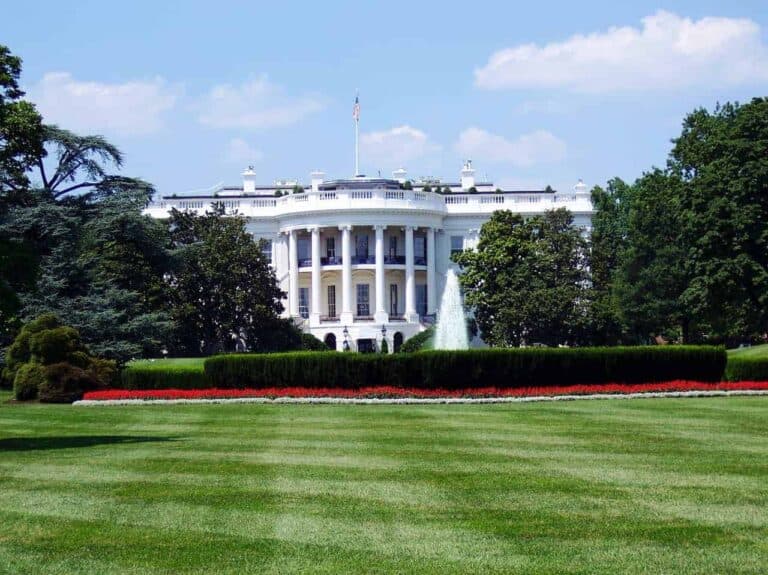
A broad coalition of more than seventy technology companies and investors has sent a letter to the White House urging it not to restrict open AI models with far-reaching regulations. According to the signatories, open-weight models are crucial for maintaining U.S. competitiveness, stimulating innovation, and preventing AI from falling into the hands of a small number of providers.
The letter comes as the Trump administration is examining whether stricter restrictions are needed for open AI models from China. This follows concerns about national security and allegations that Chinese AI companies have used U.S. technology to develop their own models more quickly.
This call is not an isolated one. The arguments align with the Open Secure AI Alliance that Nvidia unveiled earlier this week. As Techzine reported yesterday, that coalition argues that open AI models not only accelerate innovation but are also essential for effective cyber defense in the wake of the Hugging Face incident.
Competitors join forces
The letter was signed by a remarkably broad group of companies, including Nvidia, Microsoft, Meta, Google, IBM, Dell Technologies, AMD, Cisco, Cloudflare, GitHub, Hugging Face, Mistral, Palantir, and OpenAI. Investors such as Andreessen Horowitz and Y Combinator also backed the call. The fact that direct competitors are joining forces demonstrates just how great the concerns are about the international AI race, writes Computing.
According to the signatories, the U.S. lead will not be determined by a single powerful AI model, but by an open ecosystem in which advanced AI is widely available to companies, researchers, and governments.
Open-weight models can be downloaded, customized, and deployed on an organization’s own infrastructure. This reduces organizations’ dependence on a single vendor and allows them to use AI more closely integrated with their own data and processes.
According to the companies, this not only stimulates innovation but also fosters competition among providers of cloud infrastructure, AI chips, and software. At the same time, they warn that restrictions on open models could actually lead to greater dependence on a small number of proprietary AI providers.
Microsoft and Palantir have previously highlighted the growing customer demand to run AI models in their own data centers, enabling them to maintain greater control over costs, security, and compliance.
Chinese models are applying pressure
The debate has been further fueled by the introduction of Kimi K3 by the Chinese company Moonshot AI. That model is viewed by various parties as comparable to the best U.S. AI models, while reportedly being significantly cheaper.
U.S. authorities are also investigating allegations that Chinese developers have used knowledge from U.S. AI systems via model distillation to improve their own models.
The signatories acknowledge that open models carry risks but reject the notion that closed AI systems are inherently safer. Precisely because open models can be examined by a broad community, vulnerabilities would be uncovered more quickly and addressed more effectively.
Nvidia CEO Jensen Huang also recently warned against “premature restrictions” that could stifle competition and drive AI innovation overseas.
Anthropic is missing
Notably, Anthropic did not sign the letter. The company has long advocated stricter measures against Chinese AI developers over alleged distillation attacks, which it views as a risk to both intellectual property and national security.
OpenAI did sign the letter, however. CEO Sam Altman stated that he sees both open-weight and closed AI models playing an important role. In doing so, the coalition underscores that the discussion in Washington is less and less about who builds the most powerful AI, and increasingly about who sets the rules for the technology.