

IBM is launching a new generation of FlashSystem storage with agentic AI as co-manager today. The three new systems, FlashSystem 5600, 7600, and 9600, are designed to reduce storage management work by up to 90 percent through autonomous decisions.
IBM is convinced to shake up the storage market with storage systems that integrate AI, changing the way storage is managed. Sam Werner, GM of IBM Storage, has a clear message about the new portfolio being launched: “This is not just about the hardware. We are innovating the entire product line. It’s about the incredible innovation we are bringing that allows organizations to manage their data and storage more efficiently and effectively, so they can ultimately invest in other initiatives. It also gives them a way to mitigate some of the challenges around supply chain.”
The three new FlashSystem models run on FlashSystem.ai, a set of AI services that continuously analyzes, optimizes, and intervenes without human intervention. “Storage is becoming an intelligent, always-available layer in which performance, security, and costs are optimized without human intervention,” says Werner.
The new approach marks a break away from the storage management we have known for the past 20+ years. Whereas storage management traditionally required manual work via interfaces and dashboards, FlashSystem.ai runs on an AI model trained on tens of billions of data points from real operational environments. The system makes thousands of automated decisions per day that previously required human supervision.
Three scale levels
The new line reduces the storage footprint by 30 to 75 percent, depending on the model, through optimized placement and consolidation. The FlashSystem 5600 targets compact environments with up to 2.5 PB of effective capacity in a 1U system. With 2.6 million IOPs, the system fits into edge locations and smaller data centers where space is scarce. Offering a FlashSystem in a small package is something IBM has mastered for some time, but the new generation offers significantly more capacity.
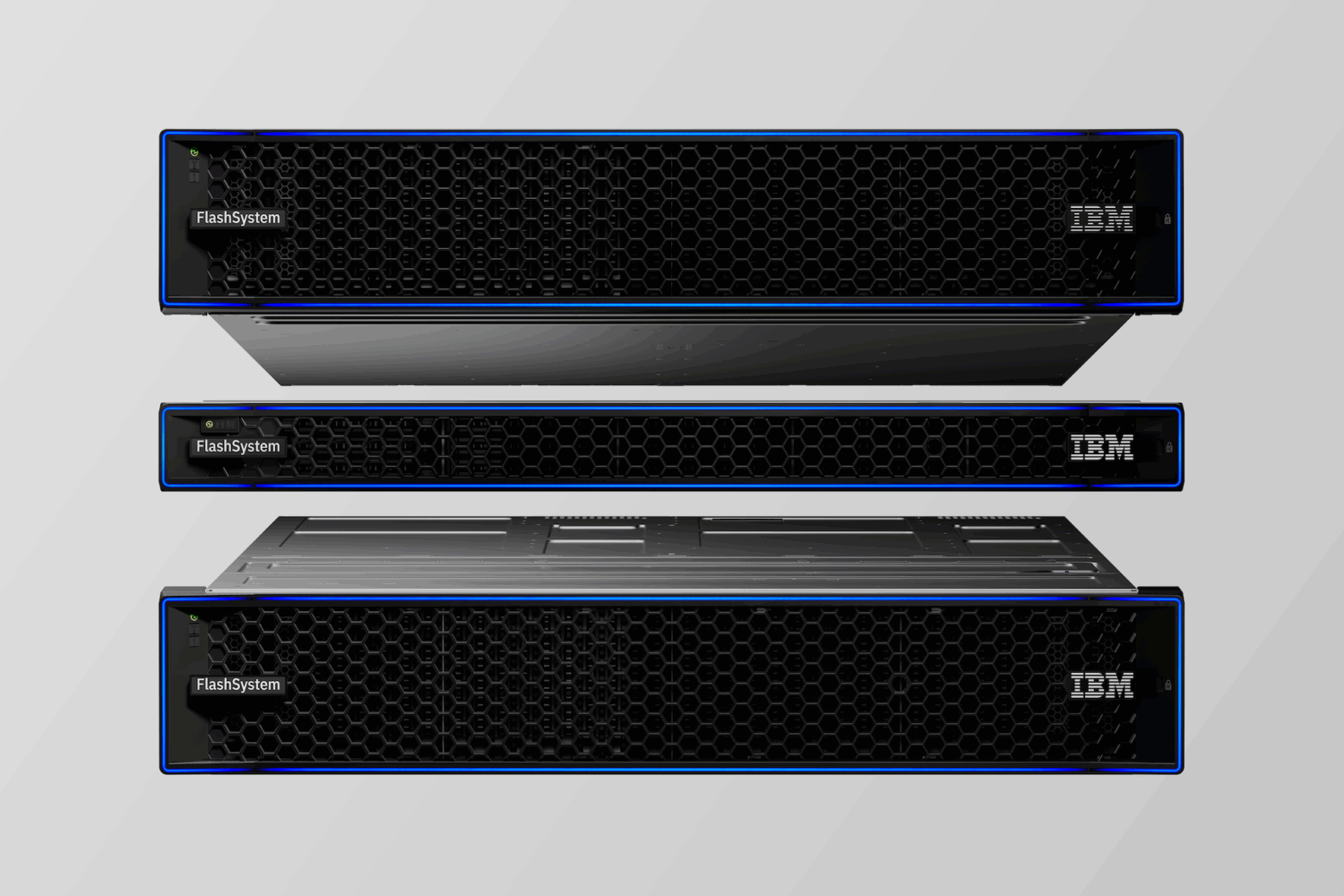
For larger work environments, the FlashSystem 7600 will be available with 7.2 PB of effective capacity in 2U and up to 4.3 million IOPs. The model is designed to handle virtualized environments, analytics platforms, and consolidated applications that require more capacity and faster response times.
The top-of-the-line FlashSystem 9600 delivers 11.8 PB of effective capacity with 6.3 million IOPs. “We can support 3.4 petabytes of raw capacity, or up to 11.8 petabytes of effective capacity in a 2U form factor,” Werner explains. IBM positions this system for mission-critical operations such as core banking, ERP platforms, and AI-driven applications. According to IBM, the model reduces operating costs by 57 percent through AI optimization and consolidation compared to the previous generation.
Ransomware detection in one minute
IBM attributes the uniqueness of its FlashSystem storage to its proprietary FlashCore drive. This is a core component of all newly announced models and is now in its fifth generation. This drive, with up to 105TB of capacity, performs hardware-accelerated real-time ransomware detection. The system calculates complex statistics on every I/O operation without affecting system performance.
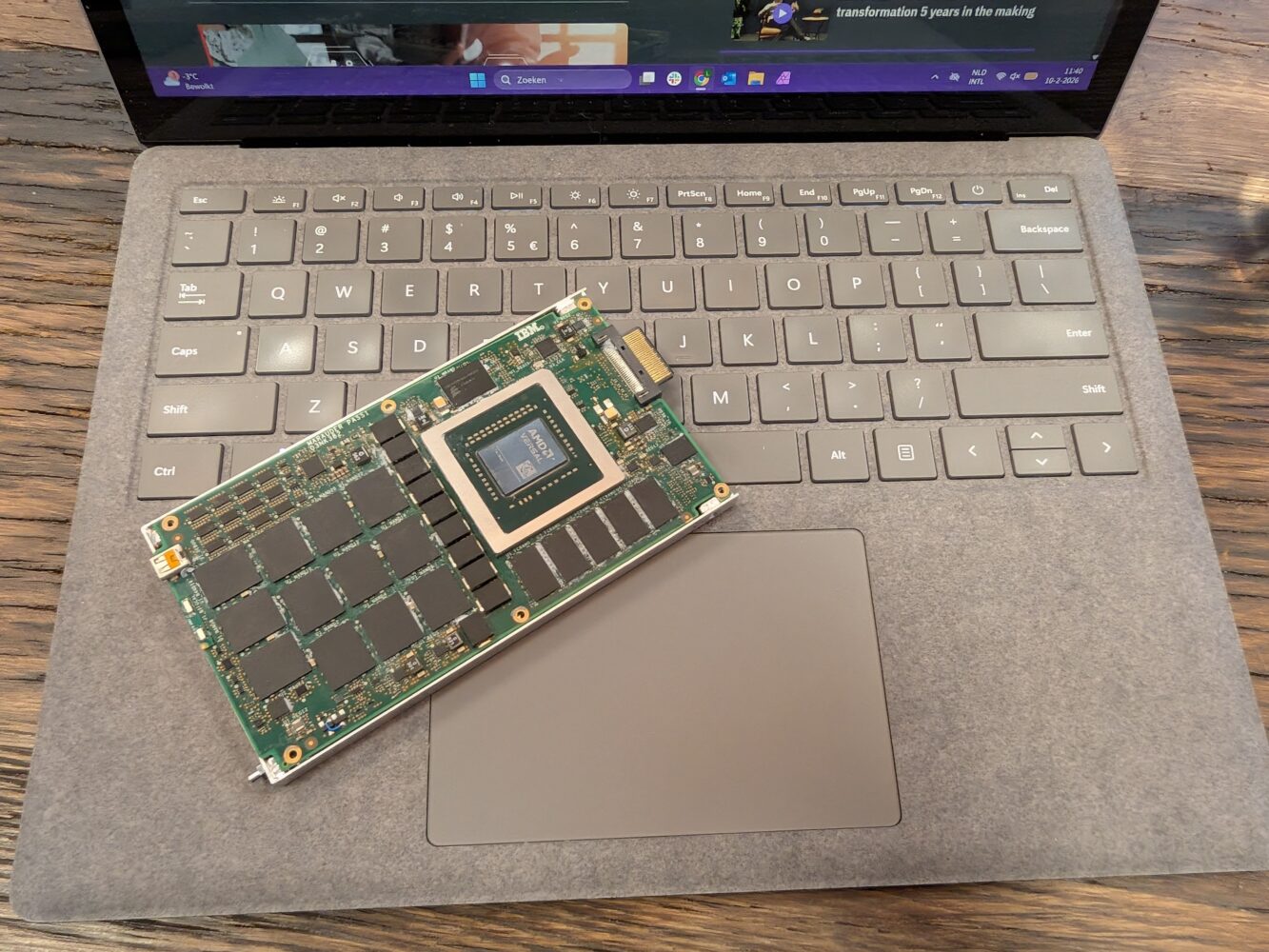
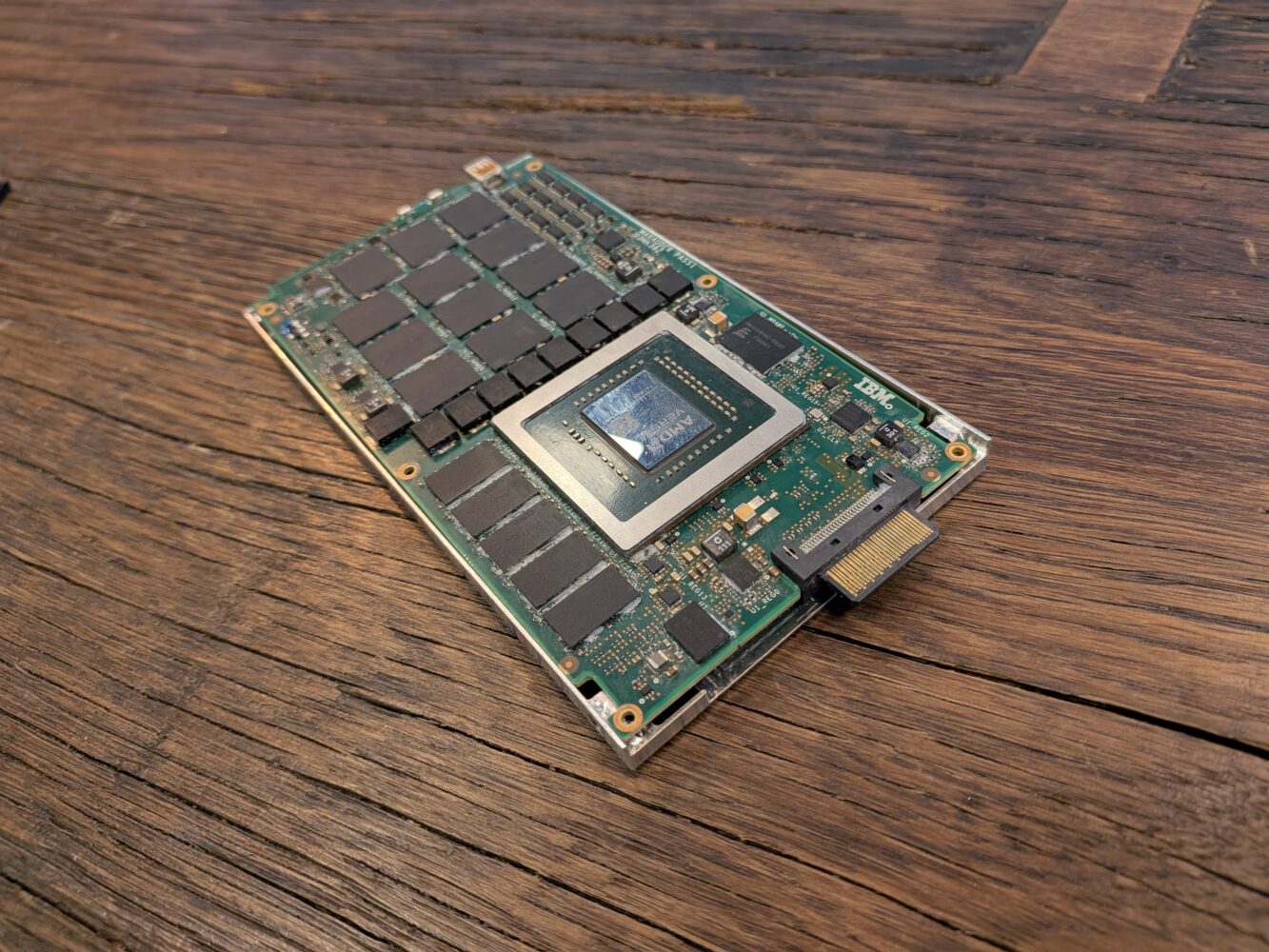
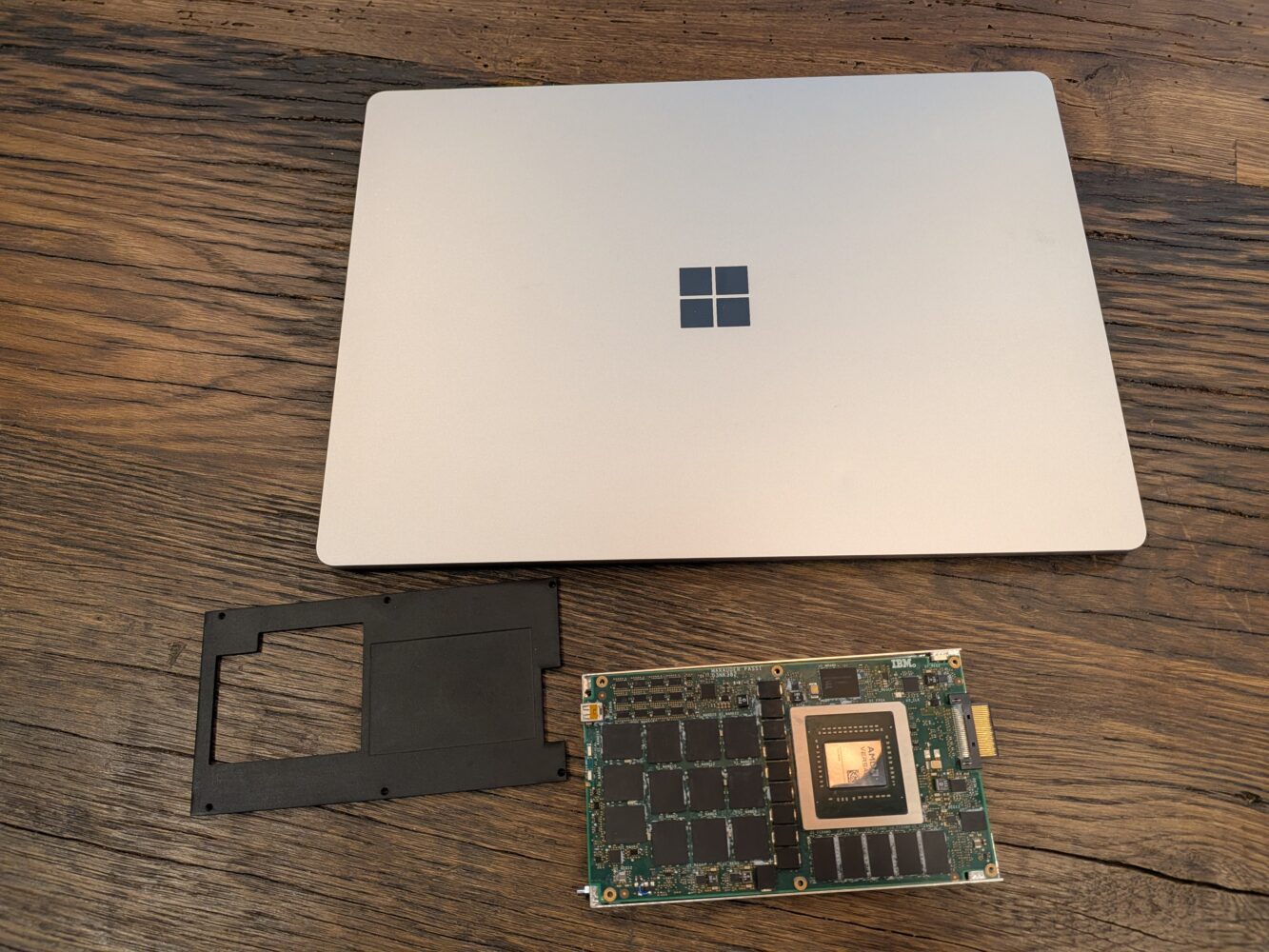
“We develop our own drives from start to finish, which gives us many advantages over standard industry SSD drives,” explains Werner. “We have computing power in this drive that allows us to outsource much of the work you would normally do in these arrays to the drive itself.” That work includes quantum-safe encryption directly in the drive for all data, compression, and, in this new fifth-generation FlashCore module, deduplication, which enables 5:1 data reduction.
Threat detection has an error rate, in which false positives are indicated, of less than one percent. AI-driven ransomware detection and alerting occurs within 60 seconds, with autonomous recovery actions at the hardware level. “We can look at every I/O that comes in and search for anomalies in the data. This allows us to guarantee detection of a ransomware attack in less than a minute,” Werner emphasizes.
Combined with IBM’s safeguarded copy technology, which creates a logical air gap of data, organizations can recover from a ransomware attack within a minute. “We make a copy of the data that is hidden from any external connection and is also immutable. When you combine that, you can recover from a ransomware attack in less than a minute by restoring from those safeguarded copies,” Werner said. This builds on earlier Cyber Vault functionality that IBM introduced in 2022.
How is IBM positioned in the storage market, which is currently experiencing shortages and price increases?
Regardless of the technical capabilities of this drive, there are also logistical advantages. Currently, there are severe supply chain problems in the storage industry, caused by AI training that requires increasing storage capacity. The combination of high demand and a shortage of supply logically causes huge price increases. Werner is convinced that IBM is in a position to offer better prices than other competitors: “Because of our position with our FlashCore modules, I think we are in a better position than most other suppliers. So far, we have been very stable in our pricing and less erratic than some other suppliers I have seen.”
Agentic AI learns quick
FlashSystem.ai is at the heart of the various AI capabilities woven into the drive. Werner emphasizes its transformative impact: “Imagine a storage array with built-in intelligence that constantly looks at billions of points of telemetry data and tries to understand what’s happening. We deliver capabilities that a storage administrator could never achieve on their own.”
The agentic AI function adapts to application behavior within hours, significantly faster than template-based systems. The system suggests performance improvements and explains its reasoning, while processing administrator feedback to refine recommendations.
The AI-generated operational reasoning also provides a perfect starting point for the documentation required for audits and compliance requirements. According to the company, it cuts in half the time a storage administrator would normally spend writing this documentation. Werner explains: “Storage administrators are very talented and they know where to look when there is a problem. But they spend most of their time on this and it requires considerable skill. What if the FlashSystem could enhance their skills, free up their time and allow them to spend more time on future innovation and architecture?”
The system provides recommendations on where to place data based on workload characteristics. That preferred placement changes dynamically as conditions change. The latest generation runs workloads with proactive tuning and intelligent placement for non-disruptive data mobility across storage devices, including third-party arrays.
Compatibility with existing systems
How does this new offering compare to the existing storage products offered by IBM? Werner explains that the new FlashSystem portfolio is widely applicable and works seamlessly with existing infrastructure.
“In the real world, there’s not just flash, but also hard drives. You have companies with enormous amounts of data,” said one attendee. Werner confirms that IBM fully supports hybrid implementations: “We support external spinning disk drives and external enclosures that enable our customers to run hybrid implementations, and we have many who do.”
FlashSystem Grid allows customers to combine the latest FlashSystem models with older generations and even third-party storage solutions. “We support more than 500 different third-party vendors,” Werner explains. “You can combine a mix of IBM and third-party technology, flash and spinning disk arrays and we deliver our optimal data storage solutions for them all.” This means that organizations can move workloads non-disruptively between IBM and third-party technology to achieve optimal performance and costs.
Availability
The new FlashSystem portfolio will be generally available on March 6, 2026. IBM is positioning the launch as the most significant FlashSystem release in six years. “We believe we are in a whole new era of how you manage with intelligent storage,” concludes Werner.
Read also: NetApp goes all out for AI with AFX and AI Data Engine