
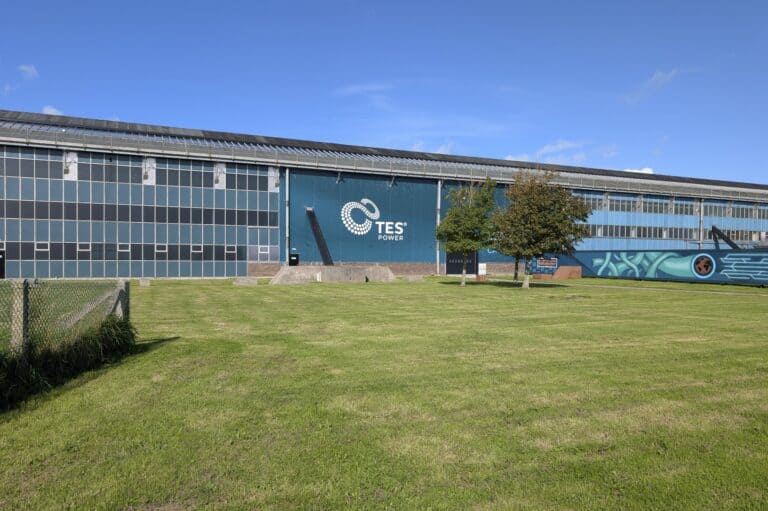
We recently visited Northern Ireland, where something interesting is happening at TES Group. The company is actively expanding a new division focused on power supply for data centers. Northern Ireland’s unique situation, combined with the company’s expertise in water systems, offers a wealth of opportunities.
TES Group consists of TES Water and TES Power. Since 1999, TES Water has been building and managing water systems for numerous regions across the United Kingdom and Ireland. It develops everything in-house; nothing is off-the-shelf, and everything is custom-made for a specific client. This division of the company has now reached the point where it handles, or is capable of handling, every aspect of building and installing a water system, except for pouring concrete.
TES Power was added later, because TES as a whole wanted to continue growing, and that wasn’t possible within the water sector. This division focuses on power supply systems for data centers. Incidentally, the two divisions haven’t been called TES Water and TES Power for very long. However, since they are clearly two distinct worlds for the time being, it’s useful to distinguish between them.
Cookstown and Ballykelly
Physically, the two divisions are also located at two different sites in Northern Ireland. TES Water is based in Cookstown, while TES Power is located on the grounds of a former RAF airbase in Ballykelly. That base remains largely as it has been for a very long time. The runways are still there, and TES Power uses the buildings that were already on the site.
The most striking building is a massive hangar. It features a so-called cantilever roof spanning about fifty meters. This type of has columns on only one side. This means there are no columns inside the space itself, and the other side can be opened in its entirety. This is important for TES Power, for reasons we’ll get back to later.
Finally, Northern Ireland’s location is also significant for the TES Group. As a result of the Brexit negotiations, it holds a very unique position. It can trade seamlessly with both Great Britain and the rest of the world. This should save a lot of hassle regarding import tariffs and the like.
TES Power is growing rapidly
TES Group has performed well in the water market. However, one challenge the company faces in this market is that further growth and scaling up are essentially not possible. You could say it has more or less achieved what it set out to do. Expanding into countries other than the UK and Ireland doesn’t make much sense. Water supply is, by its very nature, something that municipalities, provinces, and countries handle locally. That’s why 95 percent of all TES Group’s revenue in this sector comes from its own region.
If TES wanted to grow, it had to look for other market segments. That wasn’t so easy, according to Gary McLorn, Director of Business Development at TES Group. In most markets, they couldn’t make a competitive offer, by their own account, because of the high quality standards they strive for. They didn’t want to compromise on quality.
Apparently, however, it was possible to compete on quality in the world of power solutions for data centers. About three years ago, growth in that area accelerated. That’s not entirely surprising of course, given the insatiable demand for (AI) data centers.
The division now known as TES Power accounts for the majority of TES Group’s revenue. Incidentally, the TES Power revenue comes primarily from Europe, specifically, not the UK or Ireland. It’s also important to note that TES Power focuses on colocation data centers, not hyperscalers.
Power is much simpler than water
Developments in the data center market are currently moving very quickly. Still, we shouldn’t overestimate how complex this market is. In other words, this market is nowhere near as complex as what TES Water is used to in the world of water supply, McLorn points out. Ultimately, water is much more about regulation, fine-tuning pressure, dosing chemicals, and the like. Power supply doesn’t face any of those challenges. Put simply, it’s all about on and off. Consequently, there’s little room for qualitative improvement when it comes to something like switchgear for data centers.
TES Power’s competitive edge, therefore, does not lie so much in the use of higher-quality technology in the solutions it provides to customers. According to McLorn, it lies primarily in how TES Power operates, based on more than 25 years of experience in the water industry.
How does TES Power set itself apart?
Just like TES Water, TES Power does virtually everything in-house. That is to say, it builds the modules entirely on its own. To do this, the company has purchased machines capable of bending metal, as well as machines that can punch holes in metal. It also has a fully automated paint booth.
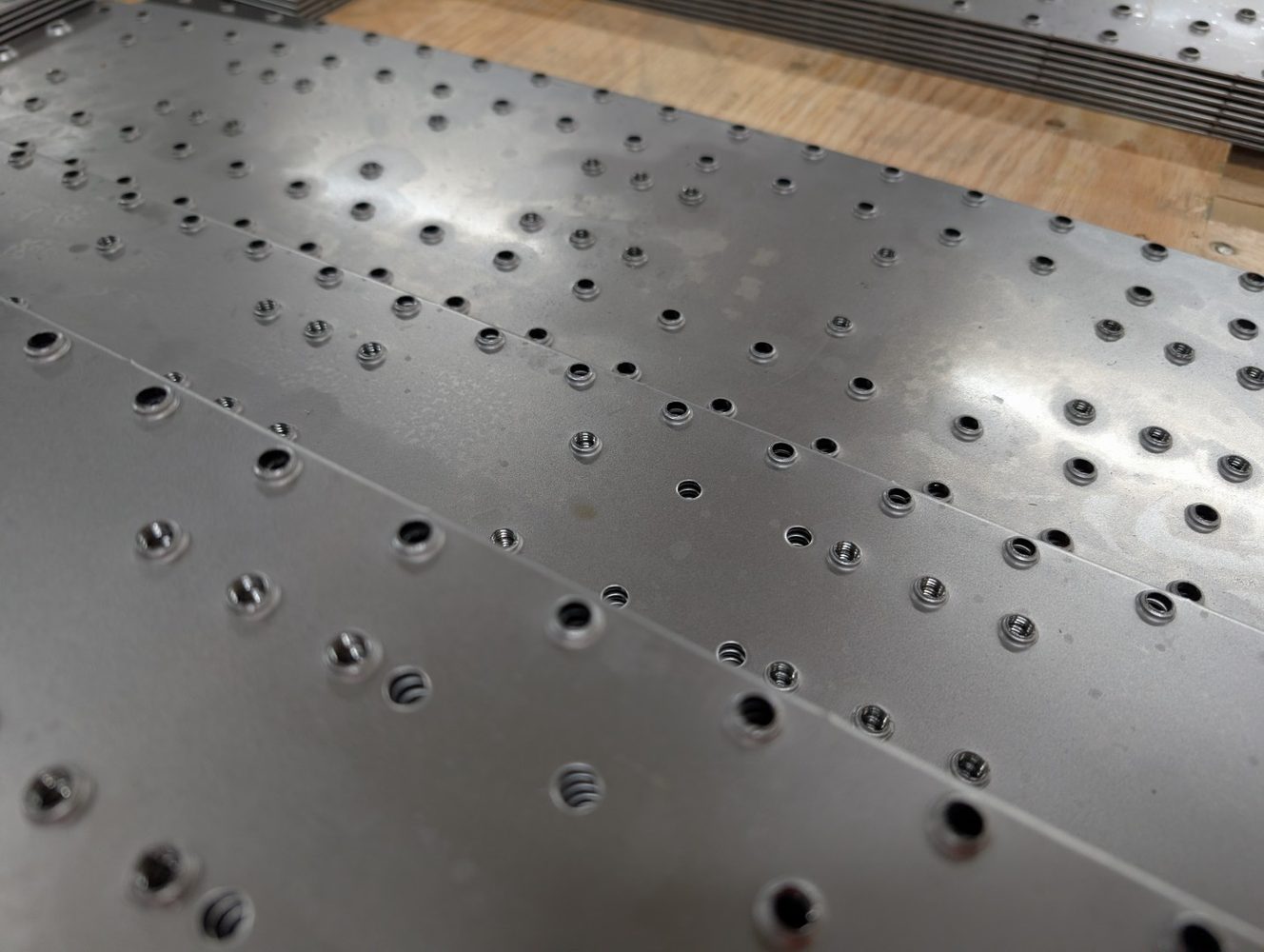
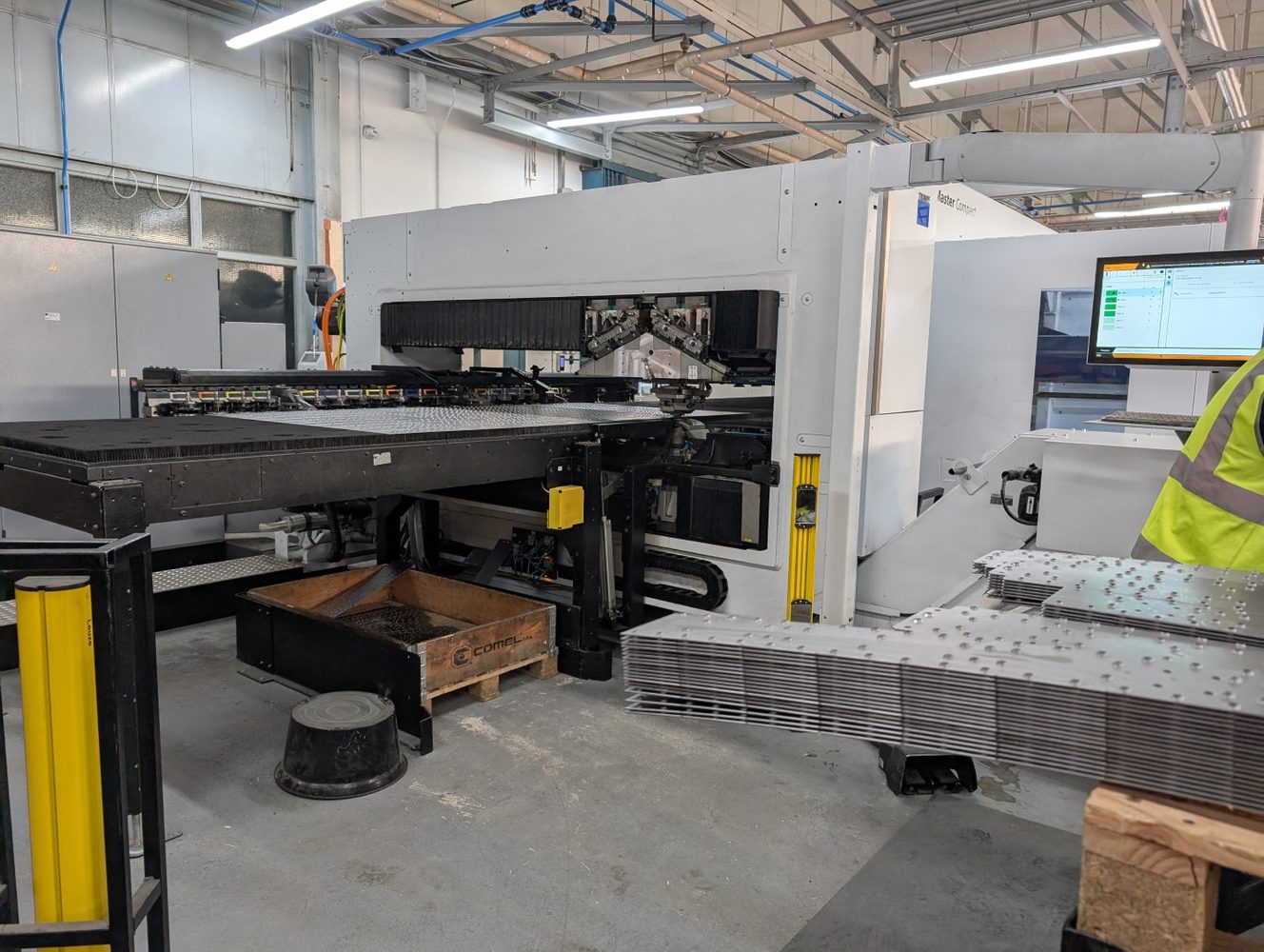
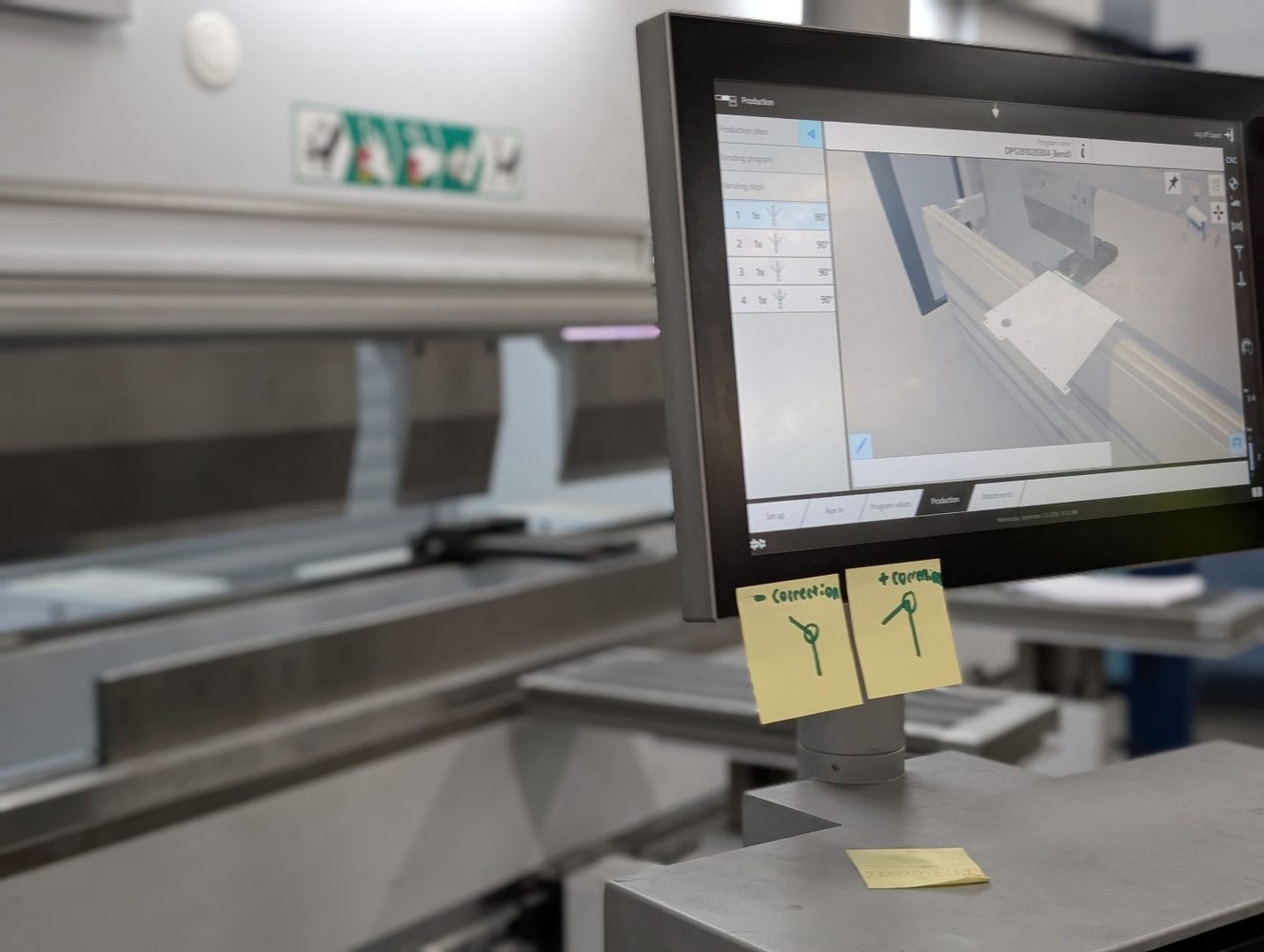
The main reason TES Power does all of this in-house is that it allows the company to maintain much greater control over the production process. This is important because the company builds everything modularly in the hangar we mentioned earlier. These modules are quite large. However, thanks to the hangar’s unique roof design, they can still move freely throughout the facility.
It is particularly the modular off-site construction that TES Power performs that makes it a distinctive player. The company has been doing this for decades, much longer than other players in this market. The advantage of this construction method is that it can be completed much faster than if everything were built on-site. It is because of this modular approach that the absence of colums in the hangar is a big advantage. It makes it possible to move the modules, which are about the size of a shipping container, around without freely.
This long-standing expertise also means that TES has made a great many mistakes, says Michael Beagan, the MD of TES Power, in conversation with us. That experience gives the company much more insight into what works and what doesn’t. It should make it possible to build everything as efficiently as possible. Ultimately, that benefits the customer. That’s also why TES Group as a whole is an early adopter of software that helps make the products it builds more efficient. Think of things like 3D modeling and digital twin technology, as well as Building Information Modeling.
TES Power does, however, purchase the actual switchgear, UPS batteries, transformers, and so on off the shelf from well-known suppliers. Customers can choose what they want, after which TES Power ensures that it procures and uses the correct components.
Can TES Group bring water and watts together?
All in all, TES Group is actually a somewhat unusual combination of two disciplines that, at first glance, seem completely different. Yet there is also an obvious connection to be made. More and more data centers require liquid cooling. This requires expertise in areas where TES Water excels.
According to Beagan, what he calls “transitional” discussions between TES Power and TES Water have now begun. However, he also points out that water is “ten times more complex than the data center.” That means there’s still quite a bit of work to be done before a truly integrated solution is in place.
In the area of integrating water and power supply into a single design, TES Power showcased something interesting during our visit. It is working on modular Hot Aisle Containment (HAC). It is doing this in collaboration with Legrand, the large and well-established French company that, following its recent acquisition of TES Group, aims to play a greater role in data center construction.
Until now, HAC has almost always been assembled on-site. However, in the hangar in Ballykelly, we saw the first steps toward a complete HAC module. “The manifolds are in place, and we plan to use it with all the piping installed,” Beagan explains. All in all, it seems that TES Group is definitely committed to bringing the two sides of the business closer together.
Data centers are critical infrastructure
To a certain extent, bringing water and power supply services together under the TES Group can be seen as a sign of the times. While water systems have traditionally been viewed as critical infrastructure, data centers are increasingly being seen in the same light.
The fact that a company like TES Group is getting involved in this and, by its own account, intends to view it through the same lens as it views the water sector is good news for that development. With the investments the company is receiving following its acquisition by Legrand and the French company’s promise that it will remain a standalone division, TES Group is certainly a company to keep an eye on in the coming period.
Read also: Scaling at speed: How AI is rewriting the blueprint of the modern data center