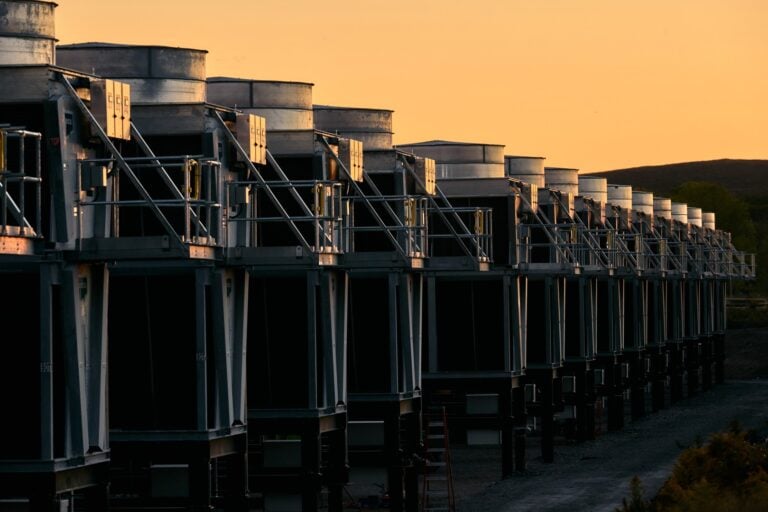
With Nvidia leading the way, AI is making everything go faster and faster. The rest of the market just has to keep up. To see how this is impacting data center construction, we recently visited TeraWulf’s new flagship Lake Mariner AI campus, currently under construction on the shores of Lake Ontario, at the invitation of Schneider Electric. There, we got a glimpse into how this works and, above all, how it can be done as quickly as possible. Speed, energy availability, and a well-thought-out full-stack approach to hardware and software from Schneider Electric play an important role in this.
Data centers are undergoing a major evolution. Fundamental changes are taking place in virtually every area. Consider the scale (in MWs), how all IT equipment can be cooled, the monitoring required, how the design process works, the flexibility and dynamism that must be built into data centers, and we could go on and on.
Many of these changes can be attributed to the rise of AI. As Marc Garner, Global President, Cloud & Service Providers at Schneider Electric, put it during the event: “It’s all about tokenization, converting compute into [AI, ed.] output.” He predicts that 36 percent of all compute power organizations deploy will be running AI workloads by 2030. That’s why the number of neoclouds, GPU clouds, or whatever these providers call themselves, has risen sharply in recent years. Everyone wants a piece of the action. Moreover, such an expansion of compute power for AI is also necessary. The expected workloads that AI brings with it can no longer be handled within “old-fashioned” hybrid environments, which consist of public cloud and on-premises infrastructure.
The challenge: scaling up quickly
However, everyone active in the AI infrastructure market faces a major challenge. A vast amount of infrastructure must be built to process all the AI workloads on the horizon. Given the pace at which Nvidia and other key market players are scaling up, this must also happen very quickly. This “scaling at speed,” as Garner calls it, is not easy.
There are several reasons why scaling up quickly is not easy for data center builders. The most important of these is the connection to the power grid. Everything hinges on that. This is currently a major issue, as an energy transition is also underway. This means it is not simply possible to secure a fairly large capacity on the grid.
The kW/MW per rack on which the reference designs from Schneider Electric and Nvidia, among others, are based are also only going up. During our visit, we heard that 150 kW racks are already in use. In a year or two, with the Feynman generation of GPUs from Nvidia and others, that could already be 1 MW per rack. To get all those MWs to the rack, a transition to 800V DC is also on the horizon. That means a fairly radical change in how power and voltage will be configured in data centers.
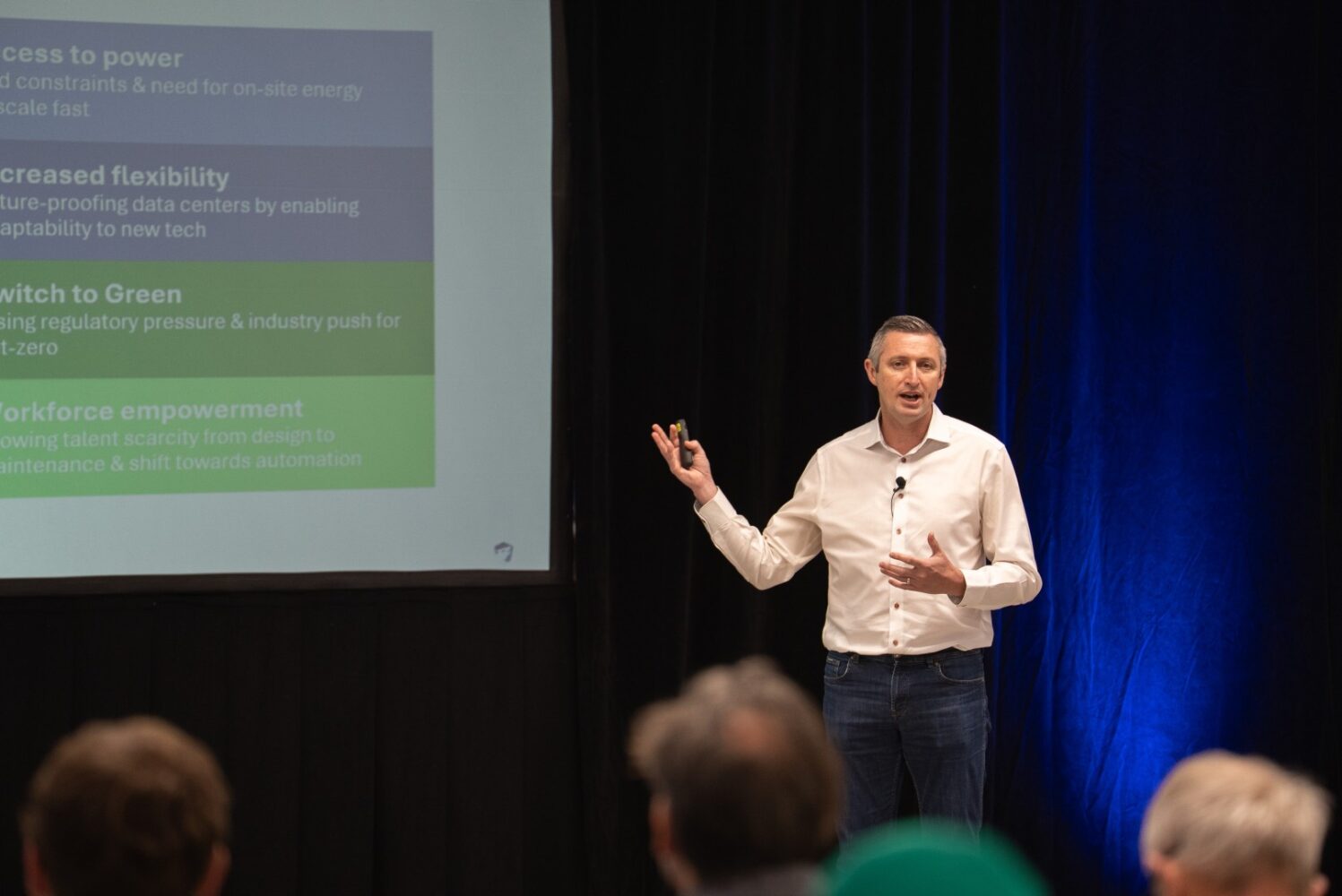
In addition to the power that AI data centers, in particular, will draw from the grid, there is also the challenge of optimizing the supply chain to the extent that rapid construction becomes feasible. Finally, there is the more or less mandatory transition to liquid cooling. Liquid cooling has, of course, been possible for a long time, but mainly for supercomputers and other HPC purposes. That is where Motivair has made a name for itself “under the radar,” in the words of Motivair CEO Rich Whitmore. He sees Nvidia’s H100 GPU as a turning point in that regard. From then on, liquid cooling became more or less a requirement for data centers targeting the types of workloads for which it is needed.
During our visit to TeraWulf and Motivair, which, by the way, has officially been called Motivair by Schneider Electric since the acquisition, we gained insights into all these aspects and how they are interconnected.
TeraWulf: transition from bitcoin mining to AI
TeraWulf isn’t really well-known outside the U.S. yet. After all, it’s only been around since 2021. Initially, it was a company that built infrastructure for Bitcoin mining. That’s still how it’s listed on Wikipedia. In itself, such a starting point isn’t unusual. Many companies that now play a key role in the development of AI infrastructure started out that way. The best-known to many will undoubtedly be CoreWeave, but there are many more.
TeraWulf has since shifted its focus to building AI data centers. This is a completely different workload than Bitcoin mining and also requires a different infrastructure. Obviously, this shows in the types of servers TeraWulf deployed in the data hall. In addition, the orientation of the racks and aisle, and thus ultimately in the shape of the data halls themselves is different too between Bitcoin mining and AI workloads. In a rectangular building, the racks for bitcoin mining are positioned parallel to the short sides of the building. Racks used for AI workloads have a different orientation. They’re positioned parallel to the long side, we hear from Sean Farrell, TeraWulf’s COO. This makes building and running the data hall easier. Also, the AI workloads that TeraWulf offers to Core42 and Fluidstack (which gets backing form Google) require liquid cooling. For Bitcoin mining, air cooling will do.
In any case, TeraWulf is serious about this. The goal is to build a total of just under 3GW of AI capacity spread across multiple sites, Farrell says. Exactly how many sites there are isn’t entirely clear to us. Farrell himself mentions five sites: two in New York, one in Texas, one in Kentucky, and one in Maryland. TeraWulf acquired the latter two a few months ago. However, the company’s own website lists six, with an additional data center in Kentucky.
Whether there are five sites or six, it is undeniably clear that TeraWulf is making significant strides. That is why the question came up whether there are also plans to explore opportunities outside the U.S. We did not receive a clear answer to that. Except that TeraWulf is always on the lookout for opportunities. In theory, those could also be in Europe. We didn’t really get the impression that this is actually a serious option.
Lake Mariner AI Campus is big, really big
TeraWulf may have five or six sites, but the one we visited is what they call their flagship site. In other words, the Lake Mariner AI Campus is the largest and most advanced of them all. That is, it will be. Because right now, there’s a lot of construction activity going on. A total of about 1,600 people are working day and night to build the various separate buildings from the ground up. And that’s happening very quickly.
During our visit, we went inside one of the newest buildings. This particular building can house tens of megawatts of capacity. It was practically complete when we visited it (excluding the IT equipment). This is rather impressive if you take into account that the first spade for this building went into the ground on January 1 of this year (2026). Work on a similar building next to it began on April 1. TeraWulf have finished that one for 50 percent already too.
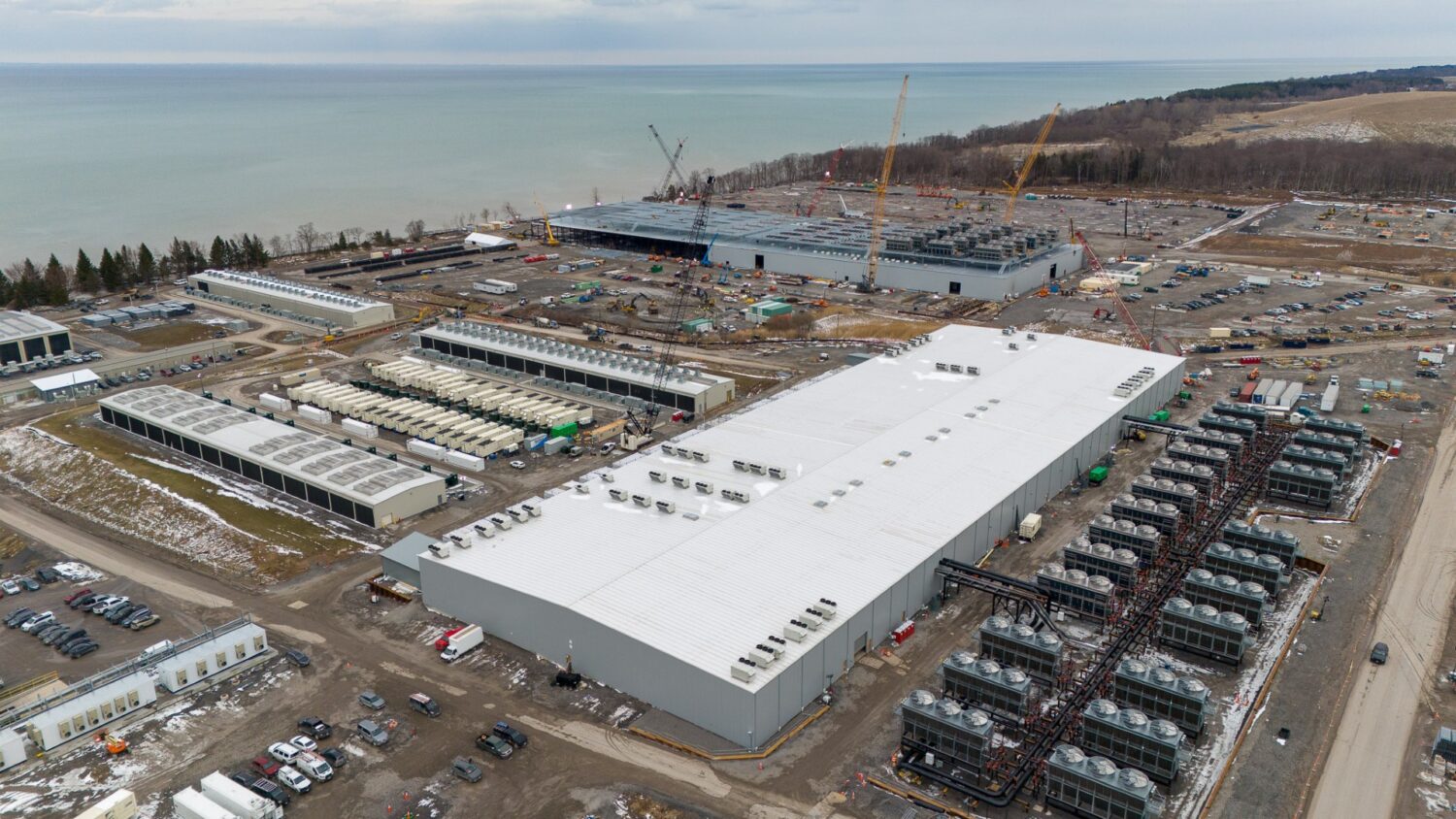
Furthermore, this was by far the largest site we’ve visited so far. In total, the site covers an area of 1,800 acres, Farrell notes. If we convert that to hectares, it comes out to over 728 hectares. And that, in turn, is 7.28 million square meters. Of course, data center TeraWulf won’t cover the entire 1800 acres with data center infrastructure. It will cover an area of 180 acres. So the decimal point shifts one place in the figures above: 72.8 hectares and 728,000 square meters of data center infrastructure.
In total, no less than 750 MW of capacity will become available. That is the maximum power reservation TeraWulf can make. Currently, TeraWulf has permission for 500 MW, but there is still room to expand this. With 750 MW, this is definitely a large data center campus. Of course, there are bigger ones. Think of the Start Campus site in Portugal that we visited last year. That will be 1.2 GW when that is finished. Nevertheless, 750 MW certainly falls into the category of very large data center campuses.
The right starting point
If the available capacity of the power grid is the most important factor in developing new data centers, it stands to reason that this is the starting point. Whereas traditional data centers were often built near people and businesses due to factors such as latency or the need to dissipate residual heat, this is much less important for AI data centers. Especially for data centers that customers use to train models, factors like latency to the outside world matter little to nothing. It all comes down to whether there is sufficient capacity on the power grid. And that is often a challenge in traditional data center locations.
It is therefore no surprise that it takes us about 1.5 hours to travel from our hotel in Buffalo to the Lake Mariner AI campus. TeraWulf is building it on the shores of Lake Ontario. Not, however, to use the lake water for cooling purposes, as we saw at Start Campus. The reason TeraWulf builds the campus here is because there is a defunct power plant on the site. The gas-fired power plant has not been operational since 2020, but the available capacity is still there. That is why TeraWulf purchased this site. Other sites owned by the company are also former power plants.
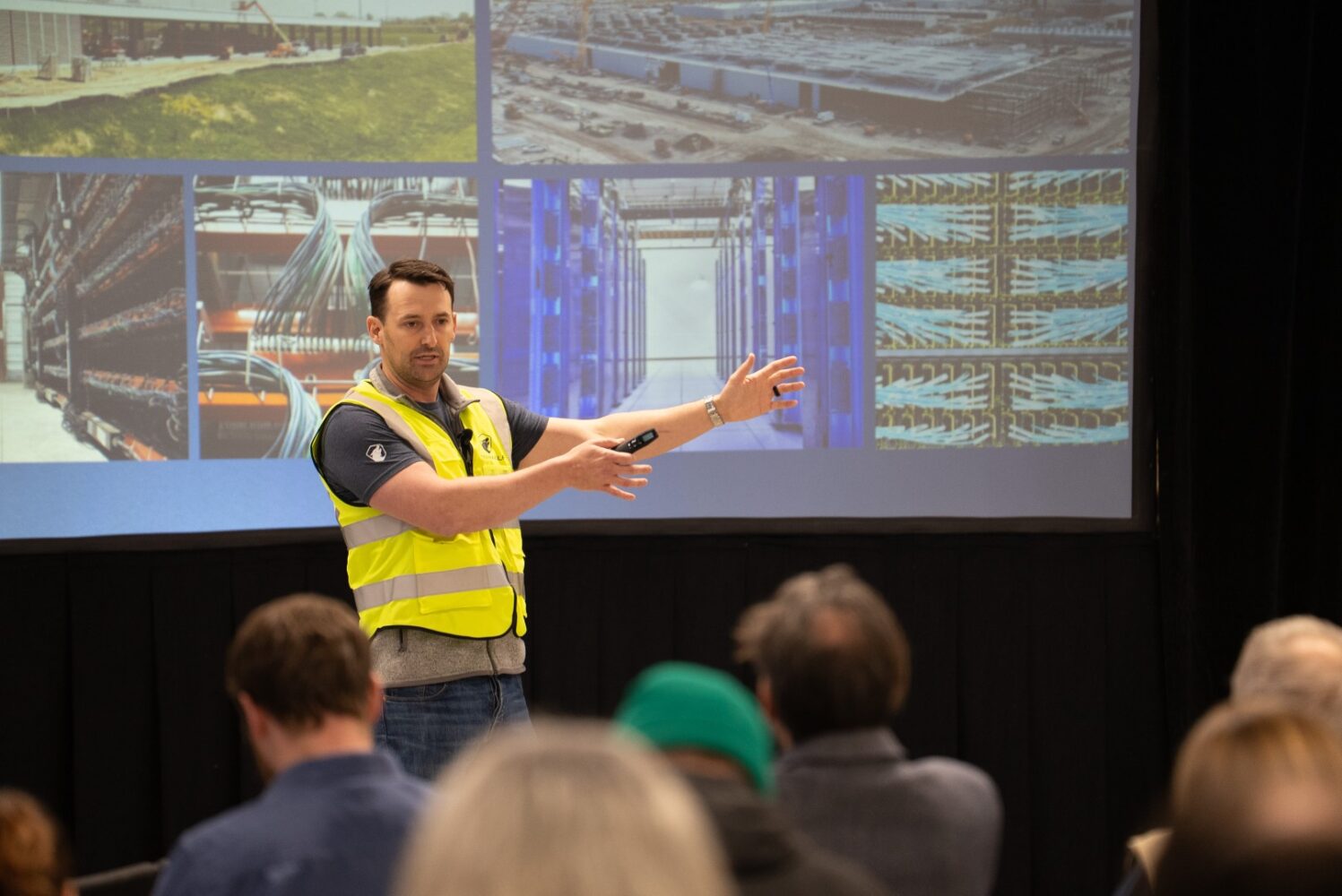
The focus on power supply is evident throughout the company. Farrell has a background in this sector. TeraWulf still employs around 30 people who worked at the power plant. According to him, that background helps not only with the intricacies of power supply. Power plants typically use liquid cooling as well, so the principles applied there also came in handy for the new construction on the site. For the record, the old gas plant will remain in place, as TeraWulf is utilizing its existing infrastructure.
It should be clear that building an AI data center actually has little to do with IT. This has long been evident in public discourse, but it’s also truly the case in daily practice.
The role of Schneider Electric and Motivair
With the liquid cooling we discussed in the previous section, we’ve identified the role that Motivair, in particular, plays in the TeraWulf story. Visiting several Motivair locations around Buffalo, we see what the company actually manufactures. When it comes to cooling data centers, it primarily involves two different components: CDUs and HDUs. CDU stands for Coolant Distribution Unit and HDU stands for Heat Dissipation Unit. The former ensures that the liquid in a closed system reaches the right places. The latter extracts heat from the liquid and blow it away.
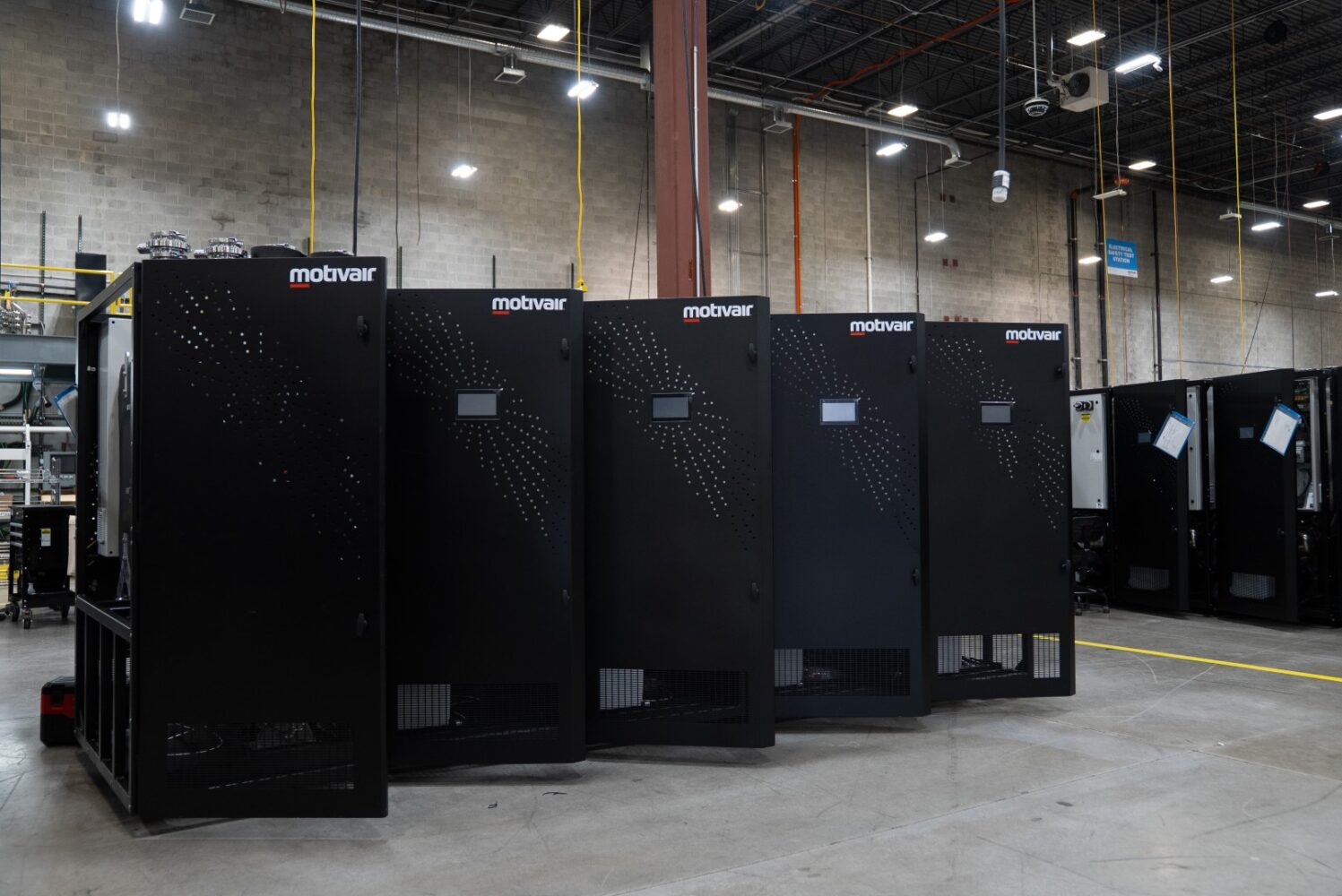
During our visit to the Motivair assembly lines, we saw many different variants of the CDU. It comes in several sizes. For example, there is one that you place at the bottom of a rack, which then handles the distribution of liquid for the (direct-to-chip) cooling of that rack. However, there are also standalone CDUs. Strangely enough, these are not quite the size of a standard rack, but are roughly the same size. From a central location, these units distribute the liquid to multiple racks. Within that housing, there are various configurations. That is to say, Motivair can supply CDUs of different capacities in the same package.
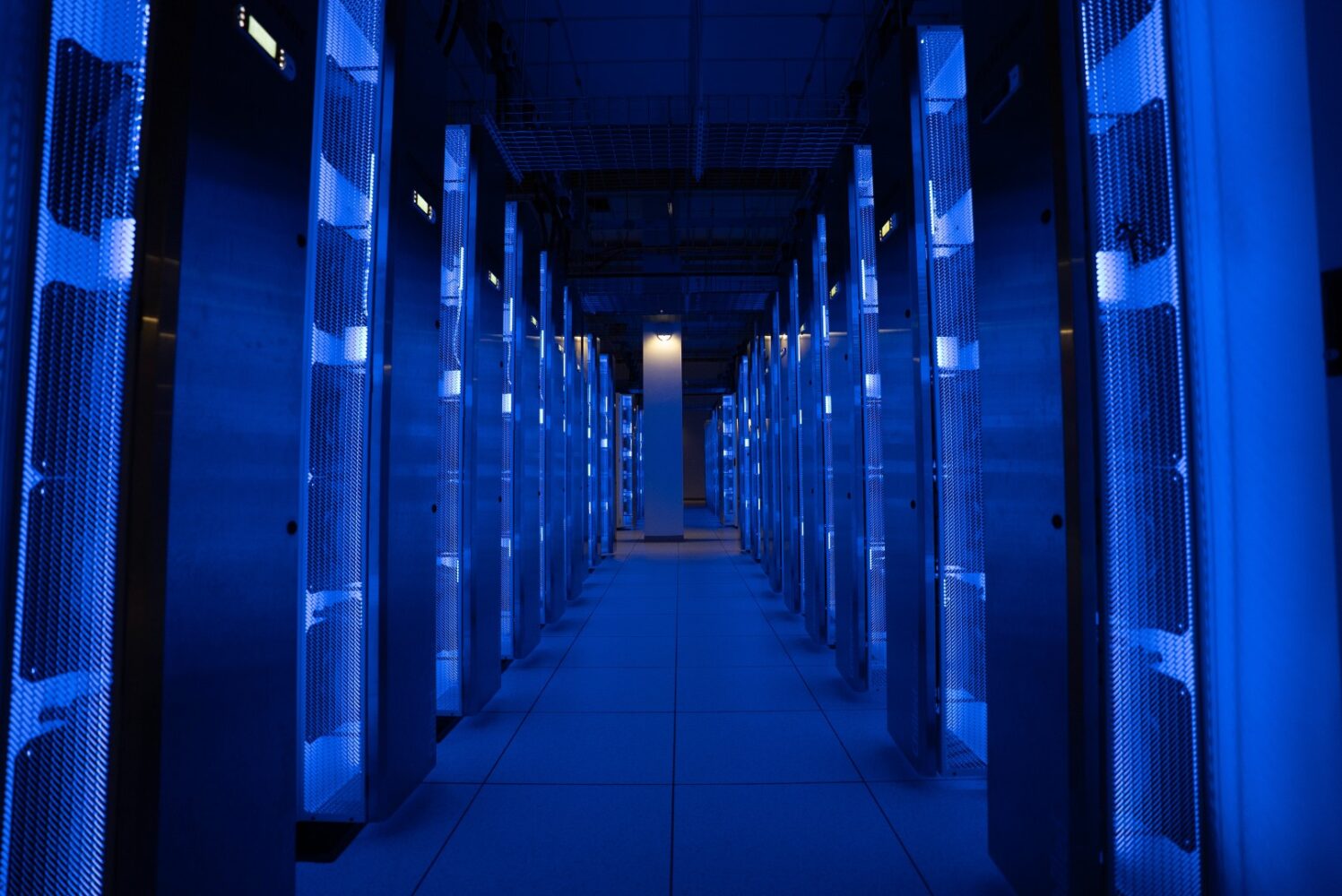
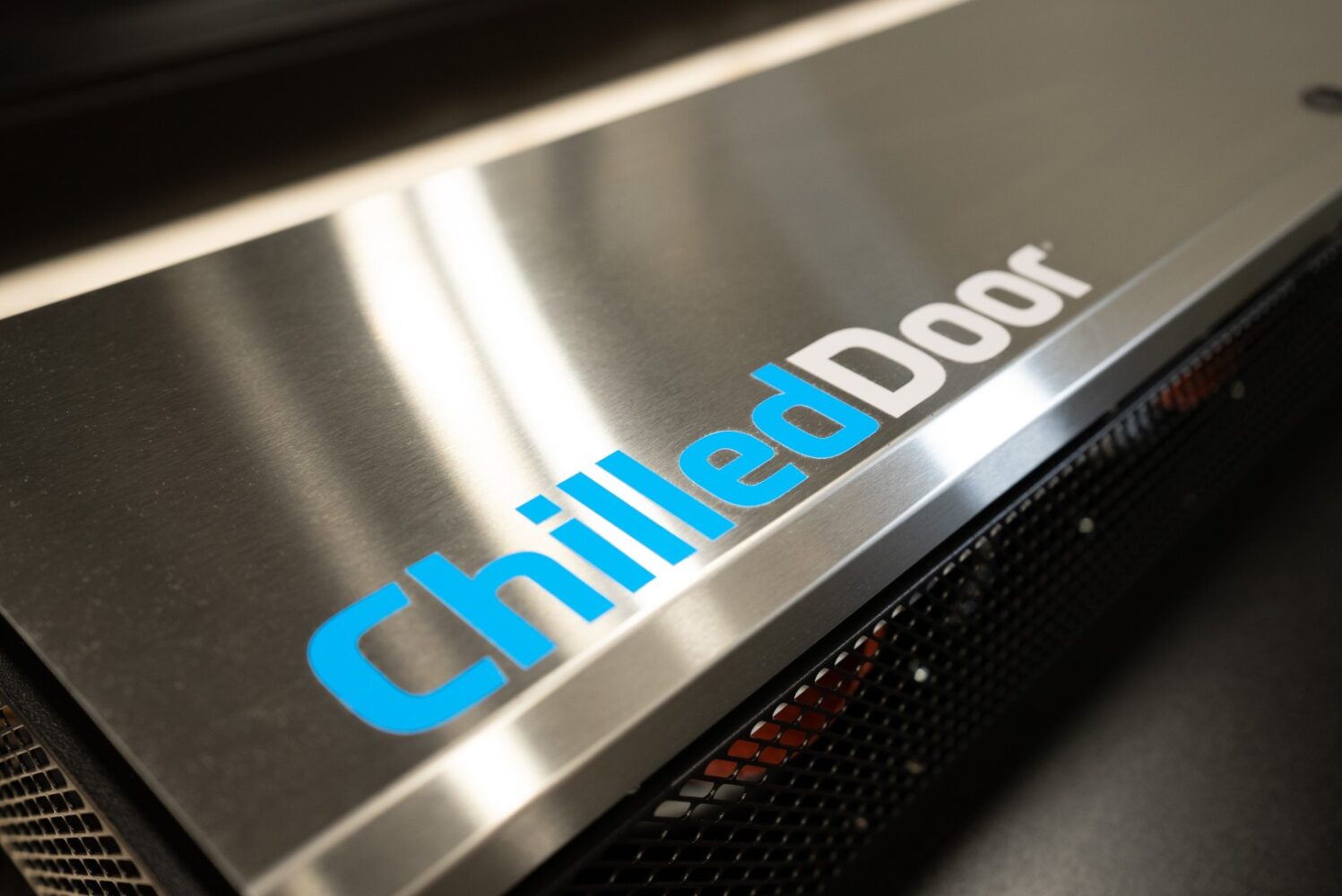
Finally, we also saw Motivair’s so-called ChilledDoors. As the name suggests, these are doors that you attach to racks to cool them. These doors, which according to Motivair fit all standard racks, are cooled; they draw in air, which is then pulled through the server and warms up. The air then passes through a liquid-cooled heat exchanger and is blown back into the room after being cooled. This is therefore a combination of air and liquid cooling.
A ChilledDoor isn’t particularly useful for heavy-duty AI racks, by the way. A single door can cool a maximum of 75 kW per rack. If you need more capacity, you’ll have to go with direct-to-chip and CDUs.
Motivair fits into Schneider Electric’s strategy and stack
Schneider Electric isn’t the only player supplying cooling for (AI) data centers. However, in recent years, it has been quite aggressive in building a complete stack. It often refers to “grid to chiller, chiller to chip” to describe this complete stack. In other words, from the power grid to the cooling system and from the cooling system to the IT infrastructure. According to a spokesperson for Schneider Electric, the company can supply about 90 percent of what goes into a modern data center.
With the acquisition of Motivair, Schneider Electric has filled an important gap, Motivair CEO Whitmore tells us: “Schneider Electric has a very broad portfolio, but lacked expertise in transferring heat from the chip to the chiller.” It can do that now. Around the time of the acquisition, Motivair was already actively exploring its options. They wanted to sell or grow with the help of private equity. During our conversation, Whitmore shares an anecdote to illustrate that Schneider’s acquisition of Motivair was a good and smart move. At the time of the acquisition, he was on a call with Nvidia and mentioned that Schneider Electric wanted to buy Motivair. According to him, Nvidia reacted very enthusiastically to that.
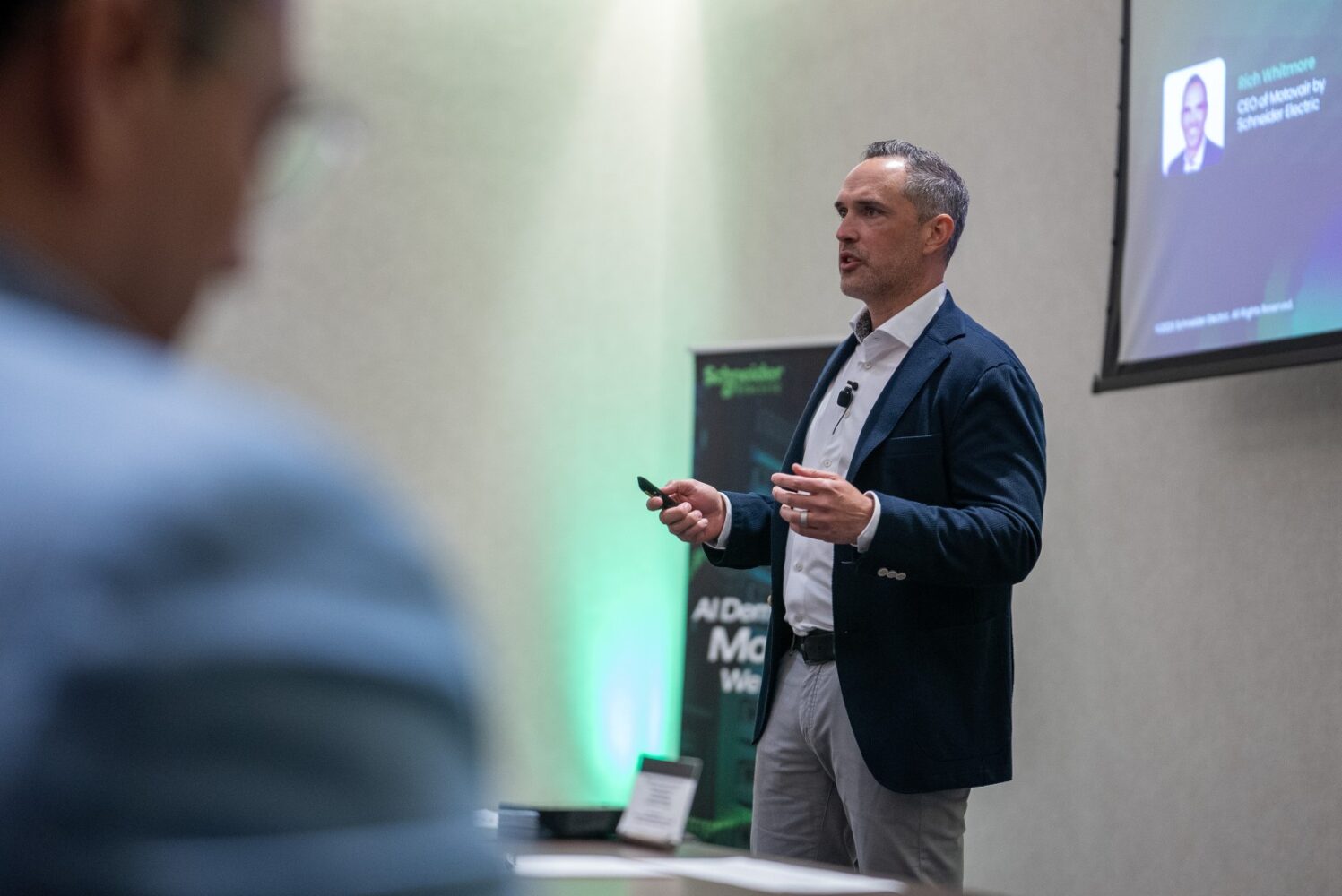
The main reason Nvidia reacted enthusiastically could very well be that Motivair fits almost seamlessly into Schneider Electric’s product portfolio. That’s not surprising, of course, because Motivair has undoubtedly always tailored its designs to what the big players in this industry offer. Since Schneider Electric and Nvidia collaborate on many reference designs, the math is easy to do.
A healthy supply chain means making choices
The fact that Motivair is part of Schneider Electric undoubtedly played a role in TeraWulf’s decision to partner with Schneider Electric. It can source virtually an entire stack from the same provider. For example, we also saw Schneider’s UPS units (see photo below).
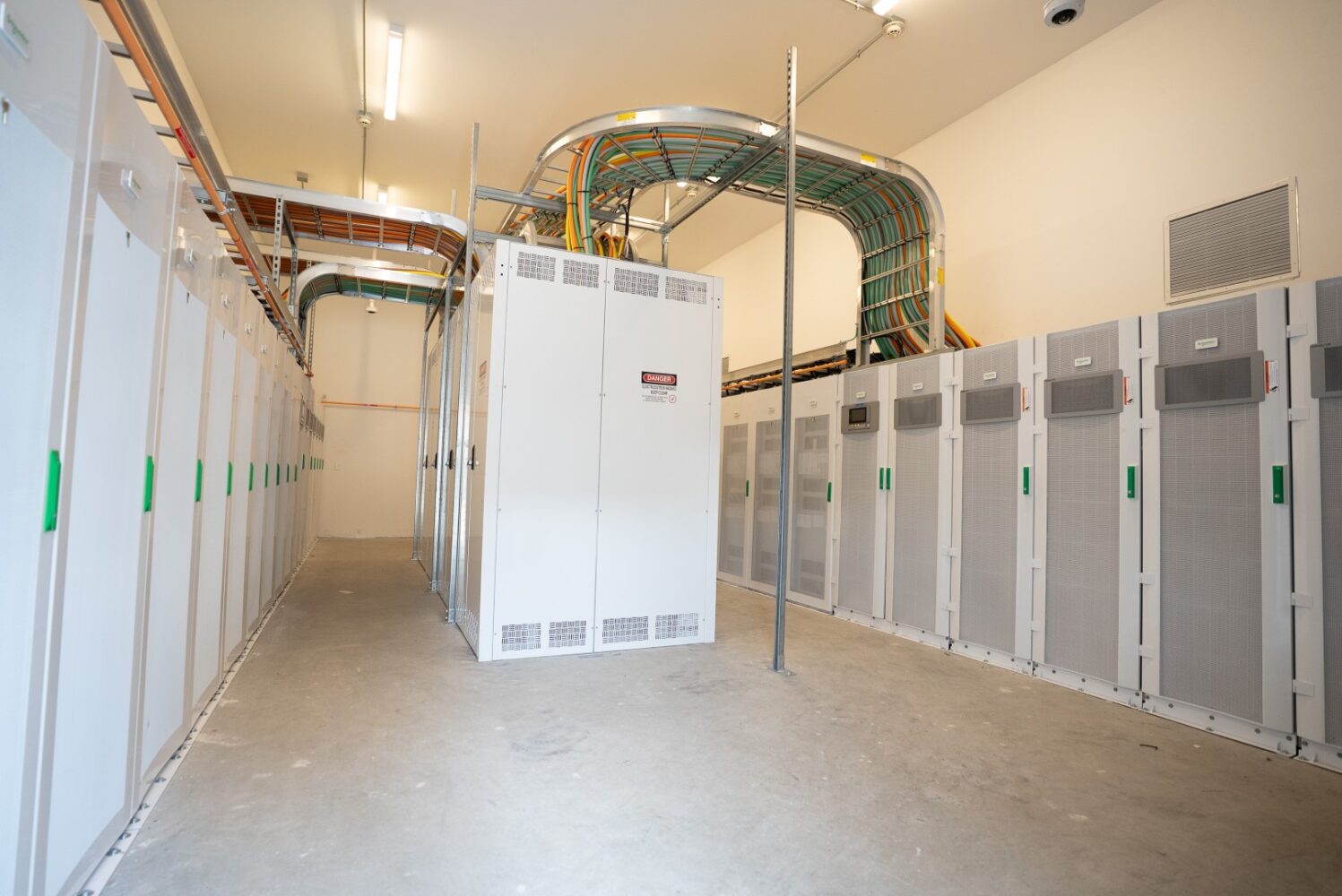
Purchasing a lot from the same suppliers is very important operationally. Given the pace at which TeraWulf wants to build, the company needs to have an excellent supply chain. If a lot of that comes from the same supplier, that’s convenient. To illustrate how important speed in the supply chain is for TeraWulf, Farrell points to specific pipes running through a data hall as an example. They didn’t purchase them in the diameter they originally had in mind, but slightly smaller. TeraWulf can source that size more widely and thus have it delivered faster.
Mind you, TeraWulf certainly doesn’t source everything from Schneider Electric. Although there is added value in terms of scalability in purchasing as much full-stack as possible, TeraWulf also follows the trend toward multi-vendor solutions in data centers. For example, during our tour of one of the halls, we saw quite a few PDUs (Power Distribution Units) from another supplier. We don’t know if that supplier was able to deliver them faster, or if this is a deliberate strategy by TeraWulf to diversify its supply chain.
Software plays a decisive role
However, software is also playing an increasingly important role in the construction of data centers. In fact, we wouldn’t be surprised if this role ultimately proves more significant than the integration of Motivair into the Schneider stack. It’s no coincidence that Whitmore cites the Etap software as a key asset for Motivair. This software makes it possible to simulate the entire electrical architecture of a data center during the design phase. This is particularly important given the expected transition within data centers from 48V/56V AC in-rack power supply to 800V DC outside the rack, especially if, like TeraWulf, you want to move as quickly as possible. (Much more on 800V DC coming soon. We’ll be publishing an article plus a video of an in-depth discussion on this topic.)
In addition to Etap, Schneider now offers much more software. It all actually started with the development of its own EcoStruxure software, which enables data centers to manage their infrastructure. A few years ago, Schneider also acquired AVEVA, which offers software for data management and visualization, among other things. Together with Etap, Schneider’s software portfolio is quite impressive. It has to be if it wants to take full-stack seriously. Without good software, it’s virtually impossible to deliver anything full-stack.
Building fast is building full-stack
One thing is clear to us after our visit to Motivair and TeraWulf: AI data centers require a completely different way of thinking about their construction. Speed is, of course, crucial, but that also means more groundwork, more precise design, and a broader view of the whole picture. Looking at the entire stack—including the supply chain and the construction of the buildings that house the data halls—is now even more of a requirement than it already was. Software plays a decisive role in this. Only with software can you maintain the insight and overview that are necessary. After all, there is little room for error—and thus delay—when everyone is clamoring for more AI computing power.