
How do organizations identify vulnerabilities in the codebase of the software they use? Cisco says that with the new Antares models, it offers additional capabilities to find vulnerabilities faster. Thanks to the use of Small Language Models (SLMs), this can also be done in a cost-effective manner. Starting today, the first two models in the Antares family are available on Hugging Face. A third is coming soon.
Cisco has been making strides for quite some time when it comes to securing AI. The relatively new business unit known as Foundation AI is focused on this, among other things. When Foundation AI was established, an open-source security model was immediately launched. At the time, it was called the “Security AI Reasoning Model.” In the meantime, Cisco has also added the Cisco Foundry Security Spec to its portfolio. This is an open framework designed to help you effectively manage AI within your organization.
Two major challenges…
The Antares models that Cisco is announcing today can be seen as a further development of Foundation AI’s ambitions. Compared to last year’s model, which had 8 billion parameters, the new models are significantly smaller. Based on their names, Antares-350M and Antares-1B have 350 million and 1 billion parameters, respectively. Antares-3B, which will be available soon, is expected to have 3 billion parameters. These can certainly be called SLMs.
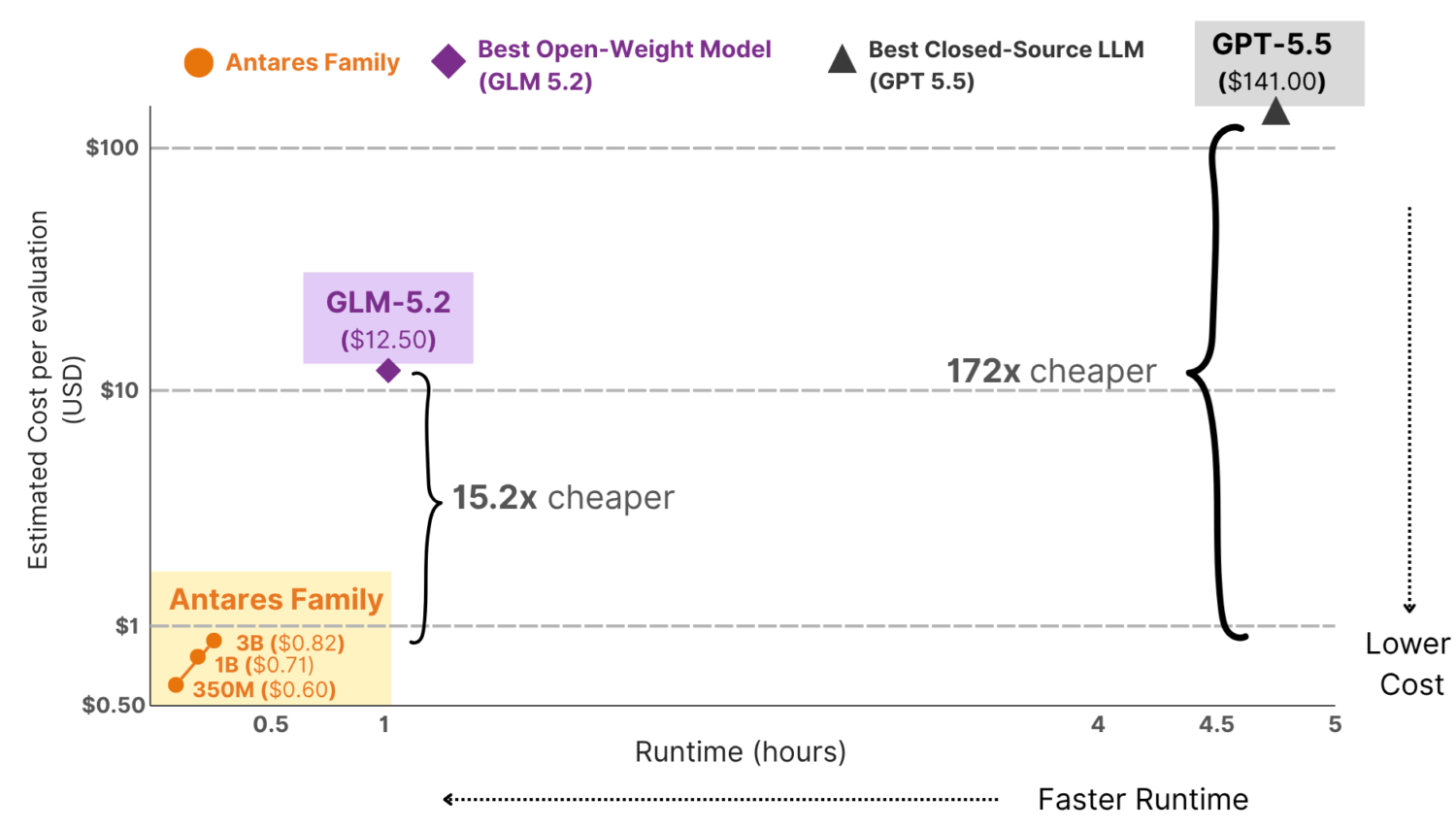
When it comes to finding vulnerabilities in code, there are at least two major problems that security analysts and organizations face. The first problem is that security analysts are simply overwhelmed by code they don’t know, unclear naming conventions, and so on. Repositories are large, and documentation is difficult to find in a centralized location. The second problem is that while an LLM can detect many issues, it is very expensive. That’s not ideal when you need to inspect enormous amounts of code.
…Antares solves them, says Cisco
Cisco’s Antares models solve the above problems, according to the company itself. It has managed to make the SLMs powerful enough to find the vulnerabilities. Foundation AI has ensured that, for this specific use case, a small model can search, reflect, adapt strategies, and even decide to abandon a specific path if it’s not leading anywhere, and then try a different approach.
So, according to Cisco, a large model isn’t necessary for a process as complex as finding vulnerabilities in massive amounts of code based on a great deal of input. It claims to have successfully taught the SLMs strategies that are effective. The idea is that the Antares models operate just as a security analyst would. The model starts with a description of the vulnerability, searches for relevant patterns in the code, and proceeds step by step. The models also incorporate new insights as the investigation progresses.
The final result is a list of files that require closer examination. The Antares models immediately rank this list. They also explain how they arrived at the list of vulnerabilities.
New benchmark
The fact that the Antares models are so small and have such a clear focus means it’s difficult to compare their performance with other solutions in the benchmarks that have existed so far. After all, the Antares models do only one thing: search, within a limited context, for files that might contain a vulnerability. That’s it. They don’t deal with generating patches, to give one example.
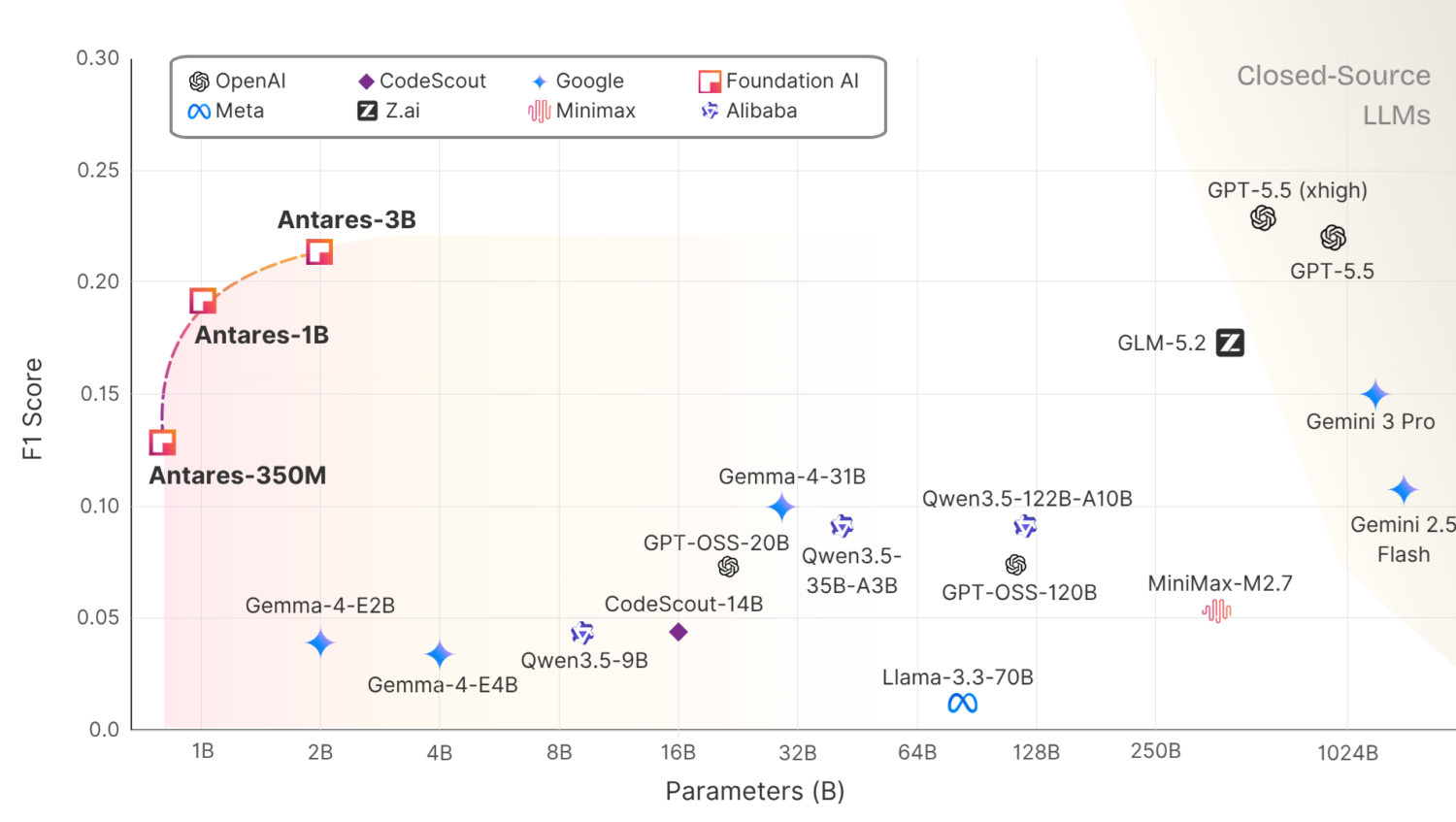
To still be able to compare the performance of the Antares models against that of other models, a new benchmark had to be created. It’s called the Vulnerability Localization Benchmark. You can see the results below. Strangely enough, the Antares-3B model is right up there with models that have 2 billion parameters, which, given its name, is not what you’d expect. Perhaps that’s a mistake.
Antares is an extra layer, but also open-weight
In several places in the official blog post published by the Cisco Foundation AI alongside the announcement of the Antares models, it is stated that Antares is not, in principle, a replacement for existing tools. All other tools used to verify whether software is secure will continue to play their role. Antares is designed to ensure that, based on the information available about vulnerabilities, for example, from Common Weakness Enumeration (CWE) lists, insights can be obtained quickly and thoroughly.
The fact that the Antares models are open-weight aligns with Cisco’s approach to entering the market with Foundation AI. Foundation AI is first and foremost an R&D division of the company. Its primary focus is on researching and developing groundbreaking innovations in the field of AI. From a cybersecurity perspective, Cisco says it wants to do this for the entire security community, not just for itself. That’s why Antares models are open-weight. You can compare this to the previously mentioned Foundry Security Spec, which was made open source a few months ago.
Broader approach sounds promising
Ultimately, the market as a whole stands to benefit from what Cisco is trying to do with these new models and, more generally, with its open-source approach to AI. Of course, it reflects well on Cisco that it seems to be doing things for the community for free. It will undoubtedly be able to reap some benefit from this at some point. But at the end of the day, developing a shared foundation for AI, in this case, specifically how to use AI to better secure organizations, is simply a good idea.
If the Antares models deliver on their promises and actually manage to keep costs low, they’ll definitely add value to the AI model market. It’s just that these models operate in a very niche market, as evidenced by the benchmark that had to be set up specifically for them. That makes sense for SLMs, of course; they’re typically trained for a very specific task. But ultimately, these kinds of SLMs need to be part of a larger whole. Otherwise, it will become confusing for security analysts in other ways.
Whether or not these models need to be part of something bigger is not the topic of conversation today. The most important thing right now is that the new models are here and people can start using them to see if they’re really as good as Cisco claims they are.
Read also: Post-Mythos security is still very much pre-Mythos security