
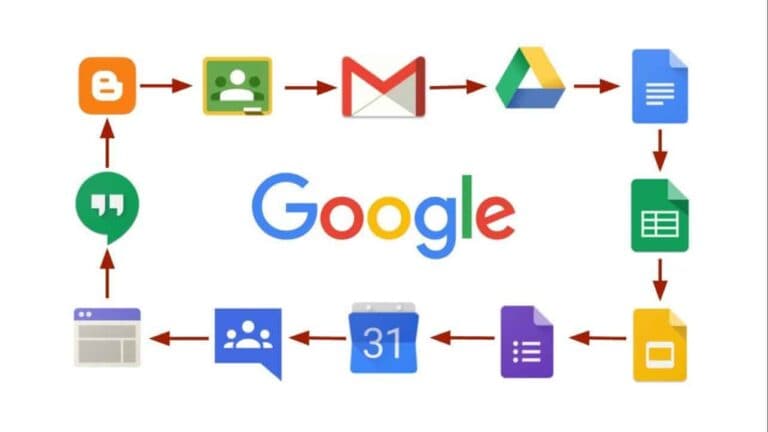
Google has published a new command line tool on GitHub that simplifies the use of Gmail, Drive, and other Workspace services for AI agents. The tool bundles various Google Workspace APIs into a single interface.
This was reported by The Next Web. The tool is called gws and provides access to virtually the entire Google Workspace ecosystem via the command line. Developers can use it to control Gmail, Google Drive, Calendar, Docs, Sheets, and Slides, among other things. Whereas previously multiple APIs had to be addressed separately, gws makes it possible to use these services via a single interface.
For AI agents, this means a clear simplification. Until now, an agent that wanted to search through emails, retrieve a document from Drive, and adjust an appointment in Calendar had to combine different APIs, each with their own authentication and structure. The new tool brings these interactions together and delivers results in structured JSON form, a format that AI systems can easily process.
A striking aspect of the architecture is that the tool does not contain a fixed set of commands. Instead, gws retrieves information from Google’s Discovery Service during execution. Based on this, functions are generated dynamically. When Google adds new API capabilities, they automatically become visible to the CLI without the need for an update. This is an important advantage for systems that need to function autonomously for long periods of time.
Predefined agent skills
In addition to basic access, the repository contains a series of predefined workflows that automate common Workspace actions. These so-called agent skills make it possible to control tasks such as uploading files to Drive, editing spreadsheets, or scheduling calendar appointments directly from agent frameworks.
The documentation refers to OpenClaw, an open source platform for AI agents that attracted a lot of attention in early 2026. The project was launched in late 2025 by Austrian developer Peter Steinberger and quickly grew into a popular platform for autonomous agents. Shortly thereafter, OpenAI announced that Steinberger would be joining the company to work on new generations of personal AI agents.
It is striking that Google mentions OpenClaw in the documentation for its new tool, although it is unclear whether this is a deliberate strategic move. What is clear is that Google is building infrastructure that connects to the growing ecosystem around AI agents.
The CLI can also function as a server for the Model Context Protocol, an open standard that allows AI systems to use external tools. This protocol was developed by Anthropic and is now supported by various development platforms. By making Workspace features available through this protocol, a variety of AI clients can communicate directly with Google Workspace.
This positions Google Workspace as a platform that is accessible to autonomous AI systems, regardless of the model or framework behind them. The development is part of a broader trend in which technology companies are building infrastructure that gives AI agents access to business software and data.
Tech giants focus on AI agents
Microsoft is focusing on Copilot functionality within productivity software, while OpenAI is working on systems to control personal agents. Meanwhile, Google is developing its own agent ecosystem around Gemini and building tools that enable integration with external agent frameworks.
Google presents the gws repository as a developer example and not as an officially supported product. This means that there are no guarantees regarding stability or long-term support. This is usually not a major problem for experiments, but organizations that want to give agents access to business data will likely take this limitation into account.
Despite this caveat, the repository received thousands of stars on GitHub shortly after publication. This suggests that developers working with AI agents quickly recognize the importance of such infrastructure. While attention in the AI industry often focuses on models and chat interfaces, the next phase of competition seems to be shifting increasingly toward systems that provide access to data and business software.