
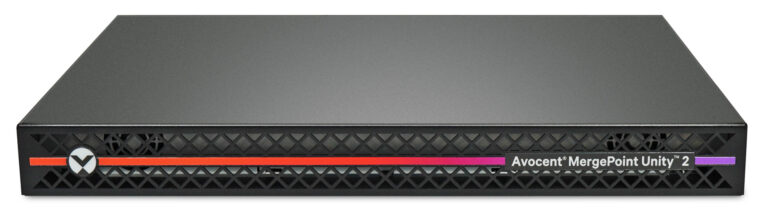
Vertiv introduces a new generation of KVM switches, designed for secure remote management of IT infrastructure.
The Vertiv Avocent MergePoint Unity 2 is designed for use in data centers, edge locations, and branch offices where physical presence is becoming less common.
The new KVM switch combines central access to servers and network equipment with support for remote diagnosis and repair. This allows IT teams to respond more quickly to incidents and perform maintenance without the need for a technician to visit the site. At the same time, the system is designed to accept only verified firmware and software, limiting the risk of unauthorized changes.
A central access point
According to Ramesh Menon, vice president of IT systems solutions at Vertiv, the introduction is a response to the increased distribution of workloads across multiple locations. He argues that this makes it increasingly difficult for organizations to maintain overview and control. With a single central access point, he believes administrators can improve both visibility and response time, regardless of where systems are physically located.
In terms of security, MergePoint Unity 2 focuses on high-demand environments, including government and large enterprises. The KVM switch complies with the FIPS 140-3 standard for cryptography. It also supports encrypted connections with additional authentication methods such as smart cards and Common Access Cards. Combined with fine-grained user rights management, these features are designed to prevent unauthorized access while allowing administrators to maintain a complete overview of their infrastructure.
Support for virtual media
An important part of the platform is its support for virtual media. This allows administrators to remotely connect drives to install operating systems or applications and perform updates. This should simplify maintenance and reduce downtime.
In addition, the KVM switch provides access to UEFI and BIOS interfaces, making it possible to analyze and resolve problems at the firmware level without physical presence. Operation is via a browser-based interface that is available both locally and remotely.
In terms of hardware, the KVM switch is compact. In combination with a local rack console, the system fits within a single rack unit. Management can be carried out via the built-in web interface for standalone use, but also via integration with existing Vertiv management platforms for centralized control on a larger scale.