
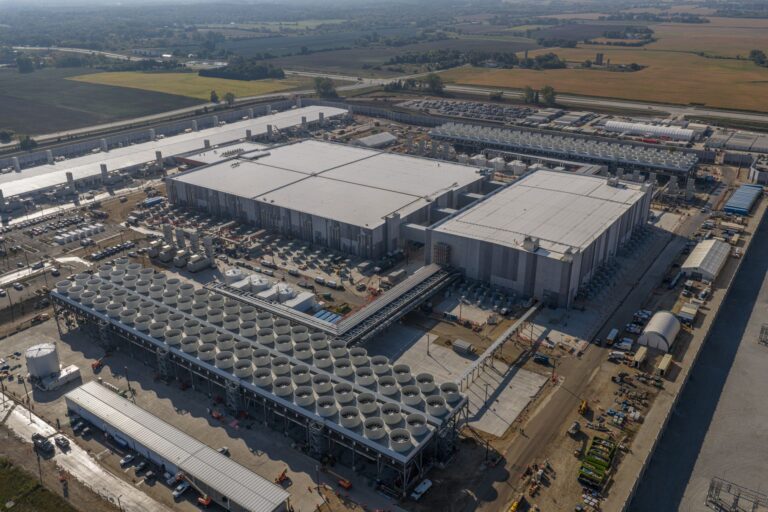
VOLT is launching the Dutch AI Cloud, a computing platform where organizations can purchase GPU computing power. Dell Technologies is providing the infrastructure, and NorthC Datacenters is hosting the first AI Factory in Amsterdam. It will go live in October and precedes the construction of a so-called AI Gigafactory in Rotterdam.
With this new service, VOLT aims to provide a European alternative to foreign AI clouds. Organizations can purchase GPU capacity by the hour, reserve it for a fixed monthly fee, or have their AI infrastructure fully managed by VOLT. The focus is on mission-critical applications in sectors such as financial services, healthcare, industry, government, and defense.
According to VOLT, the fact that the data centers are located in the Netherlands, are European-owned, and are operated from the Netherlands is a significant advantage. This ensures that data and models remain under the organization’s own control and within the scope of European laws and regulations.
From experiment to production
More and more companies are building their processes on AI, making not only the model but also the underlying infrastructure business-critical, VOLT states. “With the Dutch AI Cloud, we are building a European alternative that offers organizations maximum control, performance, and security,” says Han de Groot, the company’s founder and CEO.
The collaboration builds on previous steps. Earlier this year, VOLT and CM.com already entered into a partnership for a sovereign AI environment, in which CM.com’s application platform runs on VOLT’s infrastructure.
Gigafactory depends on funding
The AI Factory in Amsterdam is the first operational step toward the AI Gigafactory in Rotterdam, which is expected to accommodate approximately 250,000 GPUs. VOLT is developing it as an AI Gigafactory Partner of NVIDIA, together with a broad consortium including Eneco, TNO, ING, and several universities.
However, this next phase is not a foregone conclusion. It was previously reported that the Netherlands risks missing out on the EU tender for gigafactories due to slow decision-making. The EU is opening five of these factories, with approximately 35 percent of the investment coming from public funding. The Ministry of Economic Affairs indicated that the public budget has not yet been allocated. This should not dampen enthusiasm for a future infrastructure project that will indeed be known as a Gigafactory, though not based on the EU allocation.
The Port of Rotterdam was chosen because of the direct power cables from offshore wind farms, which means the already overburdened national grid won’t be further strained. The Amsterdam AI Factory will become operational in October.