
Nvidia has more than doubled its quarterly revenue thanks to continued investments in AI infrastructure. Notably, this growth is no longer driven exclusively by hyperscalers. Enterprises and other AI providers are also rapidly increasing their purchases of Nvidia infrastructure.
In the second quarter of fiscal year 2027, Nvidia reported revenue of $96.2 billion. That is 106 percent more than a year ago and 18 percent more than in the previous quarter. Non-GAAP net income came in at nearly $54 billion.
Data centers accounted for $89 billion, up 117 percent year over year. This means that more than 92 percent of Nvidia’s revenue now comes from this market. The results exceeded analysts’ expectations, who had forecast total revenue of approximately $92.2 billion.
Growth beyond hyperscalers
The major hyperscalers remain the most important customer group, generating $48.7 billion. However, Nvidia also generated $40.3 billion from AI clouds, industrial companies, and enterprises. Revenue from this group grew 138 percent year over year, according to SiliconANGLE.
This supports Nvidia’s claim that demand for AI infrastructure is broadening. For the third quarter, the company expects revenue of approximately $108 billion, compared to market expectations of $104.2 billion. Furthermore, Nvidia’s forecast does not include revenue from data center compute in China.
Expectations for next year are also high. CFO Colette Kress anticipates approximately 70 percent revenue growth for fiscal year 2028, while analysts had previously projected around 44 percent. According to her, customer forecasts point to a further acceleration in growth. At the same time, Nvidia continues to be constrained by supply-side issues.
Vera Rubin in production
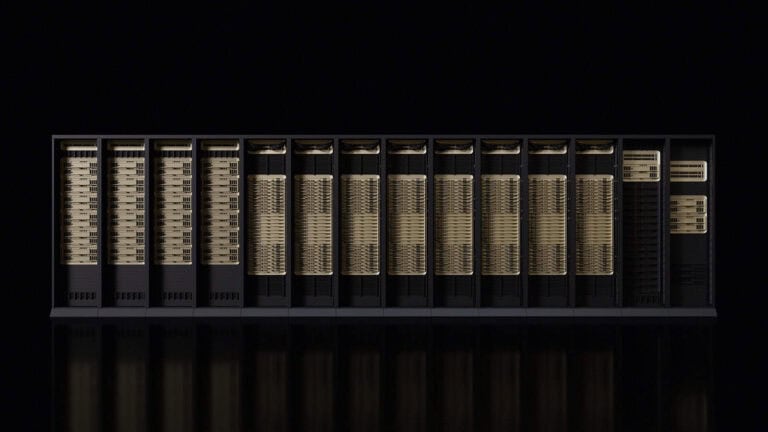
Vera Rubin will play a key role in the next phase of growth. Nvidia reports that the platform is now being scaled up to full production. Systems are running at CoreWeave, Google Cloud, Microsoft Azure, Oracle Cloud Infrastructure, and Nebius, among others.
With this, Nvidia is beginning the transition from Blackwell to its next platform. At the same time, the company is expanding its presence in the AI data center space with networking, storage, and security technologies, as well as solutions for designing complete AI facilities.
Doubts about AI investments
Despite the strong figures, there remains debate about the sustainability of the wave of AI investment. Nvidia itself is investing billions in AI companies, which in turn are purchasing infrastructure. In addition, it is working with firms such as Apollo, BlackRock, and KKR on financing platforms intended to ultimately mobilize more than $500 billion in external capital for AI infrastructure.
Competition is also intensifying. AMD is trying to gain market share, while major Nvidia customers such as Google are developing their own AI chips. However, these figures show that demand is broadening for now. The company also expects growth next year to be significantly higher than the market has assumed so far.