
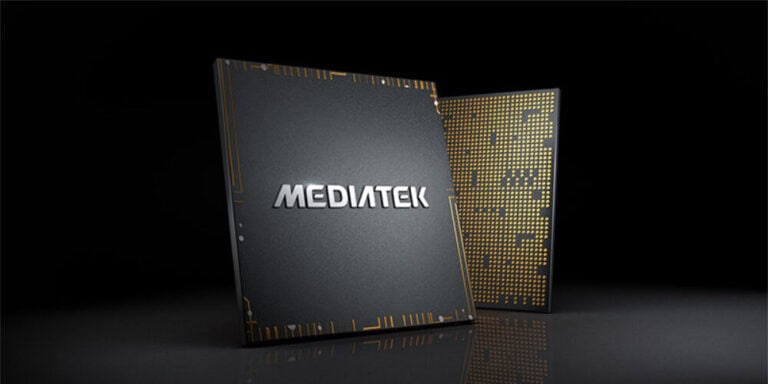
Nvidia is purchasing $3.5 billion in MediaTek bonds and expanding its partnership with the Taiwanese chipmaker into three areas. AI infrastructure, on-premises AI hardware, and the automotive industry will receive solutions based on technology from both companies. MediaTek will also offer NVLink Fusion connectivity to customers who have their own AI chips designed.
The two companies have been collaborating for years, but now a significant sum of money is also coming into the picture. Nvidia is acquiring $3.5 billion in so-called convertible bonds, debt securities that can later be converted into shares. This is a move that has been seen before, as Nvidia had already invested $2 billion in Marvell back in March, also linked to NVLink Fusion. The latter is a technology that enables custom-designed hardware to connect at high speeds to Nvidia’s infrastructure.
The initial focus of the new partnership is also on custom silicon. Customers who have MediaTek design an AI accelerator for them can now opt for NVLink Fusion as the interconnect. Nvidia opened Fusion to third parties last year, with MediaTek also named as a partner at that time.
From chiplet to rack
The platform combines the NVLink Fusion chiplet, NVLink-C2C for connections to Rosa CPUs, and NVHBM, whereby the memory controller is moved from the logic die to the memory die. According to Nvidia, this delivers higher bandwidth with lower power consumption. This way, customers only need to design their own compute core; packaging, memory, and rack integration are provided by Nvidia and MediaTek. Memory, in particular, is a major cost driver, and all AI hardware requires it, but custom compute can offer significant advantages for highly specific models and workloads. The latter is currently an Achilles’ heel for “generic” chips such as Nvidia’s GPUs, no matter how powerful they may be on benchmarks.
With this move, Nvidia is further entering a market currently dominated primarily by Broadcom and Marvell. MediaTek itself is aiming for 15 to 20 percent of a market for custom accelerators that is projected to reach about $70 to $80 billion by 2027. For 2026, the company doubled its revenue forecast for the data center division to $2 billion. In this regard, it is following the general trend of shifting from consumer hardware to enterprise-scale IT infrastructure as its primary source of revenue and growth driver.
PCs and cars
The second area where Nvidia and MediaTek are collaborating is on-device AI. MediaTek previously contributed to the GB10 superchip in the DGX Spark workstation and later to RTX Spark, with which Nvidia entered the PC market in June. Both companies are working on multiple next-generation products. As a result, a more serious Arm alternative to x86-based PCs is gradually emerging in the consumer and workstation markets.
And, not to be forgotten: chips for the automotive industry. MediaTek incorporates Nvidia technology for RTX graphics in cockpits into its Dimensity Auto platforms, alongside DRIVE AGX. That line of development is also continuing and is driving the advancement of autonomous driving features.
Challengers on the horizon
A few years ago, Nvidia seemed unassailable. Even now, the company is hard to bypass when it comes to building AI infrastructure at scale. Nevertheless, OpenAI in particular is aiming for a level of efficiency that, as an AI player, it doesn’t seem to be able to achieve using GPUs. A partnership with Cerebras for the fastest instances of GPT-5.6 Sol is still in its infancy; the same goes for “Jalapeño,” the custom chip it developed together with Broadcom. For GPT models, this hardware is expected to deliver much better performance, particularly in terms of power consumption, than Nvidia GPUs. It’s an early sign of change that makes a partnership between Nvidia and MediaTek a natural fit, enabling custom silicon within the Nvidia ecosystem.