
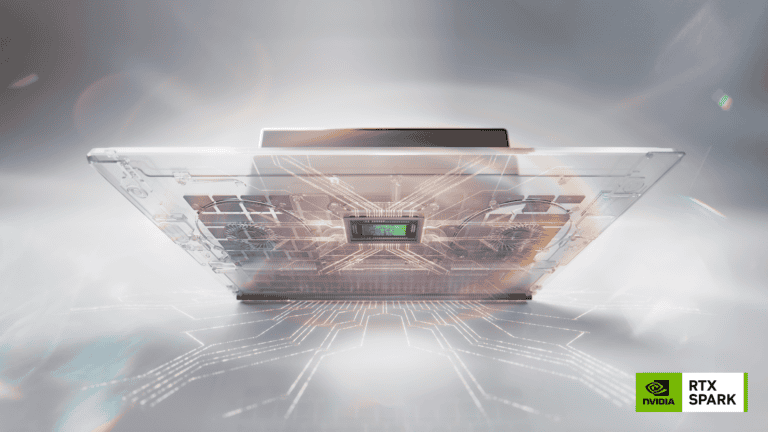
Rumors had been swirling for quite some time, but during Computex, the moment finally arrived. Nvidia CEO Jensen Huang took the stage to drop a bombshell, or let’s just say a bomb. Nvidia is officially entering the Windows PC market. They’re doing so with the brand-new RTX Spark. It’s a powerful ARM-based chip designed specifically for Windows laptops.
The company has been the undisputed king of graphics cards for decades. Things have been going exceptionally well for them in recent years, thanks to the AI boom, which has enabled them to earn billions annually. Now, the company is setting its sights on the processor market as well. In doing so, it will be competing with established names like AMD, Intel, and Qualcomm. Moreover, Nvidia has no intention of leaving after just a single chip. Huang immediately presented an ambitious roadmap that extends through at least 2030. The PC market is thus heading into an extremely interesting period.
The technology behind the RTX Spark
The RTX Spark is a System-on-a-Chip that integrates the processor and graphics card into a single chip. For this project, Nvidia worked closely with MediaTek. The well-known Taiwanese chipmaker is best known to the general public for its smartphone chips. It is precisely that experience with energy-efficient chips that made MediaTek the ideal partner for this laptop venture, according to Nvidia.
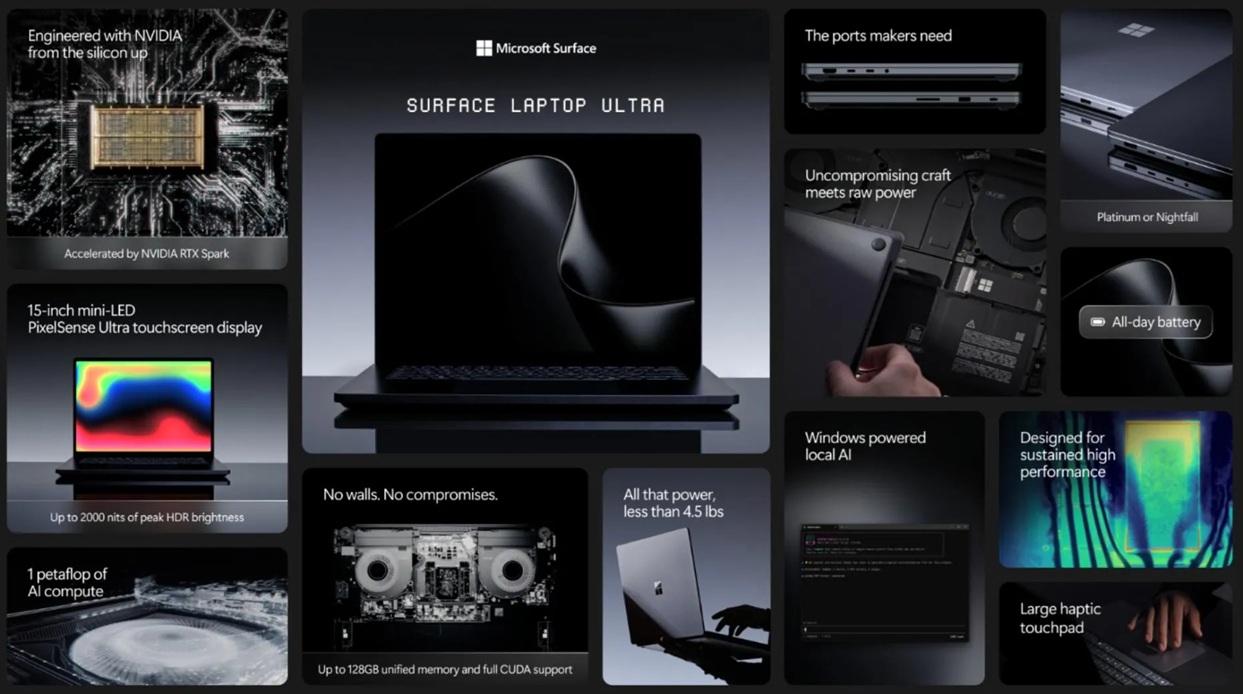
The RTX Spark’s specifications are impressive. The chip combines a Grace processor with twenty ARM cores and a powerful, built-in Blackwell GPU. It packs a lot of graphics processing power. Under the hood, there are 6,144 CUDA cores—exactly the same number found in the RTX 5070 graphics card for a standard desktop. However, there is, of course, one key difference: energy efficiency. Since a laptop runs on a battery and isn’t constantly plugged in, the chip must use power more efficiently. In practice, this version will therefore run at lower speeds than the desktop variant, allowing the battery to last longer.
Additionally, the chip features up to 128GB of LPDDR5X memory. This is “unified” memory, where both the processor and the graphics card have direct access to the same memory pool. This results in speed gains, as data doesn’t have to be constantly sent back and forth. Laptop manufacturers aren’t required to use the version described here. They have the freedom to release variants with less RAM.
AI powerhouse and perfect for creatives
With this chip, Nvidia is, of course, also fully committed to artificial intelligence. The RTX Spark is specifically designed to perform heavy AI tasks locally on the laptop. This means a constant internet connection isn’t required. According to Nvidia, the chip can easily handle advanced AI tools. Rendering massive 3D scenes and editing 12K videos pose no problems either.
Creative professionals will also be delighted. Special versions of Photoshop and Premiere are on the way that will run up to twice as fast on this new chip. Finally, the hardcore gamer hasn’t been forgotten either. During the presentation, Nvidia showed a demo of the brand-new Forza Horizon 6 with all the bells and whistles, and it all ran very smoothly.
Is Nvidia really ready for the CPU battle?
The big question, of course, is: can Nvidia just become successful in the CPU market? The short answer is definitely yes; the chances are pretty good. That’s because Nvidia has a number of unique strengths that competitors lack or have to a lesser extent.
First, Nvidia has a rock-solid brand name. Professionals immediately associate the brand with top performance. Second, Nvidia is among the world’s leaders in graphics technology. Intel and AMD have been making processors with integrated graphics for years, but in terms of raw power, they rarely match Nvidia’s chips. By merging a full-fledged graphics chip with an ARM processor, Nvidia is creating a product category that Intel and AMD simply have no answer for at the moment.
Nvidia is also entering the market at the perfect time. For a long time, Qualcomm was the only company allowed to make ARM chips for Windows due to a deal with Microsoft. That exclusivity is now over. Qualcomm has already demonstrated that there is a market for this. Their Snapdragon X chips quickly captured over 10 percent market share in the premium laptop segment. The path is therefore clear, and Nvidia can enter the market at a time when ARM laptops are growing in popularity. These laptops are known, among other things, for their long battery life and quiet operation—features that are becoming increasingly important to business users.
What does this mean for the competition and the market?
A question we must also ask ourselves is whether competitors like Intel, AMD, and Qualcomm should be worried now? Another important question is whether this is the beginning of the end for the traditional PC market, or is it just a storm in a teacup? It is definitely not the latter; we’d be better off describing it as a fundamental shift in the tech industry.
For Intel and AMD, this is a direct threat to their core businesses. They build their processors on the traditional x86 architecture. Those chips are powerful, but consume relatively high amounts of power. The tech world is rapidly moving toward ARM chips, which are much more efficient. Apple has already demonstrated how successful that transition is with its in-house developed M-chips. Now that Nvidia is entering the Windows market with a similar concept, Intel and AMD simply have to pull out all the stops to avoid becoming irrelevant in the laptop segment.
For Qualcomm, Nvidia’s arrival simply means the end of its monopoly on Windows-on-ARM. Qualcomm has laid a solid foundation, but Nvidia has closer ties with the tech community and software developers. Nvidia knows how to optimize software for its hardware, and that could end up costing Qualcomm a significant share of the market.
Must-read: Nvidia’s plans for Vera Rubin, DGX Station, agents and robots
The impact on AI and other organizations
It’s not just consumers and business professionals who stand to benefit greatly from this. The introduction of the RTX Spark is expected to accelerate the broader adoption of AI within companies. Until now, most heavy AI models have run in massive data centers. This entails high costs, privacy risks, and delays, among other things.
With the arrival of laptops capable of running heavy AI models locally, the way many organizations work is changing. Sensitive business data no longer needs to leave the laptop to be analyzed by an AI assistant. Developers, data analysts, and creatives can perform heavy-duty tasks on the go, without an internet connection. All of this boosts productivity and can actually reduce global pressure on cloud infrastructure.
A look to the future: through 2030 and beyond
Huang made it clear right away that the RTX Spark is not a one-off experiment. The company immediately presented a roadmap extending at least through 2030. The company plans to release a new generation of chips every two years. The first Spark laptops from brands including Asus, Dell, Lenovo, MSI, and Microsoft will be released this fall.
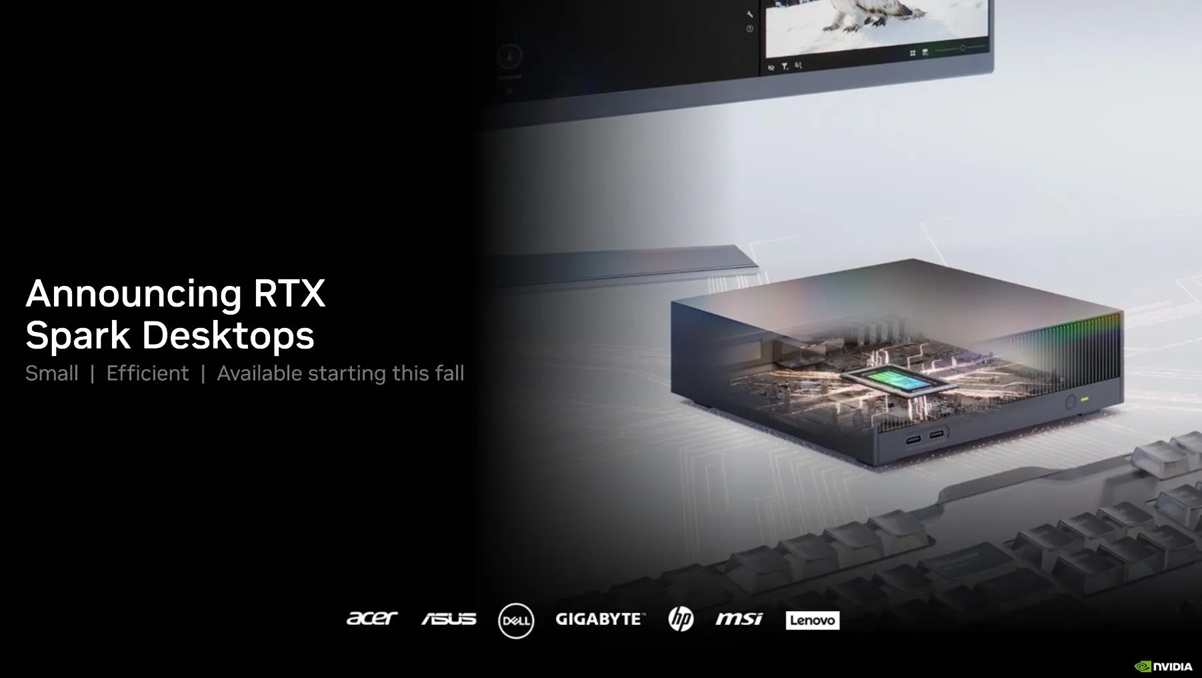
In addition, the company is looking beyond laptops. For instance, it is working on developing chips for mini-PCs and powerful Windows workstations. The Nvidia GB300 Ultra chip will be used for those high-performance desktops. This is a powerful chip with 72 ARM cores and over 20,000 CUDA cores, originally intended for data centers.
Time will tell
With the introduction of the RTX Spark, Nvidia is showing that it is ready to dominate the PC world. They are challenging the status quo in a field that has remained unchanged for years. Thanks to the unique combination of ARM efficiency, graphics power, and on-device AI capabilities, Nvidia potentially has a gold mine on its hands. The competition absolutely cannot and will not ignore this announcement. Ultimately, the end user—alongside Nvidia itself, of course—is the big winner, with devices that are faster, smarter, and more energy-efficient than ever before.
All in all, time will tell how Nvidia fares in this area. If it comes even close to how well the manufacturer is doing in the video chip sector, Nvidia will easily become the first company with a market capitalization of $10 trillion within a few years.