
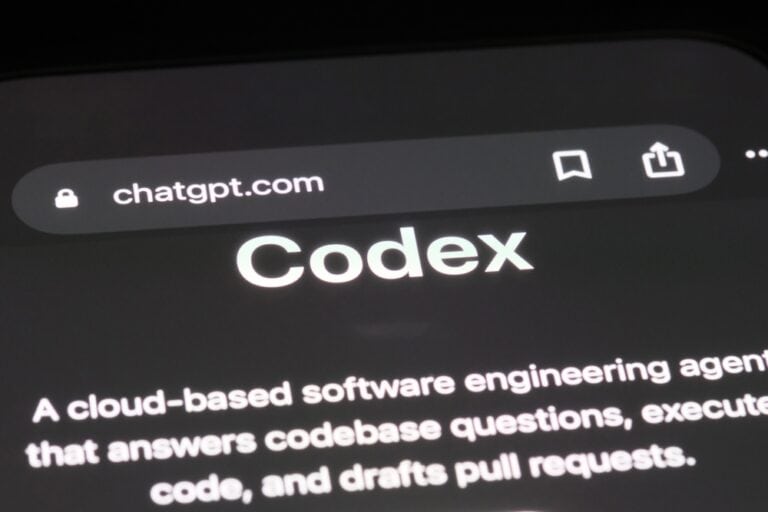
Attackers are using sponsored search results and pages on Google Sites to trick macOS users into installing a fake version of OpenAI Codex. Anyone who follows the instructions ends up pasting a malicious command into Terminal themselves. This triggers a chain of events that ultimately leads to the Atomic macOS Stealer infostealer, according to researchers at Cato Networks.
This has been revealed by research from Cato Networks. It starts with an ad. For search queries such as “codex macos download,” a sponsored result appears above the genuine OpenAI result. That ad does not lead to openai.com, but to a page on Google Sites, Google’s free no-code website service. The page mimics a Codex download portal and offers versions for macOS and Linux. Cato only observed a payload being delivered on macOS.
The trick is called ClickFix. No file is downloaded that an antivirus solution could block. Instead, the victim is tricked into copying a command and executing it themselves in Terminal. The user does the malware’s work.
Google Sites is just the front end
The visible Google Sites page itself contains no malicious code. It loads content from the attacker’s servers via an iframe, likely through a static content proxy provided by Google. Cato identified three sets of lures on sites.google.com that link to iframe hosts such as bright-links[.]com and swiftsaverfin[.]com.
The trusted Google domain lends credibility, while the external iframe can be replaced or updated without modifying the ad or the lure page. Once the command runs, a multi-step malware chain follows that, according to Cato, strongly overlaps with previously documented activity surrounding Atomic macOS Stealer. That stealer collects browser data, system information, and data from crypto wallets.