
The OpenSearch Software Foundation has announced a long-term support (LTS) program for enterprise users. This ensures at least 18 months of support per major release. It coincides with the release of OpenSearch 3.6 earlier in April. This latest update to the platform has been released as the first LTS version.
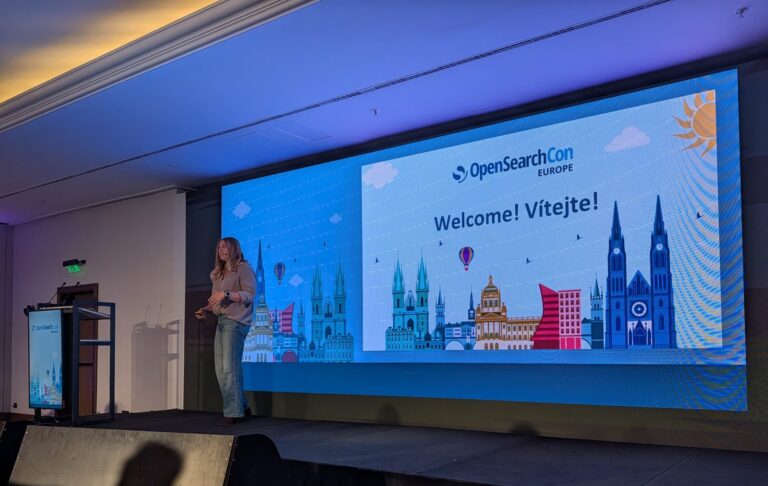
This was just unveiled during OpenSearchCon Europe in Prague. The long-term support (LTS) program is intended to give large enterprise organizations greater confidence in deploying OpenSearch as a production platform. The combination of guarantees and new functionality is intended to be the next step for the project, which is now also focusing more on SBOM (software bills of materials)-based compliance and certified vendor support without vendor lock-in.
OpenSearch isn’t even that old as a project, but it’s making significant strides to become attractive to an increasing number of organizations. The platform originated in 2021 as a fork of Elasticsearch and now has at least 1.5 billion downloads, according to Executive Director Bianca Lewis (OpenSearch Software Foundation) and Director of Product Management for OpenSearch Carl Meadows (AWS). In September 2024, AWS transferred the project to the Linux Foundation, giving it a vendor-neutral governance structure. Premier members of the foundation include AWS, SAP, and Uber, while Atlassian and Canonical are also among the members.
“Long-term support versions give enterprises predictable support, trusted security practices, and certified vendor options – making it easier to deploy and scale OpenSearch with confidence, without sacrificing the benefits of open source,” said Lewis.
What the LTS program entails
The LTS program guarantees at least one LTS release per major version with a minimum support period of 18 months. The first two versions with this status are OpenSearch 2.19 and 3.6. Version 2.19 may sound like an ancient release based on the number, but it dates back to February 2025. It was a major release for the platform, which also includes several additional releases ranging from 2.19.1 through 2.19.5. Typically, OpenSearch does not release multiple additional updates for a single release.
Vendor neutrality is ultimately key. All fixes and improvements must be contributed upstream so that the entire community benefits. In terms of security, the program imposes several concrete obligations. Vulnerabilities with a medium or high severity must be resolved within 60 days of public disclosure. Organizations also receive early notifications about security breaches. To demonstrate regulatory compliance, software bills of materials are generated for all approximately 150 OpenSearch repositories.
Vendor accreditation is the third pillar of the program. The foundation approves vendors that are permitted to offer commercial LTS services, without locking organizations into a single provider. The first three accredited providers are BigData Boutique, Eliatra, and Resolve Technology. Interested vendors can join the foundation and submit an accreditation application via opensearch.org/long-term-support.
OpenSearch 3.6: Focus on AI and Observability
OpenSearch 3.6 is not only the first LTS version but also a feature-rich release. This version was released on April 7, just before OpenSearchCon, and is now receiving a lot of attention. In our view, one of the most notable additions is OpenSearch Launchpad. This is an AI assistant that reduces the time required to set up a complete search application from hours or days to minutes. An intelligent agent analyzes a sample document, gathers preferences through a conversation, and then automatically sets up a local environment with optimal architecture. Launchpad is the first skill in OpenSearch Agent Skills and integrates via the Model Context Protocol (MCP) with the development environments Claude Code, Cursor, and Kiro.
In addition, version 3.6 introduces the OpenSearch Relevance Agent, which is currently an experimental tool. Improvements in search relevance are automated through a system of three specialized subagents. The three subagents are used for user behavior analysis, hypothesis generation, and evaluation. According to OpenSearch, optimization cycles that previously took weeks can now be reduced to a few hours.
Observability and AI monitoring in a single stack
OpenSearch 3.6 also introduces the OpenSearch Observability Stack. This is a fully preconfigured observability environment that can be launched with a single command via Docker Compose. The stack bundles OpenTelemetry Collector, Data Prepper, Prometheus, and OpenSearch Dashboards, with support for distributed tracing, log analytics, and Prometheus-compatible metrics.
Another new feature is Application Performance Monitoring (APM), a function for real-time monitoring of distributed applications. APM automatically generates service topology maps based on trace data and combines them with RED metrics (Rate, Errors, Duration). From an Observability workspace in OpenSearch Dashboards, teams can drill down from service metrics to related traces and log entries.
Agent Traces have been added specifically for generative AI applications. This allows agent invocations, LLM calls, tool executions, and retrieval operations to be traced via OpenTelemetry instrumentation. A Python SDK supports providers such as OpenAI, Anthropic, Amazon Bedrock, LangChain, and LlamaIndex. In the dashboards, execution flows are displayed as interactive DAG graphs and Gantt timelines.