
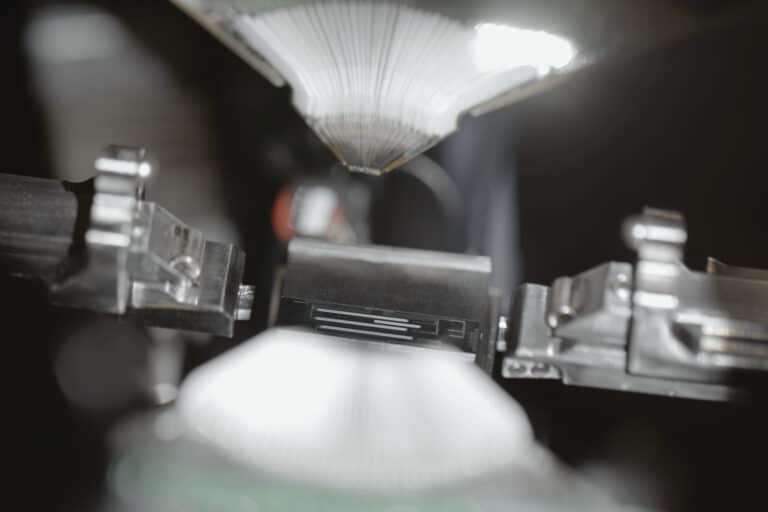
In addition to developing quantum computers, more needs to be done to make quantum computing a success as a whole. At least, that is Cisco’s position. That is why it is working on a complete quantum stack. Interconnecting quantum computers is also part of that. However, this presents quite a few challenges. To address them, Cisco announced today that it has a working prototype of the Universal Quantum Switch.
So far, quantum computing has focused primarily on the number of qubits available to perform calculations. There are now systems with more than 5,000 qubits, and that number is expected to continue growing steadily. However, solving the problems for which quantum computing is being developed will require hundreds of thousands, or even millions, of qubits. We are still a long way from that.
However, if it is possible to connect multiple quantum computers together, then multiple smaller computers can form a larger one. To make this possible, a network connection is required. And that is where Cisco’s Universal Quantum Switch comes into play.
Today’s announcement can be seen as the next step in the development of Cisco’s quantum network. Last year, the company announced the Quantum Network Entanglement Chip, which enables the creation of entangled photon pairs. With the Universal Quantum Switch, it should become possible to actually get these pairs where they need to go.
Multiple technologies, modalities, and encoding
Connecting quantum computers via a network may sound simple, but it is anything but. Photons can simply be sent from one location to another over a standard fiber-optic cable, but as soon as a photon (carrying the qubit) arrives at a switch, it cannot be treated in the same way we have been accustomed to until now.
Quantum computing is far from a standardized field. Different parties use different technologies. The best known are Neutral-Atom, Trapped Ion, Photonic, and Superconducting. These technologies and their associated materials also entail certain preferences for so-called modalities and encodings of the qubits: polarization, time-bin, frequency-bin, and path encoding. The first uses the orientation of the light wave, the second the timing of the light pulses, the third the color, or frequency, of the light, and the fourth its physical path.
It is expected that the situation described above will not change anytime soon. This means that quantum computing and quantum networks will remain a heterogeneous environment. The infrastructure must be able to handle this.
Routing without destruction
First and foremost, it is essential to make the various modalities compatible with one another. That is the job of the so-called Quantum State Converter (QSC). This device converts photons carrying qubits from the encoding in which they arrive into a format suitable for routing. Next, the information reaches the actual switching section. Routing takes place there, after which the converted qubit is sent to the correct output. This output is then another QSC that must convert it into the desired modality.
Converting any modality into a format suitable for routing is quite a task in itself. However, the actual switching of the traffic is no easy feat either. The traffic must not be ‘read’. In the world of quantum computing, this means that the so-called quantum state can (and will) be compromised, and the information carried by the qubits is lost. The Universal Quantum Switch is virtually unaffected by this, according to Cisco. It is also a non-blocking switch. This means that multiple photons can be processed by the chip simultaneously.
Working prototype, at room temperature
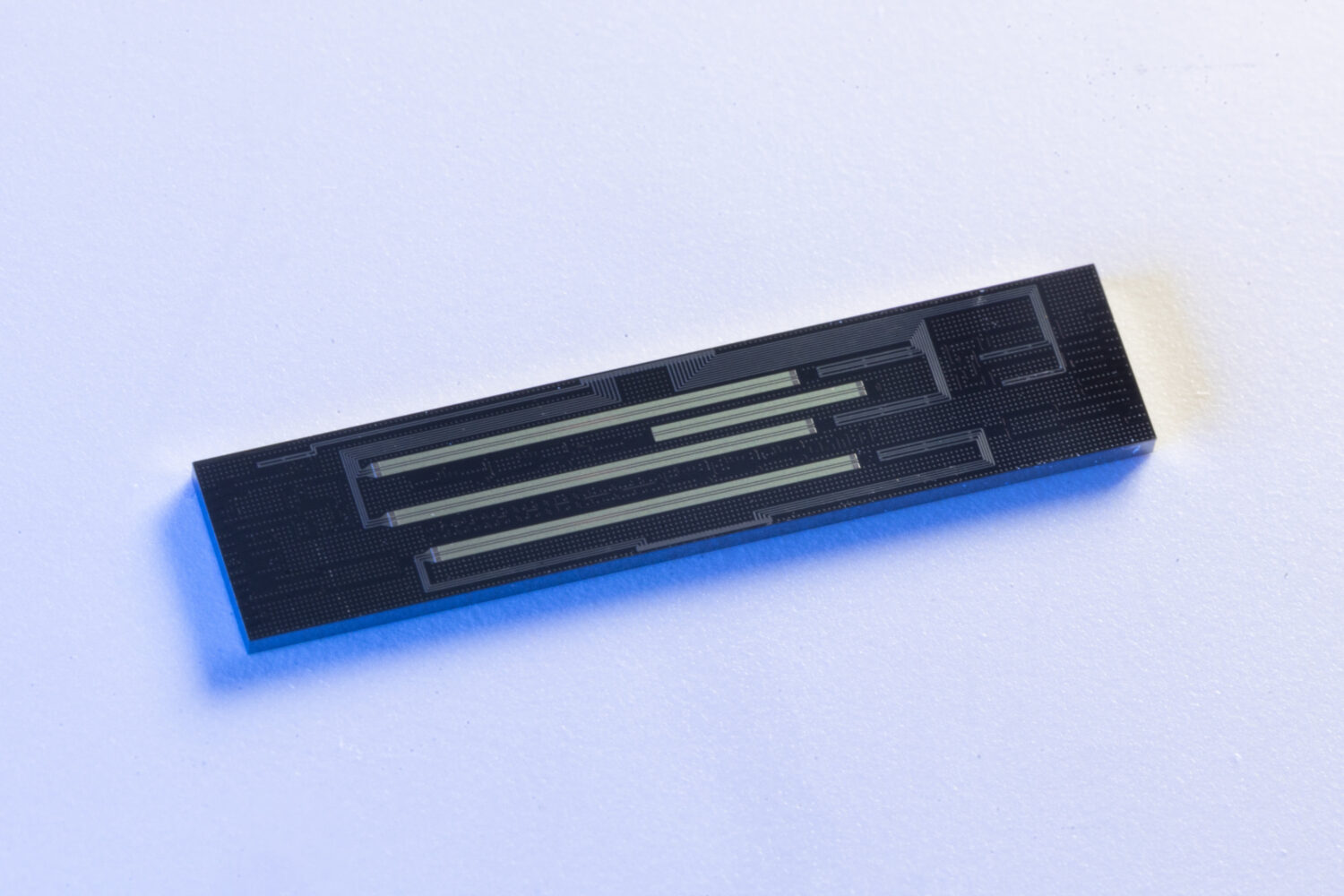
According to Cisco, Cisco Quantum Labs has succeeded in creating a working prototype of the Universal Quantum Switch. Initial results are promising. It reports less than 4 percent degradation of the quantum state and the entanglement of the photon pairs. In terms of switching speed, it also appears to be performing well at less than one nanosecond. Additionally, Cisco reports high energy efficiency. It mentions a power consumption of less than 1 milliwatt. We have a pending question seeking clarification on this power consumption, as it is currently unclear to us exactly what the switch is using that 1 milliwatt for.
Update: Further inquiry reveals that the power consumption is not less than 1 milliwatt, but less than 1 watt. This is the power consumption of the entire switch during operation. It therefore refers to the total power drawn by the integrated photonics chip platform. During the experiments, Cisco subjected the switch to a throughput of 800,000 photons per second. It has not yet conducted tests beyond this load.
It is also worth noting that Cisco has designed the Universal Quantum Switch to operate at room temperature. Much quantum hardware must be kept at extremely low temperatures to function. That is not the case here.
Universal and full-stack
The fact that the Cisco Universal Quantum Switch operates at room temperature and supports all modalities via the QSCs in the switch means that Cisco can genuinely claim this is a universal switch. In principle, it should enable all different quantum computers to be interconnected via the network. It also works with existing infrastructure; connections can simply be established over existing fiber-optic cables.
The Universal Quantum Switch has currently only been validated by Cisco for polarization encoding. The company states that support for time-bin and frequency-bin is built into the design. The next step is to validate support for these as well. We currently have no information regarding support for path encoding.
Looking at how Cisco is approaching the quantum challenge, the Universal Quantum Switch fits into the full-stack approach the company is pursuing. Following the Quantum Network Entanglement Chip, which can generate photon pairs, there is now also a way to transport them over a network. Finally, Cisco is also working on so-called quantum-aware applications. Consider Quantum Alert, which uses entangled photons to detect eavesdropping on fiber optics, but more will follow.
In a world where everyone approaches things in their own way, the standardization Cisco is striving to achieve is not only good for Cisco, but also for the ultimate users of the technology.