
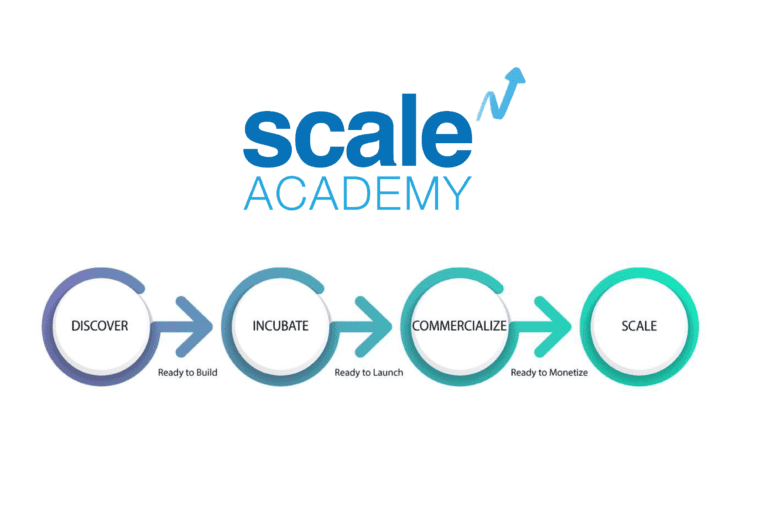
NTT Research aims to give new technologies and innovation a better chance to reach maturity. Today, it announced an incubator, Scale Academy, to bridge and accelerate the transition from the lab and R&D to the market. It is also immediately launching its first product, SaltGrain. This is designed to address and resolve the shortcomings of “traditional” Zero Trust architectures.
Scale Academy can be seen as the next step in the development of NTT Research. Conducting fundamental research into new technologies is, of course, important, but ultimately, this must also be translated into something that has a place in the market. That is why NTT Research also has the task of identifying technologies that have commercial potential. These must then receive the right guidance to actually bring them to market. Scale Academy is designed to help with that.
Zero Trust doesn’t work well enough
Zero Trust has long been a buzzword used by many security players. If you trust nothing until you’ve verified it, you protect the underlying infrastructure and the data it holds. That is the underlying idea. To a certain extent, that is true, but there are still some limitations. For instance, in many implementations, Zero Trust still has a strong perimeter-based approach. That is to say, checks are performed somewhere at the edge to determine whether a login attempt or something else is trustworthy. If the answer is “yes,” there isn’t always the ability to adjust that answer later, should it be necessary.
Ultimately, many attacks, especially ransomware attacks, are primarily about the data. And according to NTT Research, that is precisely what is not explicitly protected within the current Zero Trust architecture. In other words, another layer of security needs to be added, one that explicitly focuses on protecting the data. That is where SaltGrain comes into play.
What is SaltGrain?
SaltGrain is the first product to be launched on the market through the Scale Academy. The name already gives an indication of what it does. Salting is the process of adding extra data to the hashing process to increase its complexity and make it harder to breach, for example, through brute-force attacks. Grain represents the granularity with which SaltGrain must operate, according to NTT Research.
An important component of SaltGrain is ABE. This stands for Attribute-Based Encryption. With ABE, it is possible to link the ciphertext (what you get when you apply encryption to data) to specific policies and attributes. These attributes can be anything. Essentially, they ensure that unique elements are linked to any attempt to view the data. This should make it possible, for example, to share documents in which specific sensitive sections are not visible to everyone. According to NTT Research, SaltGrain also works with images and videos. It’s also worth noting that the ABE used by SaltGrain is prepared for the post-quantum era.
SaltGrain provides authorization at a very granular level, a topic we recently discussed in depth during a conversation with Zscaler CISO Sam Curry at the RSAC 2026 Conference. According to him , authorization is one of the fundamentals we need to get right in order to provide effective protection in the AI era. Among other things, SaltGrain should make it possible to grant AI agents access to documents during training and fine-tuning. At the same time, the components that the agents are not permitted to view or use remain protected.
A final benefit of what SaltGrain offers is that it renders stolen data unusable. Without the underlying ABE technology, no one else can do anything with it.
Zero Trust Data Security
NTT Research refers to what SaltGrain has to offer as Zero Trust Data Security. This indicates, among other things, that it is not intended to replace what we have previously called Zero Trust. It is meant to be added as an extra layer underneath.
Read also: NTT demonstrates the world’s first IOWN All-Photonics Network between Japan and Taiwan