
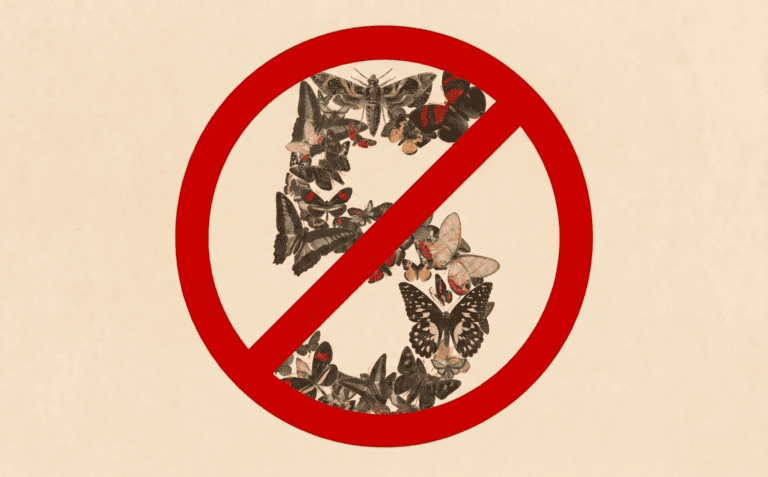
In the dying embers of the American working week, Anthropic received a directive from Washington to block access to Claude Fable 5 and Mythos 5 for non-U.S. citizens. The reason: a jailbreak of these AI models could jeopardize national security. The end result is a complete block on the use of these two LLMs, having only been available for a few days. After years of warnings from AI model developers that their technology is almost too risky to release, the decision has been made for them. What happens next? Will “frontier AI” get the development pause that many have called for? And what can Anthropic do to make Fable 5 and Mythos 5 available again?
The U.S. government is said to have become aware of one particular jailbreak. The report that Anthropic says describes the jailbreak allegedly contains an exploit that is also applicable to GPT-5.5, OpenAI’s competing model. Incidentally, the latter model also has a domain-specific, highly restricted variant in the form of GPT-5.5-Cyber. Just as Anthropic makes Mythos 5 and Mythos Preview available in Project Glasswing, OpenAI has offered restricted access to GPT-5.4-Cyber and 5.5-Cyber to participants in the “Daybreak” project.
Unfortunately, we know very little about the alleged jailbreak. That aside: all guardrails appear fundamentally hackable in any LLM, as we have recently discussed. This has been demonstrated in both recent models from OpenAI as well as those from Anthropic, with no reason to assume Gemini or other LLMs are safe from the same tactics. Only Anthropic’s explanation suggests that this process is more difficult to exploit for Fable 5 and Mythos 5.
Anthropic is essentially getting what it wants
Anthropic disagrees with the decision and states that, prior to the release of Fable 5 and Mythos 5, it had consulted with various governments, including the U.S., to ensure safety. Both internal and external tests reportedly validated their guardrails. Anyone who asked Fable 5 for details regarding cybersecurity, biology, and several other sensitive topics while the model was still accessible encountered a roadblock. Opus 4.8, the Claude model that scores lower in capabilities than Fable and Mythos, serves as a drop-in replacement LLM for such sensitive issues.
The conclusion we can draw from this incident is that Anthropic deemed a previously unseen level of protection necessary for Mythos-like models, while the U.S. government draws that line earlier. At least, when it comes to Claude: the feud between the Pentagon and Anthropic has been going on for some time and may have put Fable and Mythos under a magnifying glass. It will be interesting to see what the U.S. government does if another AI lab reaches the same level. In principle, the guardrails can be just as prone to error as AI models always are.
Even after years of fearmongering, particularly from the likes of Anthropic and OpenAI, a move like this was not expected. Since the release of ChatGPT in late 2022, AI model developers have had free rein when it comes to releasing new LLMs with potentially dangerous consequences. Those consequences, incidentally, have long been felt in all sorts of ways. Consider the explosion of deepfakes, convincing phishing emails, and the dangers of AI-written code without consistent human oversight. These problems were not introduced by ChatGPT, but they were at least accelerated and democratized by the LLM technology behind it.
In a sense, Anthropic has gotten what it has long been asking for. It recently hinted at a pause in the development of more advanced AI models, or at least asked for a mechanism to do so. The White House has proven that such a pause can certainly be enforced. AI regulation, of sorts, has finally gained teeth. Although the European Union devised more overarching regulations through the EU AI Act, the result has often been that the most advanced AI was simply not available in Europe—or not immediately. Google Bard (now Gemini) in 2023, some of Meta’s Llama models, Apple Siri AI—there are plenty of examples of LLMs or LLM products that seemingly encountered regulation (EU AI Act or not) as a regional barrier. Now, a different path to constrain AI appears to be far more universal and powerful, even though this decision by the U.S. seems highly ad hoc.
LLMs were always too early
The move by the US is unprecedented in modern times. Regulations surrounding AI have so far revolved solely around restricting the export of chips, chip technologies, and the lithography machines used to build them. Nvidia and ASML, in particular, have been familiar with this for years; the Dutch chip machine manufacturer, incidentally, had already been dealing with export restrictions for quite some time before ChatGPT appeared. Previous drastic restrictions on advanced tech date back to the 1990s or earlier, such as the infamous “Crypto Wars,” during which the FBI investigated Pretty Good Privacy (PGP) developer Phil Zimmermann for the illegal export of “ammunition.” That “ammunition” was a form of encryption that was advanced for its time; cryptography has since advanced light-years beyond PGP, with the result that a large part of the digital domain cannot be easily cracked without a future quantum computer.
What’s interesting about the Fable/Mythos blockade is that it’s the first time the availability of increasingly advanced LLMs has been curtailed. In recent years, various AI labs have enjoyed a temporary lead with a new state-of-the-art AI model. Only during outages has the continuous improvement of AI been interrupted. Now that the regulator is imposing a restriction, this has major consequences. Anthropic, as it happens, plans to go public very soon; OpenAI shares that same IPO ambition. Until now, investors have always assumed that AI would continue to improve. If this assumption falls away, the supposed bubble could very well burst right before the technology’s star players get their stock tickers.
Nevertheless, there will be supporters of the ban, whether it holds or not. An AI pause was already desired by several prominent tech figures following the release of OpenAI’s GPT-4 in March 2023. Insiders over the years have shared a similar wish to rein in AI development. Google DeepMind CEO Demis Hassabis has even frequently stated that he would have preferred to keep LLMs in the development phase, a reality in which OpenAI had not introduced the world to its generative chatbot when it idd. The world would have looked very different without ChatGPT, without a publicly available Transformer paper, and so on. But that world simply doesn’t exist.
The floodgates have opened
The then-obscure Chinese company DeepSeek surprised friends and foes alike in early 2025 with the unveiling of R-1. The AI model, which “reasoned” just like OpenAI’s crown jewel o1, scored extremely well on benchmarks. Moreover: it was available as an open-source product, so anyone who downloaded the 671 billion parameters and assorted LLM componentes from DeepSeek’s GitHub page had a copy of near-cutting-edge AI. No export control could put the genie back in the bottle.
Meanwhile, AI development has moved on, and it appears that the closed-source AI players have maintained their lead. If the U.S. or another entity bans the development of LLMs with capabilities beyond those of Opus 4.8, GPT-5.5, and Gemini 3.1 Pro, it will nevertheless have only a temporary effect. An LLM on the level of the now-banned Fable 5 and Mythos 5 will eventually become available as an open-source model. That may take months or even years, though the past three years have taught us that AI model builders hold onto a lead only briefly.
Again: what if OpenAI and/or Google comes out with a Mythos-like model? That seems almost inevitable. Mythos was apparently developed without a massive technological breakthrough: it appears to be merely an application of various existing, well-known techniques, training methods, and architectures. That means that any AI player with enough computing power will eventually make that same leap. Once that applies to DeepSeek or another non-American model developer, Washington’s restrictions will have little effect.
Conclusion
The release and subsequent blocking of Claude Fable 5 and Mythos 5 present a completely new AI reality. AI safety, governance—whatever you call it: a government (or, in fact, just the U.S. government) can remove the world’s most advanced LLM from the playing field. Whether that is good or bad in itself, we do not know. Without fully understanding how the jailbreak works and what its consequences are, we can only take Anthropic’s earlier caution and warnings regarding Mythos seriously. It’s not as if the creator of Claude was ambiguous about its own fearmongering. That this appears to be partly a marketing ploy is irrelevant at this point. The PR campaign has apparently convinced enough people in Washington that a ban is the only way to limit AI-driven security threats.
The fundamental problem for the U.S. government is twofold. The sky-high valuations of tech companies and the revenue figures of firms like Nvidia or Micron hinge on the assumption that AI is constantly improving and requires ever-greater computational power, memory and chips. That second assumption has already been threatened by DeepSeek. Occasionally, some disappointing LLM debuts have taken the wind out of the sails of the AI advance for a day or two. Yet this is the first suggestion that AI models might reach a certain ceiling—specifically due to an artificial limitation imposed by the authorities, not a stuctural maximum for the underlying technology.
Unfortunately for the regulators—and perhaps also unfortunately for security researchers—this restriction comes about 3.5 years too late, or the lifespan of ChatGPT. Or, if you will, about 9 years, the amount of time since the publication of “Attention Is All You Need,” the Google research paper that unveiled Transformer technology and paved the way for all of today’s LLMs. In any case, we must continue to expect a Mythos from someone other than Anthropic; and models that are better. These will gradually find their way into the hands of every user. Some of them will be able to jailbreak new LLMs once more or even design one from scratch for abuse and exploitation of vulnerabilities. That reality won’t change.
For Anthropic, a lasting blockade would be a potential disaster. The IPO could potentially be put on hold if no workaround can be found. All investments in the development of Mythos—likely billions of dollars—are now without the revenue that was expected to stream into the company’s coffers. That financial reality could have major consequences for sentiment surrounding AI on Wall Street. In a broader sense: no matter what the stock market does, AI itself is here to stay and cannot be contained, and if it can, that is at most only a temporary condition.