
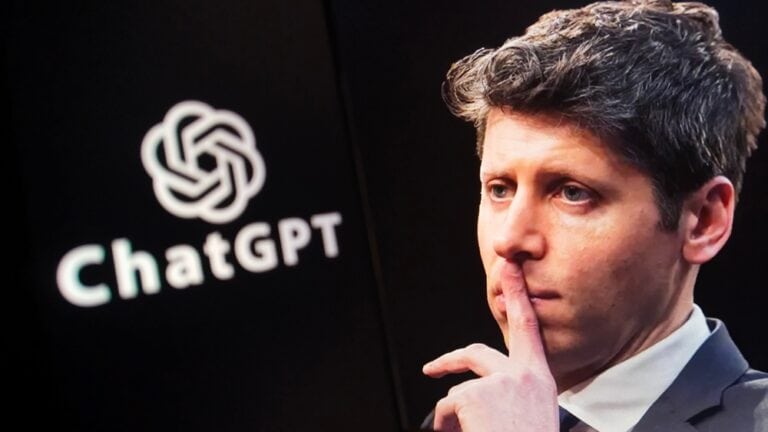
Whereas ChatGPT was practically the only AI chatbot in the office in 2023, it has now lost a quarter of its market share. Google Gemini and Claude are the main challengers among business AI users, with 14.4 percent and 8.6 percent, respectively. Nevertheless, it is primarily OpenAI itself that has thrown a wrench in the works, with remarkably little damage so far.
Data from DeskTime shows that ChatGPT usage is still growing, even though the increase in overall AI usage is much greater. The first four months of 2026 suggest that employees are spending three times as much time on AI tools annually as before. The number of power users (those with 26 hours or more of AI usage per year) has also roughly tripled in recent years, in line with the growth in adoption.
The figures also show a shift in the tools being used. The study, based on 50,000 DeskTime users, contains a warning for OpenAI despite ChatGPT’s still-strong position. For instance, it is expected that Claude will once again take a “huge bite” out of ChatGPT’s market share this year.
OpenAI’s enterprise approach is lacking
The comparison between OpenAI and Netscape, creator of the Netscape Navigator browser, is never far off. As early as the first months of 2023, various media outlets and analysts pointed out a series of similarities. At the time, Google played the role of Microsoft, which had been caught off guard by Netscape during the browser wars of the late 1990s.
Or, rather, the browser battle. Ultimately, it was Google, not Microsoft, that walked away with the real goldmine. The search engine turned out to be the financial engine behind the internet, not the browser interface. Historical comparisons are always somewhat skewed and open to interpretation, but the lesson is clear: with a new technology, the platform that benefits from it is not necessarily the most obvious option.
We don’t yet know who will turn the LLM breakthrough into market dominance in the coming decades, or exactly what this industry will look like. That requires a correct interpretation of the implementation. Google, after being initially surprised, now has a far more mature strategy than OpenAI. However, Claude illustrates even better where things went wrong at Sam Altman’s company.
Claude is what ChatGPT could have been
Anthropic, like OpenAI, does not own a full workplace suite; it first found a niche among developers and has since produced multiple practical applications based on Claude. Whereas OpenAI seems tied to the chatbot, Anthropic offers integrations for workflows, management layers, and implementation services.
Anthropic achieves the latter through a firm financed by Blackstone and Goldman Sachs and with the help of partners KPMG and PwC. Not entirely surprisingly, ChatGPT announced a similar move, although this was quite late in the game.
With a decrease in the number of “side quests” OpenAI is undertaking, there is an opportunity for the company to regroup. AI adoption is still in its early stages, so office workers can switch platforms without too much trouble. OpenAI may even gain market share once its new strategy bears fruit. To achieve that, OpenAI must find the answer to the following question: what would be a good reason to return to ChatGPT?
Read also: OpenAI lawsuit: Musk accused of jealousy, disclosure of massive stake