
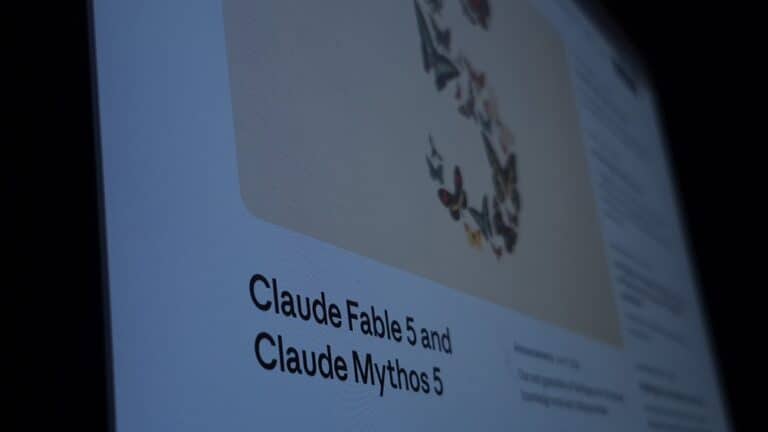
The European Commission is investigating the consequences of a U.S. export restriction directive that has forced Anthropic to disable its AI models Claude Fable 5 and Mythos 5 worldwide. Brussels states that measures must not discriminate against partners and emphasizes the importance of technological sovereignty. European users currently no longer have access to the models.
The European Commission is assessing the practical implications of a U.S. export control directive affecting AI company Anthropic. The directive, received on June 12, required Anthropic to block access to its most advanced models for foreign users.
EC spokesperson Thomas Regnier stated that the Commission is examining the practical consequences for European users of these services. He emphasized that, in this context, emergency measures must “not be discriminatory against partners.”
Anthropic Shuts Down Fable 5 and Mythos 5 Globally
On Friday, Anthropic announced it was abruptly taking its Claude Fable 5 and Mythos 5 models offline for all users. The U.S. government ordered Anthropic to block access for foreign nationals, citing national security concerns. Because a precise distinction based on nationality is technically unfeasible, a global shutdown followed.
Claude Fable 5 is the publicly available version of the more powerful Mythos model, which was previously accessible to security researchers on a limited basis. The U.S. government suspected a jailbreak method that could bypass Fable 5’s security layers in the cybersecurity domain. Anthropic disputed that characterization and stated that it had consulted with various governments regarding the models’ security prior to the release.
“This development is a further illustration of why Europe needs to strengthen its technological sovereignty,” said Regnier. The Commission describes the new generation of powerful AI models as significant for cyber defense, while acknowledging the cybersecurity risks they pose.
Other Claude models, such as Opus 4.8 and Sonnet 4.6, will remain available.