
At Google Cloud Next 2026, the message from Google Cloud and Wiz was clear: Wiz is fundamental for how Google Cloud moves toward becoming a major security player in multi-cloud environments.
At the time of Wiz’s acquisition by Alphabet, Google’s parent company, questions were still being raised here and there about what this would mean for Wiz’s multi-cloud ambitions. After all, Wiz had dedicated itself to protecting and securing the cloud in its broadest sense, not just Google Cloud.
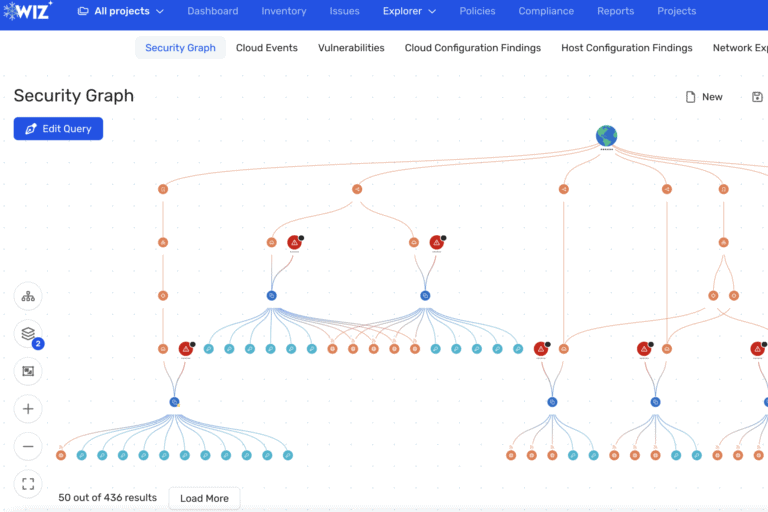
In the meantime, the acquisition has officially closed. This year, for the first time, Wiz is also an official part of Google Cloud Next, the annual event for this division of Google. The announcements from Wiz during the conference clearly indicate that Wiz still sees plenty of opportunities for expansion for its own platform. Fundamentally, this means that it sees opportunities for expansion of the application of the Wiz Security Graph. That is the foundation onto which Wiz has built its entire platform.
Read this article if you’re looking for more information about the Wiz Security Graph.
Major announcements at RSAC 2026 Conference
Wiz didn’t really make any really major announcements regarding its own new features and products during Google Cloud Next 2026, apart from some new capabilities to secure AI-native development. It’s just a bit too soon after the acquisition was finalized. Perhaps even more importantly, it also comes right after RSAC 2026 Conference a few weeks ago. There, it announced several major new developments.
The biggest announcement at RSAC 2026 Conference was AI-APP. This stands for AI-Application Protection Platform and is essentially a further development of CNAPP, or Cloud-Native Application Protection Platform. The idea is that an increasing number of applications running (in the cloud) are, in fact, AI applications. With AI-APP, Wiz aims to provide deep insight into these applications and, above all, into how they work. This kind of insight is necessary to properly protect the applications.
In addition to AI-APP, Wiz also announced Wiz Security Agents and Wiz Workflows at the end of March. Wiz’s security agents are divided into Red Agent, Blue Agent, and Green Agent. Red Agents handle offensive tasks, Blue Agents handle defensive tasks, and Green Agents handle problem solving and remediation. Wiz Workflows is a new orchestration hub within Wiz. It enables organizations to streamline their security processes internally.
Wiz expands power of Security Graph
In our view, the most significant news from Wiz this week at Google Cloud Next 2026 is that the Wiz Security Graph is becoming even more important. Wiz is adding support for Databricks, as well as the new so-called agent studios. These include AWS Agentcore, Gemini Enterprise Agent Platform, Microsoft Azure Copilot Studio, and Salesforce Agentforce. By linking these environments to the Wiz Security Graph, customers gain much greater insight into the environments they use for development.
With the integrations mentioned above, Wiz aims to ensure there are as few gaps as possible in organizations’ infrastructure. This is the case with the addition of Databrick, for example. That is the data layer for many developers (for building AI applications). Wiz now brings this very close to the cloud infrastructure via the Wiz Security Graph. Something similar applies to the agent studios.
Another expansion is actually even more interesting, as it indicates how far Wiz intends to take the platform. Integrations are also coming with what Google Cloud and Wiz itself call “the outer layer of the cloud”: Cloudflare, Akamai, Vercel, as well as Google Cloud Apigee. For Wiz Security Graph, this new integration is primarily about protecting the new way applications interact with each other now that AI is becoming dominant. This is no longer how traditional web applications operate. That is why we need a different way to protect them. That’s why Cloudflare, for example, launched AI Security for Apps earlier this year.
Google Cloud and Wiz are going for multi-cloud security
The above expansions make one thing clear: Google Cloud has no intention of making Wiz primarily relevant only to its own environments. That wouldn’t be very practical, given Wiz’s potential, but it’s still good to see. We expect that Wiz, now that it’s officially part of Google Cloud, will only continue to develop at an even faster pace.
With Wiz, Google Cloud now has a fairly comprehensive offering for the market to back up the statements made by Francis deSouza, COO of Google Cloud and President of Security Products. During a briefing on today’s announcements, he claimed that Google Cloud is the only infrastructure company that can also call itself a security company, and that the reverse is also true.
There is always room for debate when it comes to statements like the ones deSouza makes. Undoubtedly, there are other companies that believe they occupy a similar position. Google Cloud, however, does appear to have its security affairs in order pretty well. In addition to Wiz, it has its own Security Operations platform, which is becoming increasingly powerful (for example, three new AI agents were added in preview during Google Cloud Next), and with Mandiant, it has also had incident response, threat intelligence, and consulting capabilities in-house for many years.