
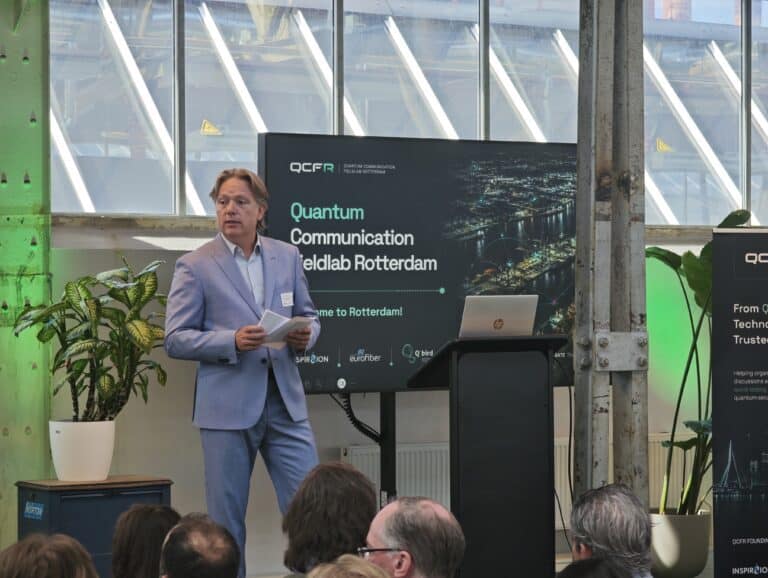
The Quantum Communication Fieldlab Rotterdam (QCFR) has been unveiled in Rotterdam today. It is a collaborative environment for testing, validating and operationalising quantum-secure communication in real-world infrastructure. Founded by Cisco, Eurofiber, INSPIR8ION, Q*Bird, and CGI, QCFR moves beyond earlier pilots to prepare critical and public infrastructure for the quantum era.
The QCFR opened its doors today, at RDM Next in Rotterdam. Its founding partners are bringing quantum-secure communication into a new phase. The idea is to be than just a proof of concept, as the practical implementation for ports, energy grids, government networks, banking and healthcare should start here.
The field lab is ahead of the quantum revolution that is set to arrive someday. But time is of the essence, as the field lab addresses the ‘harvest now, decrypt later’ threat, where adversaries may be collecting encrypted data today with the intention of decrypting it later. That later is when once quantum computers become capable enough to break current encryption.
This launch has been in the works for a while. In February 2024, Eurofiber and partners began building quantum-encrypted infrastructure for the Port of Rotterdam. By May, that consortium demonstrated what was described as the world’s first scalable quantum internet connection in the port. It proved QKD could operate in a demanding, real-world setting. QCFR is the next step from there.
From pilot to operational readiness
The field lab will focus on Quantum Key Distribution (QKD), including advanced protocols such as Measurement-Device-Independent QKD (MDI-QKD), testing technical resilience, interoperability and integration into existing infrastructure. A 2025 QUEST project, backed by a million euros in regional and EU funding, additionally enables QKD across two Eurofiber datacentres in the Randstad, with commercial services available to customers.
According to research, the number of businesses globally using QKD services is expected to grow from just over 1,000 in 2025 to around 3,000 by 2030. Meanwhile, the EU has set a roadmap requiring critical infrastructure to complete the transition to quantum-resistant encryption no later than 2030. QCFR supports that effort.
Regional Minister Meindert Stolk of Zuid-Holland stated: “Secure communication is a key issue not only for the vital operations in Europe’s busiest port, but also for critical infrastructure and government organisations in our greater region.”
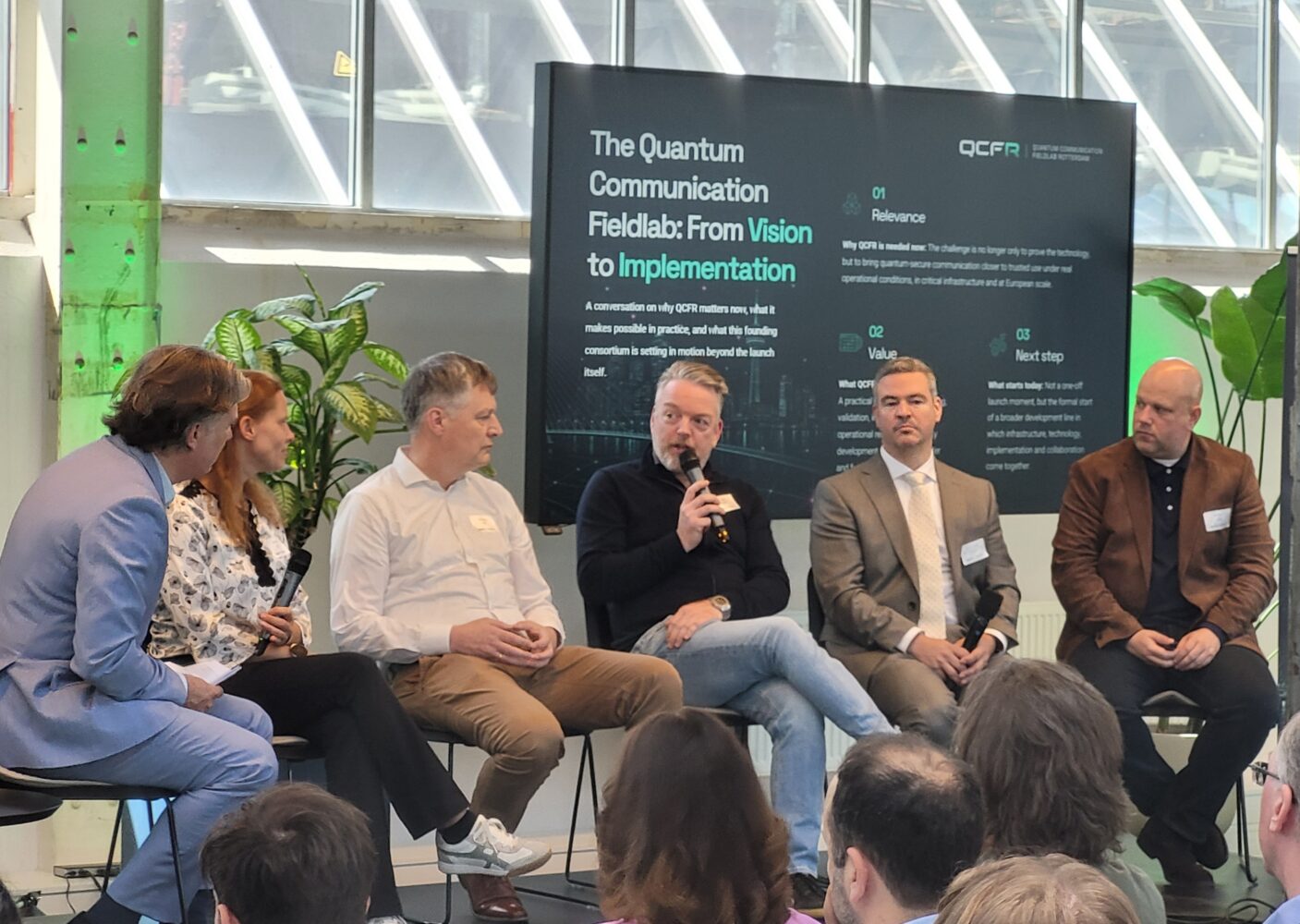
Eurofiber is also pursuing quantum-secure connections beyond Rotterdam. Earlier this year, Eurofiber and Colt Technology Services announced a QKD initiative linking Amsterdam, London and Brussels for the financial sector. QCFR’s knowledge and operational experience will feed into that broader European ecosystem.
Ready before the quantum dawn
Ingrid Romijn, cofounder and CEO of Q*Bird, noted at the unveiling in Rotterdam that her company is the pioneer of the centralized quantum-safe communication network at the heart of the new field lab. Presenting the tech as a future standard for connecting critical digital infrastructure, Romijn notes that the time to “Q-Day” is unknown. This is the moment at which quantum computers are ready to crack even the most secure classical cryptography.
Marc Hulzebos, Innovation Officer at Eurofiber, tells us that this future risk is unlikely to emerge right as quantum computing becomes viable. Instead, he says a “cryptographically relevant” quantum computer will arrive far sooner than a universal one. Eurofiber, Hulzebos notes, is trying to stay ahead of this risk with its own portfolio. This is why the company has been investing in test projects linking multiple Randstad cities, the Port of Rotterdam and now QCFR.
Also read: Quantum Key Distribution guarantees secure communication