
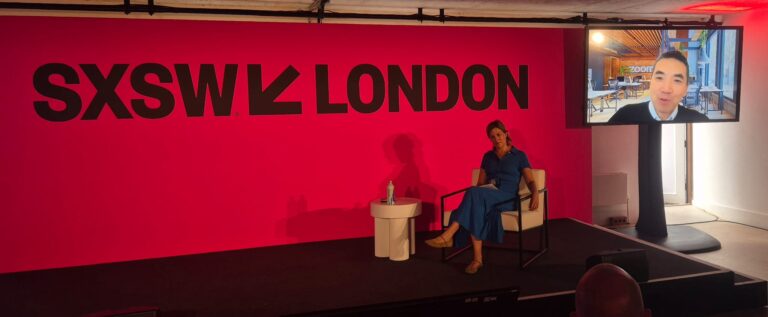
Zoom is introducing ZoomMate, an AI agent that automatically performs tasks in systems like Salesforce, Jira, and ServiceNow after a meeting, without any human intervention. At SXSW London, several sessions independently posed the same question: if agents act autonomously, who monitors what they do?
Zoom has stopped calling itself a video conferencing company for some time now. Its new positioning is “system of action”: a platform that not only facilitates conversations but also manages their follow-up. “Zoom is right where work decisions are made,” says Russell Dicker, chief product officer at Zoom.
ZoomMate is the next step in that positioning. After a meeting, the agent independently retrieves relevant information from connected business systems, creates follow-up tasks, updates customer files, and schedules follow-up appointments. Users no longer have to switch between tools themselves. The agent does that for them. The product will be available in North America starting June 1 for twenty dollars per user per month. A rollout to Europe is planned for later this year.
But the moment an AI agent independently logs into Salesforce and updates data there based on what was said in a meeting, humans disappear from part of the work process. The task is still being done, just without human intervention. That is precisely the trend that was discussed at length during the SXSW London tech festival, in sessions that independently expressed the same concern, each from a different perspective.
Training data as a blind spot

For instance, the program included a session titled: “Who Controls the AI Stack?” Jason McEwen, chief scientist at the UK’s Alan Turing Institute—the national institute for AI and data science in the UK—explained there why that question is relevant for any organization deploying AI agents. Most companies use the large commercial models from American tech companies, and that’s not a problem for many applications. But as soon as agents act independently in critical business processes, it becomes urgent to know how those agents behave, what data they were trained on, and what happens if that access is lost. “It’s not about owning the AI infrastructure itself,” says McEwen, “but about not becoming completely dependent on it.”
For McEwen, the biggest blind spot lies in the training data of AI models. Many organizations rely on the guardrails that manufacturers add to a model after the fact, but these offer no real certainty. Academic research shows that such a security layer is fragile, sometimes due to targeted jailbreaking, but also unintentionally, for example when fine-tuning a model for a specific application. The only way to truly know what a model does and doesn’t do is to understand the data it was trained on. With most commercial models, that insight is completely lacking. Malicious actors actively exploit this: they create fake sites with data they hope to get into training sets, including hidden instructions that are only activated in very specific scenarios.

David DeSanto, CEO of Anaconda, the open-source AI platform, recognizes this problem. With a background in cybersecurity and twenty years of experience in the enterprise world, he views AI risks differently than the average technology manager. When the Chinese AI model DeepSeek R1 emerged last year as one of the strongest code models on the market, the initial reaction from many enterprise customers was enthusiasm. “I approach AI models like security risks,” says DeSanto. “So I ask myself: who is the provider, where is the model running, what data was used for training, can I retrain it, and what are my comfort levels?” Most organizations don’t ask those questions, he notes, even though those are precisely the questions that are relevant to any organization considering granting an autonomous AI agent access to its business systems.
Power, Narrative, and Infrastructure
At a higher level, another mechanism is at play. During the session “Building Human-Centered Futures with AI,” Madhumita Murgia, AI editor at the Financial Times, pointed out a striking pattern: tech companies are actively spreading negative visions of the future regarding AI. Statements about massive job losses, existential risks, and even the extinction of the human race come not only from critics but also from the companies that build and sell this technology. Her explanation: it creates a mystique that concentrates power. “In doing so, they create the sense that when a technology is so complex and dangerous that even its creators fear it, you’d better leave it to the experts,” says Murgia. “That gives a small group of experts the leeway to determine how governments respond, what regulation is acceptable, and why you’d better entrust your data to them.”
Artist and filmmaker Liam Young, whose exhibition World Machine is currently on view at the Barbican in London, adds a physical dimension to this. According to him, visions of the future regarding AI are not innocent. They are deliberately deployed by tech companies to convince investors and raise capital, sometimes without the technology having already delivered on those promises. “Visions of the future have become a weapon,” says Young. “They are used to justify trillion-dollar IPOs, purely based on narrative.”
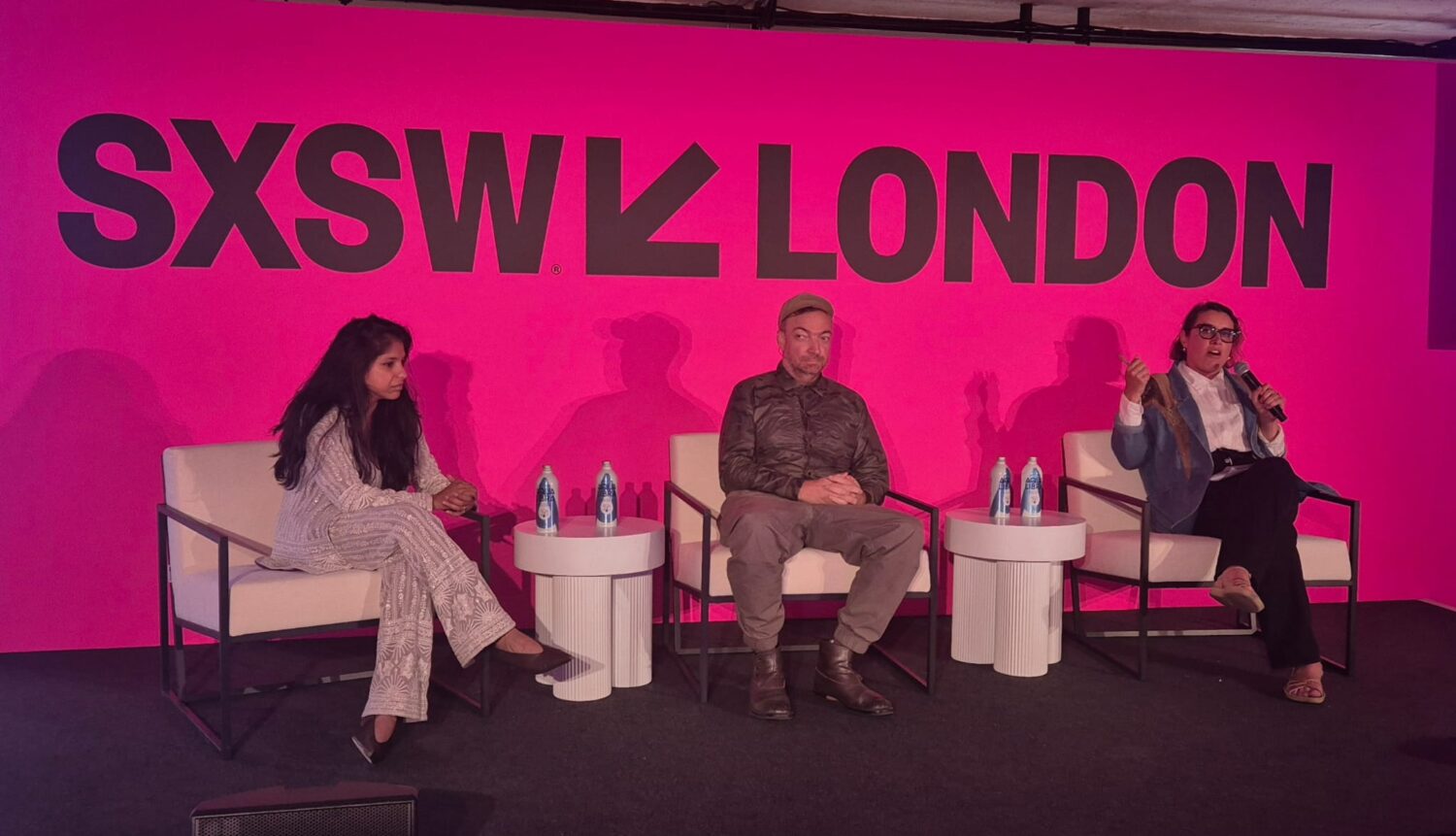
But behind those stories lies a concrete physical reality: the infrastructure that keeps AI systems running—hyperscale data centers with industrial-scale energy consumption—is being built in places and communities that have little say in the matter. “Those companies are essentially buying the absence of regulation,” Young argues. “They’re building data centers on a massive scale without any framework for environmental accountability.” The fact that tech companies simultaneously promote utopian visions of the future—as Anthropic CEO Dario Amodei did in his essay *Machines of Loving Grace*—does little to change this. According to Young and Murgia, both narratives ultimately serve the same purpose: to keep decision-making power in the hands of a small group of companies. For organizations considering integrating AI agents into their business processes, this is no trivial observation.
Three-day workweek
What does that mean specifically for ZoomMate? Zoom states in its product documentation that the agent “respects enterprise access controls, permissions, and governance” when performing actions in connected systems. ZoomMate gains access to Salesforce, Jira, ServiceNow, Workday, Google Drive, and SharePoint, and operates independently within them. For European organizations, there is an additional consideration: the models, infrastructure, and governance are American. McEwen gave the audience at SXSW London food for thought: what if the United States were to revoke access to the major AI models tomorrow? Not as a far-fetched scenario, but as practical risk management for organizations making decisions today about which systems to integrate into their infrastructure.
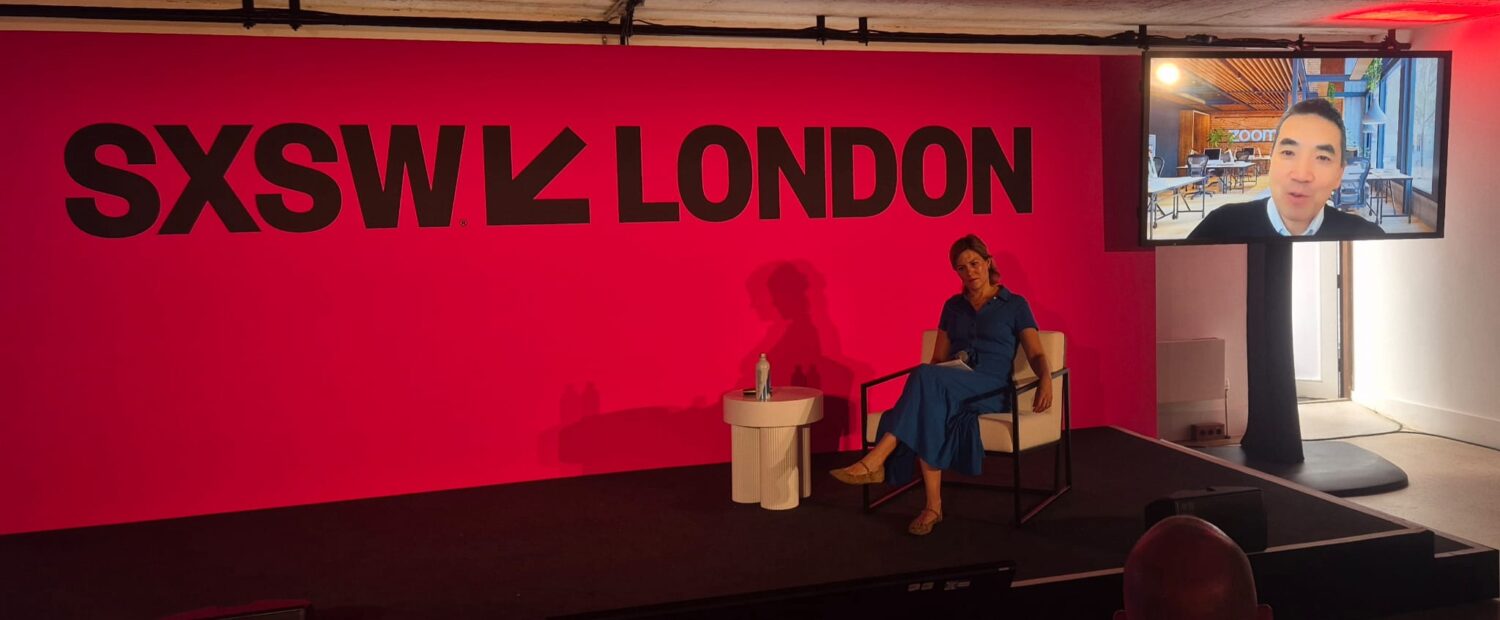
Eric Yuan, who joined via Zoom from California for his session “Human Connection: A System of Action for Modern Work,” sees it differently. The Zoom founder compares trust in AI agents to the early distrust of the internet. In 1995 and 1996, no one trusted the internet, he recalls. “And look how that turned out.” But his conviction goes further: In 1926, Henry Ford reduced the workweek from six to five days, purely by reorganizing the way people worked. “But now, a hundred years later, after countless technological revolutions, people still work five days a week,” Yuan states. “That’s a missed opportunity.” According to him, AI now offers the opportunity to take the step toward a shorter workweek once again. Digital agents work seven days a week, twenty-four hours a day, never complain, and never get tired. For Yuan, a four-day—or even three-day—workweek is not a utopia but a logical next step. “Give it time,” he says. “AI agents can truly deliver what we ask of them.”